Key Findings
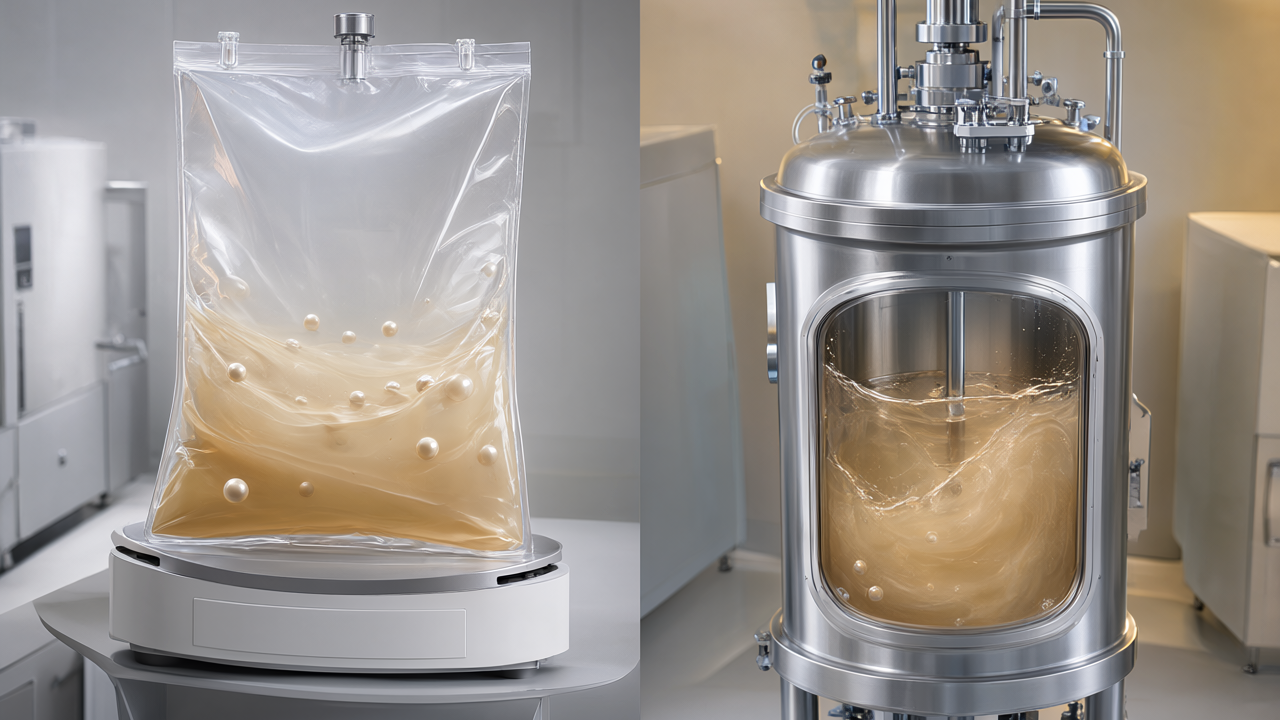
A comprehensive comparison of bioreactor platforms for viral vector manufacturing demonstrates that wave-mixed bioreactors are optimally suited for shear-sensitive cell cultures, while stirred-tank bioreactors remain the gold standard for large-scale commercial adeno-associated virus (AAV) production. Each platform offers distinct technical and scalability advantages tailored to specific cell types and production requirements.
Technical / Clinical Details
Wave-Mixed Bioreactors:
- Characteristics: Provide low-shear, gentle mixing by rocking the culture bag, minimizing physical stress on cells.
- Applications: Particularly well-suited for shear-sensitive cells, including lentiviruses, T-cell expansion, and baculovirus applications utilizing insect cells.
- Scale: Predominantly used for clinical-scale batches under 200 liters, making them ideal for early-phase clinical trials and relatively smaller production volumes.
Stirred-Tank Bioreactors:
- Characteristics: Deliver high shear forces, ensuring superior gas exchange efficiency (high kLa values) and homogeneous mixing throughout the culture.
- Applications: The industry default for commercial AAV production using stable HEK293 cell lines due to their robust performance.
- Scale: Capable of scaling up to 2,000 liters, with predictable scale-up characteristics that are essential for high-volume commercial manufacturing.
The choice between these platforms is critically determined by the specific type of viral vector, the characteristics of the host cell line, and the required production volume.
Background & Context
With the burgeoning demand for gene therapies, the efficient and large-scale manufacturing of indispensable viral vectors has emerged as a significant industry bottleneck. The selection of appropriate bioreactor technology is paramount as it directly impacts manufacturing costs, production timelines, product quality, and regulatory compliance. By judiciously choosing bioreactor types based on culture characteristics such as shear sensitivity and cell density, optimal production efficiency and quality can be achieved.
Strategic Significance & Outlook
The continuous evolution of bioreactor technology is crucial for accelerating the commercialization of gene therapies. Future developments may include hybrid systems that combine the advantages of both bioreactor types, as well as next-generation smart bioreactors integrating AI and automation. These advancements will enable adaptability to a wider variety of cell types and vector systems, further optimizing manufacturing processes. Ultimately, this will contribute to reducing the cost of therapeutic agents and expanding patient access. The strategic selection and ongoing refinement of bioreactor technology will remain a cornerstone for the sustained growth of the gene therapy sector.
Source: https://bioprocesstools.com/blog/wave-mixed-vs-stirred-tank-viral-vector/
Get our weekly technology intelligence — free
Receive an infographic that lets you judge at a glance whether each field’s analysis report is worth reading.
Subscribe Free — Weekly Tech Intelligence
By subscribing, you’ll receive Troy-Technical’s weekly technology intelligence newsletter.
- Your email and selected fields are used only to deliver the newsletter.
- We never share your information with third parties.
- You can unsubscribe anytime via the link in each email.
See our Privacy Policy for details.
Takes about a minute · Unsubscribe anytime







Comments