Context and Challenges
Cerebral organoids can mimic aspects of the complex structure and function of the human brain in vitro, making them widely used for elucidating mechanisms of neurological disorders such as Alzheimer’s, Parkinson’s, and autism spectrum disorders, as well as for drug toxicity screening and efficacy evaluation. However, the difficulty of their production and inherent batch-to-batch variability have historically been significant limiting factors for widespread application.
Key Findings
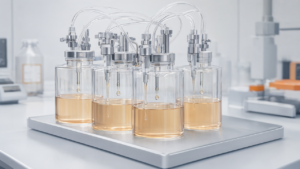
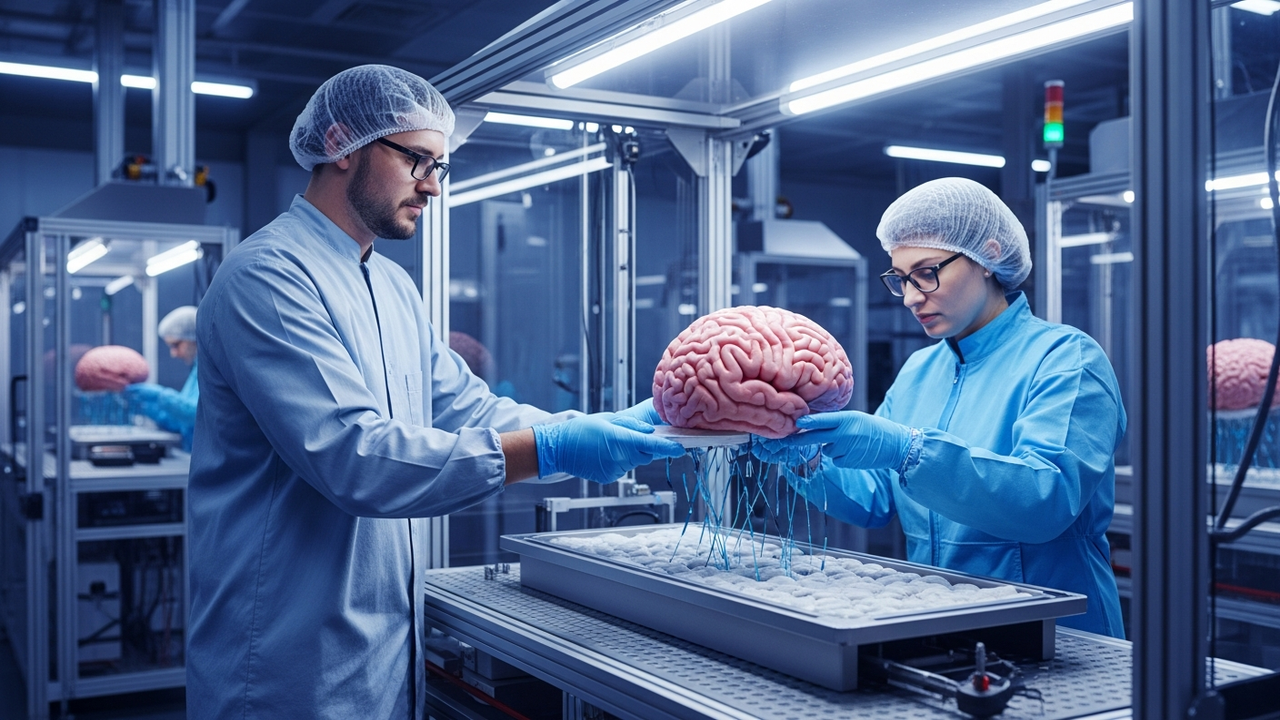
Cerebral organoid production has entered a revolutionary industrial era, driven by the introduction of automated platforms that cover the entire process of human iPSC (induced pluripotent stem cell) generation, expansion, and differentiation. This technological leap enables high-throughput production of cerebral organoids, with the potential to significantly accelerate neuroscience research and drug discovery processes.
Technological and Clinical Impact
- Standardization Through Automation: Historically, cerebral organoid production heavily relied on manual processes, leading to significant variability in quality and characteristics between batches. The adoption of automated platforms standardizes cell culture conditions and differentiation protocols, dramatically improving the uniformity and reproducibility of the resulting organoids. This is essential for obtaining reliable data in drug screening and disease modeling research.
- Improved Production Efficiency and Cost Reduction: Automated systems contribute to reduced labor costs and lower error rates. Furthermore, continuous process execution significantly boosts production throughput compared to traditional batch production, ensuring scalability for large-scale research projects and future therapeutic applications.
- Scaling iPSC Production: A stable, large-scale supply of iPSCs, the critical raw material for cerebral organoids, is key to industrialization. Automated iPSC culture systems enable efficient production of the required quantity of iPSCs while consistently maintaining quality.
- Contributions of Key Companies:
- TissueLabs: Contributes to the maturation of the entire ecosystem by providing high-quality reagents and biomaterials necessary for organoid culture, supporting standardized protocols.
- BrainZell: Aims to rapidly identify therapeutic candidates targeting specific disease-related genes or pathways by combining computational modeling with high-throughput iPSC organoid production technology. This represents a cutting-edge example of AI and automation integration into the drug discovery process.
Future Outlook
The industrialization of cerebral organoid production is expected not only to accelerate neuroscience research but also to pave the way for future applications in personalized medicine and regenerative medicine. With the supply of more standardized, high-quality organoids, it is anticipated that drug development costs and timelines will be reduced, leading to groundbreaking approaches for neurological diseases that currently lack effective treatments. The integration of automation and AI will play a central role in shaping the future of this field.
Source: https://blog.newfundcap.com/the-cerebral-organoid-enters-its-industrial-era/
Get our weekly technology intelligence — free
Receive an infographic that lets you judge at a glance whether each field’s analysis report is worth reading.
Subscribe Free — Weekly Tech Intelligence
By subscribing, you’ll receive Troy-Technical’s weekly technology intelligence newsletter.
- Your email and selected fields are used only to deliver the newsletter.
- We never share your information with third parties.
- You can unsubscribe anytime via the link in each email.
See our Privacy Policy for details.
Takes about a minute · Unsubscribe anytime