Key Findings
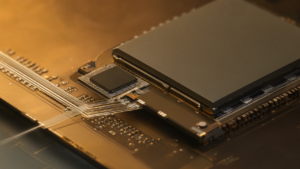
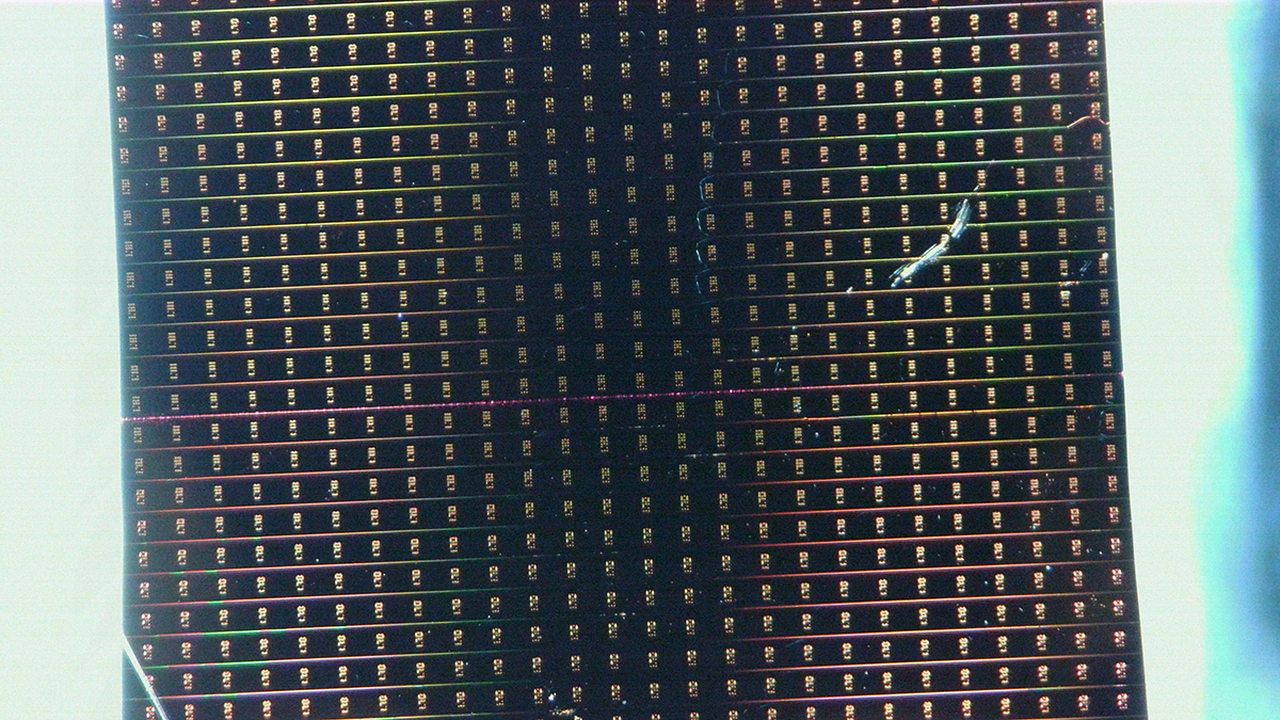
Researchers have successfully developed a novel material that addresses a critical challenge in AI scaling: low-energy optical signal modulation. This breakthrough material possesses unique properties that allow it to function without the traditional requirements of electric field polarization or complex periodic patterning. This capability enables the direct and straightforward integration of advanced functionalities into photonic chips, thereby dramatically improving the performance of energy-efficient computing and optical networks. This discovery is profoundly significant for the sustainability and scalability of AI infrastructure.
Technical / Clinical Details
The core innovation of this new material lies in its intrinsic electro-optic properties, which enable efficient optical signal modulation without the need for complex external manipulations. Many conventional electro-optic materials require high voltages, specific crystal structures, or external electric field application for signal modulation. However, this novel material relaxes these constraints, facilitating simpler chip designs and operation at significantly lower power. Such characteristics are vital for substantially improving energy efficiency and mitigating thermal issues, particularly in high-speed interconnects within data centers and on-chip optical communication for AI accelerators.
Background & Context
The rapid advancement of AI has led to an exponential increase in data processing demands and corresponding energy consumption. Specifically, the processing and transmission of electrical signals in data centers constitute a major portion of power consumption, raising sustainability concerns and operational costs. Optical communication technologies, such as silicon photonics and thin-film lithium niobate (TFLN) platforms, are considered promising solutions to these challenges, but the energy efficiency of modulators remains a crucial research area. This new material represents a technological innovation that fundamentally improves the efficiency of optical signal processing within this context.
Strategic Significance & Outlook
The development of this novel material holds the potential for wide-ranging impacts across the fields of AI computing and optical networking. More energy-efficient photonic chips could not only reduce data center operating costs and the environmental footprint of AI workloads but also accelerate the adoption of AI in new applications such as power-constrained edge devices and autonomous vehicles. Furthermore, the ease of integration of this material is expected to simplify the design and manufacturing processes of photonic integrated circuits, fostering the development of more complex and higher-performing optical systems. In the long term, this technology could bring practical optical computing closer to reality, serving as a foundational technology for future digital societies.