Key Findings
The strategic application of bioprocess analytics and advanced algorithms is significantly optimizing biologics manufacturing processes. The development of “digital twins,” utilizing real-time data and sophisticated machine learning models, enables predictive interventions and dramatically enhances product quality consistency, thereby accelerating the realization of “Bioprocessing 4.0.”
Technical / Clinical Details
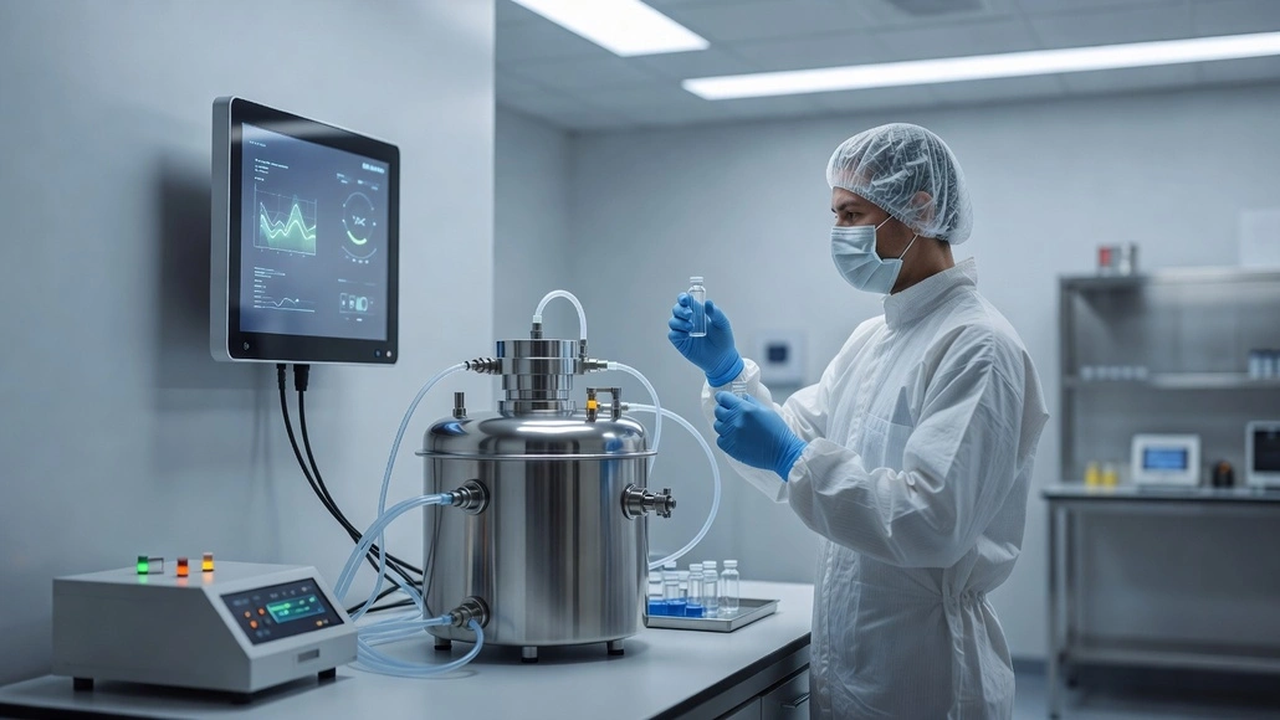
- Leveraging Real-time Data: Massive amounts of real-time data from bioreactor culture conditions (e.g., temperature, pH, dissolved oxygen, cell density) are collected and analyzed. This allows for continuous monitoring of the entire manufacturing process, rather than relying on post-batch quality evaluation.
- Machine Learning and AI Models: Based on the collected data, machine learning algorithms learn process behavior patterns and predict anomalies or potential issues. This enables early detection of quality deviations during production and automatic process adjustments, leading to improved product uniformity and yield.
- Digital Twin Construction: A “digital twin” is constructed to faithfully replicate the physical manufacturing process in a digital space. This virtual model allows for simulation of the impact of different process conditions and raw material batches, enabling the formulation of optimal manufacturing strategies in advance. This significantly reduces trial-and-error costs and time.
- Contribution to “Bioprocessing 4.0”: These technologies form the core of “Bioprocessing 4.0,” the next-generation biomanufacturing paradigm integrating sensor technology, data analytics, automation, and AI. They drive smart, autonomous, and efficient manufacturing, contributing to rapid drug market entry and cost reduction.
Background & Context
Biologics manufacturing has always demanded efficiency and quality improvement due to its complexity and high costs. Precise control is especially critical in cell culture processes, where even minor fluctuations can significantly impact product quality. Traditional control methods struggled to capture and respond to variations in real-time. The evolution of digital technologies offers powerful solutions to this challenge. Regulatory bodies like the FDA also encourage the adoption of advanced technologies to deepen process understanding and control, based on Quality by Design (QbD) principles, which drives the industry’s digital transformation.
Strategic Significance & Outlook
Bioprocess analytics and digital twin technology are expected to be deeply integrated into all stages of biopharmaceutical manufacturing. This will shorten the development period for new biologics and further reduce manufacturing costs. Predictive quality control will also lower the risk of product recalls and contribute to stable patient supply. In the future, these technologies may influence regulatory approval processes, accelerating the widespread adoption of real-time release testing. Consequently, the biopharmaceutical industry will evolve into a more efficient, robust, and sustainable manufacturing ecosystem.








Comments