Key Findings: Hydrogen-Bonded Cations Drive Perovskite Solar Cells Past 26% Efficiency and Over 1000 Hours Stability
A groundbreaking study published in Advanced Science reports an elegant solution to a critical challenge in perovskite solar cells: the instability of their two-dimensional (2D) capping layers. By employing hydrogen-bonded cations, the researchers developed champion-grade perovskite solar cells that achieve over 26% power conversion efficiency and demonstrate remarkable stability, lasting over 1000 hours in ambient air. This achievement marks a pivotal milestone in the commercialization pathway for perovskite photovoltaics.
Technical Details: In-Situ 3D Layer Protection and Stabilization Mechanism
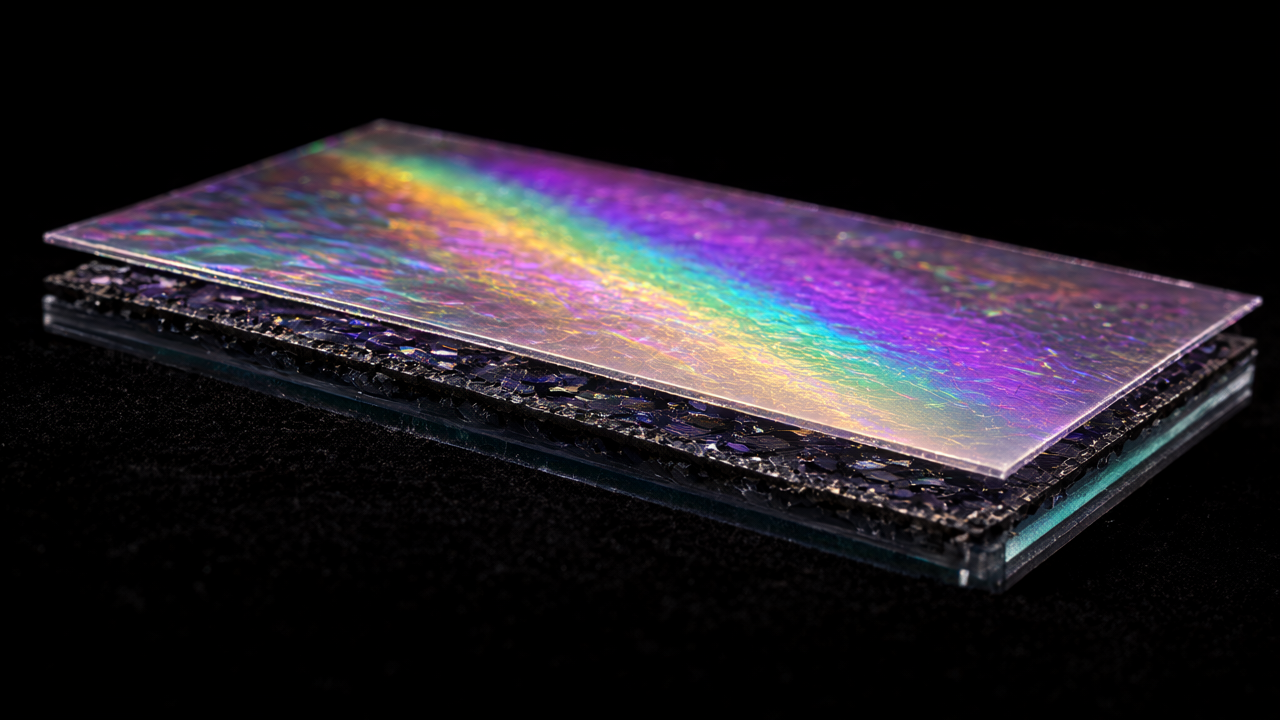
The research team adopted an innovative strategy: constructing large 2D perovskite spacer cations in situ from the formamidinium cation—a fundamental component of the perovskite material—and simple phosphonic acid molecules. This in-situ formed 2D capping layer effectively shields the underlying 3D perovskite absorber layer, significantly suppressing degradation induced by environmental factors, particularly humidity and oxygen. While conventional 2D capping layers have been problematic due to their inherent fragility, the reinforced structure formed by hydrogen bonds minimizes ion migration between layers and prevents defect formation, dramatically enhancing the overall device stability. As a result, the devices can maintain high efficiency over extended periods.
Background & Context: A New Pathway to Overcome Stability Challenges
Perovskite solar cells are widely considered a highly promising next-generation photovoltaic technology due to their high efficiency and potential for low-cost manufacturing. However, one of the most pressing issues has been their insufficient long-term stability. Specifically, their susceptibility to degradation upon exposure to atmospheric moisture and oxygen has been the primary barrier to commercialization. Previous research explored surface passivation and encapsulation techniques, but these did not offer a fundamental solution. This study is revolutionary as it proposes a more intrinsic approach: enhancing stability by modifying the perovskite material itself. This method is expected to significantly improve stability without unduly increasing the complexity of the manufacturing process.
Strategic Significance & Outlook: Accelerating Commercial Application and Broad Market Deployment
This technology, which combines over 26% high efficiency with over 1000 hours of excellent stability, will greatly accelerate the commercial application of perovskite solar cells. More durable perovskite solar cells are anticipated to be adopted across a wide range of markets, including residential rooftops, building-integrated photovoltaics (BIPV), flexible wearable devices, and even vehicle-integrated photovoltaics (VIPV). Future efforts will focus on scaling up this technology for mass production and conducting further long-term reliability tests. This breakthrough has the potential to accelerate the adoption of renewable energy technologies and make a substantial contribution to achieving a sustainable society.
Get our weekly technology intelligence — free
Receive an infographic that lets you judge at a glance whether each field’s analysis report is worth reading.
Subscribe Free — Weekly Tech Intelligence
By subscribing, you’ll receive Troy-Technical’s weekly technology intelligence newsletter.
- Your email and selected fields are used only to deliver the newsletter.
- We never share your information with third parties.
- You can unsubscribe anytime via the link in each email.
See our Privacy Policy for details.
Takes about a minute · Unsubscribe anytime