Key Findings
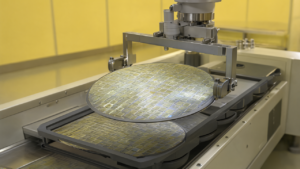
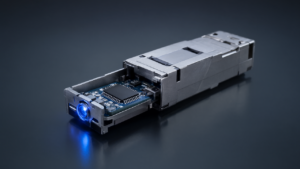
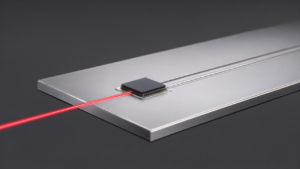
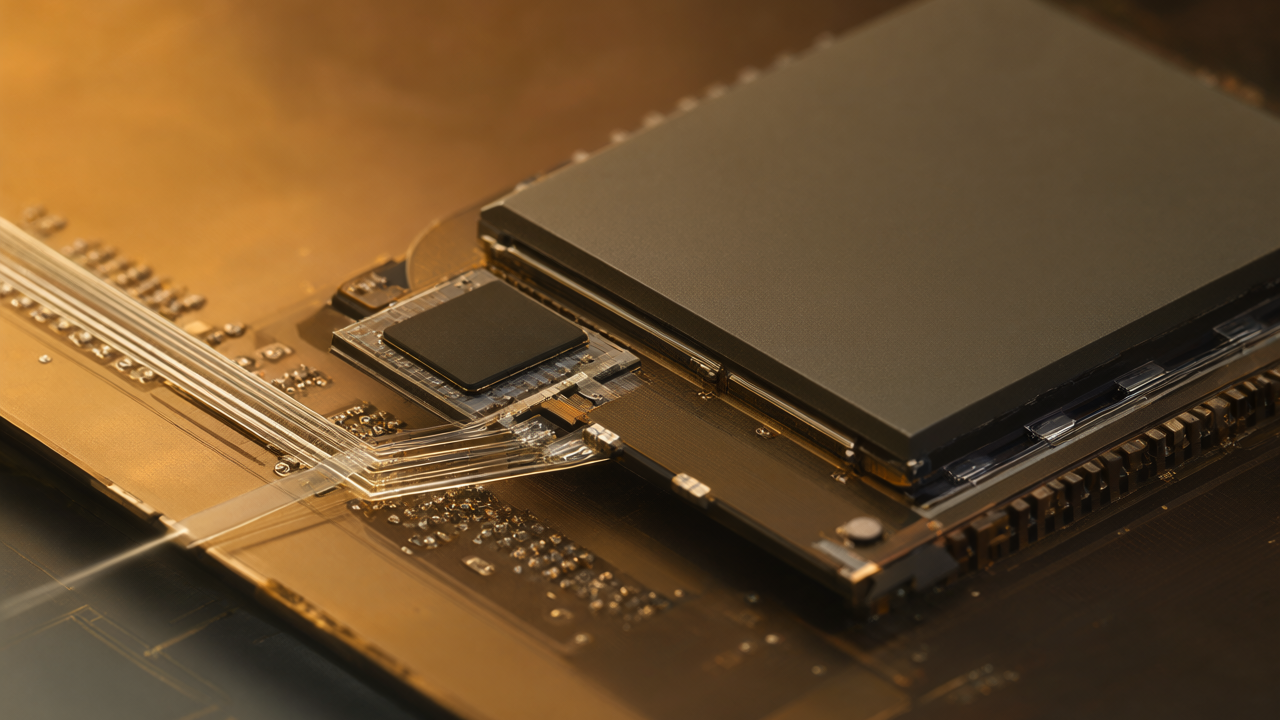
At OFC 2026, Intel announced its Optical Compute Interconnect (OCI) chiplet, a critical component for scaling AI infrastructure. This groundbreaking OCI chiplet achieves exceptional energy efficiency of approximately 5 picojoules per bit (pJ/b) and a shoreline density of 1 Terabit per second per millimeter (Tbps/mm). This represents a significant power reduction of over 70% when compared to existing 800G pluggable modules, which typically consume around 21 pJ/b. This achievement is made possible by Intel’s unique silicon photonics (SiPh) heterogeneous integration technology, which directly bonds Indium Phosphide (InP) lasers onto silicon wafers.
Technical / Clinical Details
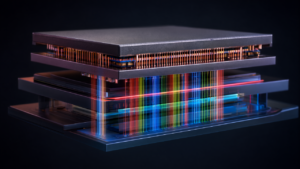
Intel’s OCI chiplet is designed to eliminate data transfer bottlenecks between AI accelerators and CPUs within data centers. AI workloads demand the high-speed processing of vast amounts of data, with associated power consumption presenting a major challenge. The OCI chiplet utilizes optical signals for data transmission, achieving performance levels beyond the capabilities of electrical signals. Specifically, the low energy consumption of 5 pJ/b dramatically reduces the overall operational costs and heat generation of data centers. Furthermore, a shoreline density of 1 Tbps/mm signifies extremely high bandwidth density from the chip edge, ensuring maximum data transfer capability within limited physical space. The core of this technology lies in ‘heterogeneous integration,’ Intel’s approach to directly integrating disparate InP lasers onto a standard silicon photonics platform. InP lasers can generate high-quality light that cannot be produced by silicon alone, thereby enabling high-performance and highly efficient optical interconnects through this integration.
Background & Context
The explosive growth of AI is placing unprecedented demands on data center computing and networking infrastructure. Specifically, training large-scale AI models requires numerous processing units (GPUs, AI accelerators, etc.) to collaborate and efficiently exchange petabit-scale data. Traditional electrical wiring and pluggable optical modules are increasingly reaching their limits in terms of power consumption, latency, and physical space. Intel has invested extensively in silicon photonics research and development for many years, and the OCI chiplet is a significant outcome of these efforts. Heterogeneous integration technology, which combines the advantages of different materials to achieve performance unattainable with a single material, is a crucial trend in the semiconductor industry. Intel’s approach is positioned as a strategic step to overcome the ‘power wall’ and ‘bandwidth wall’ of data centers in the AI era.
Strategic Significance & Outlook
Intel’s OCI chiplet holds immense potential to significantly impact the future design and operation of AI data centers. The reduction of over 70% in power consumption will dramatically improve the Total Cost of Ownership (TCO) of AI infrastructure and enable sustainable, large-scale AI computing. The proliferation of this technology will foster the development of more powerful and efficient AI accelerators, accelerating innovation across a wide range of fields, including generative AI, autonomous driving, and scientific computing. Future challenges include further mass production and cost optimization of the heterogeneous integration process, as well as building an ecosystem around the OCI chiplet with other data center components. Intel’s leadership in this domain is expected to shape the future of computing in the AI era.
Source: https://www.simpletechtrend.com/en/post/ofc2026-intel-oci-siph-chiplet-scaling-en
Get our weekly technology intelligence — free
Receive an infographic that lets you judge at a glance whether each field’s analysis report is worth reading.
Subscribe Free — Weekly Tech Intelligence
By subscribing, you’ll receive Troy-Technical’s weekly technology intelligence newsletter.
- Your email and selected fields are used only to deliver the newsletter.
- We never share your information with third parties.
- You can unsubscribe anytime via the link in each email.
See our Privacy Policy for details.
Takes about a minute · Unsubscribe anytime