Key Findings
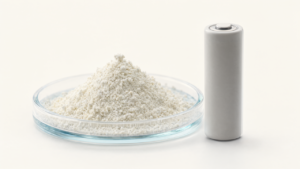
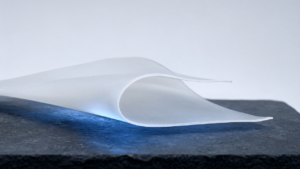
Research indicates that dispersing fine inorganic particles, specifically ceramic fillers, within polymer electrolytes can effectively suppress lithium dendrite formation while simultaneously enhancing lithium ion conductivity in solid-state batteries. This represents a significant advancement towards resolving one of the primary hurdles hindering the commercialization of solid-state battery technology, offering a promising solution to improve both safety and performance.
Technical / Clinical Details
The surfaces of these ceramic fillers create an inorganic-rich interface, composed of mechanically robust and electrochemically stable species such as lithium fluoride, lithium oxide, and lithium carbonate. This interface plays a crucial role in locally concentrating lithium ions at the electrode surface and homogenizing the ionic flux. This mechanism effectively impedes the non-uniform growth of lithium dendrites, thereby improving the battery’s safety and extending its cycle life. The observed enhancement in room-temperature ion conductivity also contributes to better performance, particularly in colder climates.
Background & Context
Solid-state batteries are anticipated to offer superior safety, higher energy density, and longer cycle life compared to conventional lithium-ion batteries. However, the formation of lithium dendrites and high interfacial resistance between electrodes and electrolytes have been major technical barriers to their commercial deployment. The utilization of ceramic fillers provides a cost-effective and scalable solution to these challenges, potentially accelerating the development and adoption of next-generation battery technologies.
Strategic Significance & Outlook
This ceramic filler technology is expected to significantly advance the performance and safety of solid-state batteries, accelerating their adoption across a wide range of applications, including electric vehicles and portable electronics. Further research into the dendrite suppression mechanisms and optimization of filler materials will likely lead to even more efficient and long-lasting solid-state batteries. This breakthrough promises to drive the overall battery technology landscape forward, contributing to a more sustainable energy future.
Get our weekly technology intelligence — free
Receive an infographic that lets you judge at a glance whether each field’s analysis report is worth reading.
Subscribe Free — Weekly Tech Intelligence
By subscribing, you’ll receive Troy-Technical’s weekly technology intelligence newsletter.
- Your email and selected fields are used only to deliver the newsletter.
- We never share your information with third parties.
- You can unsubscribe anytime via the link in each email.
See our Privacy Policy for details.
Takes about a minute · Unsubscribe anytime