Key Findings
During the Artemis II mission, astronauts achieved a significant scientific feat by directly observing five faint meteorite impact flashes on the far side of the Moon while in lunar orbit. This invaluable data will deepen our understanding of the lunar environment and is critical for assessing meteorite impact risks for future lunar base constructions. Simultaneously, preparations for the Artemis III mission, aiming for the next human lunar landing, are progressing rapidly, with engine installations underway and ongoing evaluation of high-speed laser communications utilizing SpaceX’s Starlink satellite network.
Technical/Clinical Details
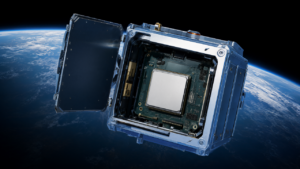
The Artemis II crew’s visual confirmation of impact flashes provides vital ground truth for models predicting the frequency and magnitude of lunar impact events. This information is essential for developing strategies to protect astronauts and infrastructure during extended stays on the lunar surface. On the technical front for Artemis III, critical propulsion engines are being integrated into the spacecraft, marking steady progress in hardware readiness for the lunar landing. In communication technology, the exploration of laser communications via SpaceX’s Starlink constellation promises a dramatic increase in data transfer rates compared to traditional radiofrequency systems, enabling real-time transmission of high-resolution scientific data and video to Earth.
Background & Context
NASA’s Artemis program aims to return humans to the Moon and, eventually, pave the way for missions to Mars. Artemis II served as a crewed lunar flyby, while Artemis III is slated for a human lunar landing, each playing a crucial role. A scientific understanding of the lunar environment is paramount for the safety and success of long-term lunar operations. Furthermore, as lunar activities increase, the demand for high-bandwidth, high-speed communication with Earth is escalating dramatically. Leveraging commercial satellite constellations like Starlink for laser communication offers a cost-effective and high-performance solution to meet these emerging communication requirements.
Strategic Significance & Outlook
The scientific observations from Artemis II will contribute directly to characterizing the lunar environment, informing the design of lunar infrastructure and operational plans for Artemis III and subsequent missions. Critically, the potential implementation of laser communication technology for Artemis III will enable astronauts to share an unprecedented volume of scientific data in real-time, enhancing mission flexibility and success rates. These advancements collectively strengthen the technological foundation for a sustained human presence on the Moon and, eventually, crewed missions to Mars, opening new possibilities for space exploration.
Source: https://science.nasa.gov/feature/artemis-ii-preliminary-lunar-science-report/
Get our weekly technology intelligence — free
Receive an infographic that lets you judge at a glance whether each field’s analysis report is worth reading.
Subscribe Free — Weekly Tech Intelligence
By subscribing, you’ll receive Troy-Technical’s weekly technology intelligence newsletter.
- Your email and selected fields are used only to deliver the newsletter.
- We never share your information with third parties.
- You can unsubscribe anytime via the link in each email.
See our Privacy Policy for details.
Takes about a minute · Unsubscribe anytime