Key Findings: New Material Achieves Unprecedented Combination of High Stiffness and Ultra-Low Thermal Conductivity
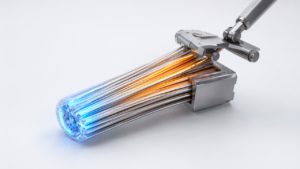
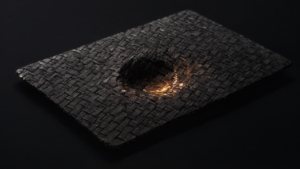
Researchers at North Carolina State University have successfully developed a thin-film material that defies conventional wisdom in materials science, exhibiting both exceptionally high stiffness and remarkably low thermal conductivity. This innovative material achieves a record-low thermal conductivity for a dense, non-porous material, demonstrating performance that approaches the theoretical limits of thermal insulation efficiency.
Technical and Clinical Details: Properties of Azobenzene Ethylammonium Lead Iodide Film
The newly developed material, dubbed ‘azobenzene ethylammonium lead iodide film,’ exhibits an astonishingly low thermal conductivity of approximately 0.04 W/mK at room temperature (around 25°C). This translates to insulation performance 5 times superior to that of silicon, a material widely used in semiconductors and electronics. Furthermore, this film possesses an unprecedented stiffness, being 700 to 10,000 times harder than silicon. This unique combination of properties was achieved through precise control over the material’s molecular structure and thermal transport mechanisms, breaking a long-standing trade-off in materials engineering.
Background and Industry Context: The Trade-off Between Heat and Stiffness in Materials Science
Historically, materials exhibiting high stiffness tend to also have high thermal conductivity, while excellent thermal insulators are typically soft and low in strength. This inherent trade-off has necessitated the use of multiple materials in applications requiring both high insulation performance and structural integrity, leading to increased design complexity, higher costs, and size constraints. The current development overcomes this long-standing limitation, opening pathways for single materials to fulfill multiple demanding requirements.
Strategic Significance and Outlook: Impact on Energy Efficiency and Device Design
This azobenzene ethylammonium lead iodide film is expected to find wide-ranging applications in areas such as high-performance building materials, thermal shields for spacecraft, advanced thermal management in next-generation electronic devices, and enhancing the efficiency of energy storage systems. Particularly in miniaturized electronic devices, where heat dissipation and improved durability are constant challenges, this material could dramatically boost device performance and reliability. The realization of lightweight yet high-strength insulating components in the automotive and aerospace industries is no longer a distant dream, promising significant improvements in energy efficiency and contributing substantially to building a sustainable society.
Source: https://scitechdaily.com/a-strange-new-material-breaks-the-usual-rules-of-heat-and-stiffness/
Get our weekly technology intelligence — free
Receive an infographic that lets you judge at a glance whether each field’s analysis report is worth reading.
Subscribe Free — Weekly Tech Intelligence
By subscribing, you’ll receive Troy-Technical’s weekly technology intelligence newsletter.
- Your email and selected fields are used only to deliver the newsletter.
- We never share your information with third parties.
- You can unsubscribe anytime via the link in each email.
See our Privacy Policy for details.
Takes about a minute · Unsubscribe anytime