Key Findings
Elastocaloric cooling technology is gaining significant attention as an environmentally friendly cooling solution that does not rely on traditional refrigerants. This technique utilizes reversible crystalline structural changes in shape memory alloys, induced by mechanical stress, to efficiently transfer heat. A recent study in August 2026 provided experimental evidence that heat itself can drive the necessary actuation for this cooling, suggesting a potential for significant improvements in system autonomy and efficiency.
Technical Details
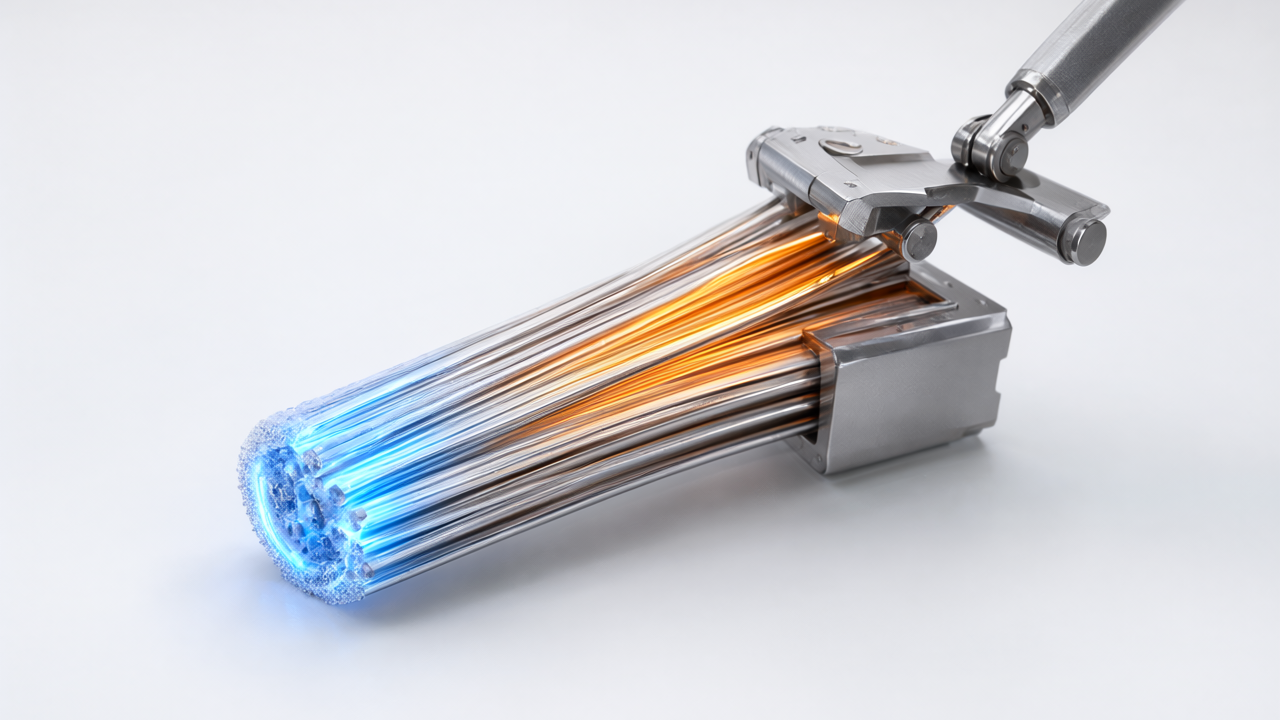
The elastocaloric effect exploits the phenomenon where certain materials, primarily shape memory alloys such as nickel-titanium (NiTi) alloys, release or absorb heat when subjected to mechanical deformation (stretching or contracting). Specifically, stretching the alloy generates heat, while releasing the tension (allowing it to contract) absorbs heat. This reversible process enables the creation of a cooling cycle that extracts heat from the surroundings and expels it externally, all without the use of refrigerant gases. The groundbreaking experiment in August 2026 demonstrated the potential for ‘self-actuated’ systems, where the material’s own temperature changes can trigger the mechanical actuation, driving the elastocaloric cycle without external energy input. This is critically important for further enhancing the system’s energy efficiency and simplifying complex control mechanisms. Nickel-titanium alloys are key candidate materials due to their excellent mechanical properties and elastocaloric performance.
Background and Industry Context
Conventional vapor-compression cooling systems rely on refrigerants that are potent greenhouse gases, contributing significantly to global warming. Concerns over the environmental impact of these refrigerants have led to stringent regulations and a global push for alternative technologies. Elastocaloric cooling, alongside other solid-state cooling technologies like magnetocaloric and electrocaloric effects, has been a focus of research and development as an eco-friendly alternative. However, practical challenges, including material fatigue life, cooling capacity, overall system efficiency, and manufacturing costs, have hindered commercialization. The discovery of self-actuation mechanisms represents a major step towards overcoming these challenges.
Strategic Significance and Outlook
The European Innovation Council (EIC)-backed SMACool project is actively developing elastocaloric cooling technology for residential building air conditioning applications. If successfully scaled commercially, this technology could offer significant energy savings and provide a refrigerant-emission-free, environmentally friendly cooling solution compared to existing HVAC systems. It also holds high potential as a heat pump, applicable for both heating and cooling, which would greatly contribute to the decarbonization of the building sector. Future research will focus on extending material lifespan, further improving efficiency, and reducing costs, with potential market introduction within the next few years. This innovation could mark a significant shift in thermal management technology.
Source: https://sherafy.com/elastocaloric-cooling/
Get our weekly technology intelligence — free
Receive an infographic that lets you judge at a glance whether each field’s analysis report is worth reading.
Subscribe Free — Weekly Tech Intelligence
By subscribing, you’ll receive Troy-Technical’s weekly technology intelligence newsletter.
- Your email and selected fields are used only to deliver the newsletter.
- We never share your information with third parties.
- You can unsubscribe anytime via the link in each email.
See our Privacy Policy for details.
Takes about a minute · Unsubscribe anytime