Key Findings
A study reported by BioProcess Tools indicates that perfusion bioreactor processes generate a substantially lower carbon footprint per kilogram of product compared to traditional fed-batch culture methods. This environmental superiority is primarily attributed to the higher volumetric productivity and more efficient use of cleanroom space inherent in perfusion systems. Specifically, a modeled 500 L perfusion process achieved 2.45 times less carbon dioxide equivalent (CO2e) emissions per kilogram of product than a 2,000 L fed-batch process.
Technical / Clinical Details
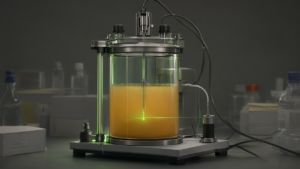
- Perfusion Culture: This is a continuous cell culture method where fresh media is continuously supplied to the bioreactor, while spent media and metabolic waste products are simultaneously removed. This allows for the maintenance of extremely high cell densities and continuous product harvesting over extended periods.
- Fed-Batch Culture: In contrast, fed-batch culture involves an initial media fill followed by intermittent nutrient feeding, without continuous removal of culture broth. While cell density increases, the process eventually terminates due to the accumulation of metabolic waste products.
- Carbon Footprint Comparison:
- Volumetric Productivity: Perfusion cultures achieve significantly higher cell densities and improved specific productivity, enabling the production of the same amount of product in a smaller bioreactor volume and shorter timeframe.
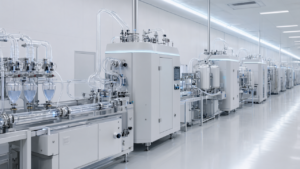
- Cleanroom Space Efficiency: Perfusion systems deliver high production capacity from a smaller cleanroom footprint, leading to reduced energy consumption associated with HVAC, lighting, and other infrastructure.
- Waste Reduction: While continuous media exchange occurs, the overall process intensification can lead to optimized use of consumables and indirect waste reduction.
- Modeled Results: The 500 L perfusion process demonstrating a 2.45-fold reduction in CO2e per kilogram of product compared to a 2000 L fed-batch process underscores the significant environmental advantages of perfusion technology.
Background & Context
The biopharmaceutical manufacturing industry is under increasing pressure not only to ensure product quality and cost-efficiency but also to reduce its environmental impact and contribute to sustainability goals. The substantial energy consumption and waste generation associated with large-scale manufacturing processes pose significant environmental challenges. While fed-batch culture has been the prevailing method, the accelerating trend of process intensification is driving greater adoption of continuous manufacturing technologies like perfusion. This shift is motivated by the potential for both operational cost savings and contributions to corporate ESG (Environmental, Social, and Governance) objectives.
Strategic Significance & Outlook
These findings provide a compelling rationale for the further adoption of perfusion culture in biopharmaceutical manufacturing. The transition towards more environmentally conscious production processes is not merely a matter of corporate social responsibility but also translates into tangible benefits such as reduced operational costs and optimized supply chains. It is anticipated that more pharmaceutical companies and CDMOs will increase their investment in perfusion technology to balance environmental performance with economic viability. This trend represents a crucial step towards building a more sustainable future for biopharmaceuticals, with further advancements in highly efficient perfusion systems and comprehensive life cycle assessment (LCA) studies expected to further solidify its environmental advantages.
Source: https://bioprocesstools.com/blog/fed-batch-vs-perfusion-carbon-footprint/
Get our weekly technology intelligence — free
Receive an infographic that lets you judge at a glance whether each field’s analysis report is worth reading.
Subscribe Free — Weekly Tech Intelligence
By subscribing, you’ll receive Troy-Technical’s weekly technology intelligence newsletter.
- Your email and selected fields are used only to deliver the newsletter.
- We never share your information with third parties.
- You can unsubscribe anytime via the link in each email.
See our Privacy Policy for details.
Takes about a minute · Unsubscribe anytime