Key Findings
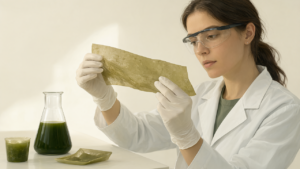
A research team at the University of Ljubljana’s Faculty of Mechanical Engineering has developed an innovative pyrolysis technology that converts challenging waste polyurethane foam into valuable oils for lubricants and electrode catalysts for fuel cells. This groundbreaking research presents a new pathway for efficiently recovering high-value products from waste polyurethane, significantly contributing to waste problem resolution and effective resource utilization.
Technical and Process Details
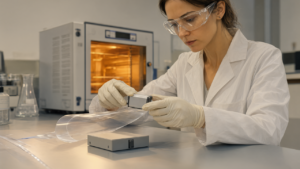
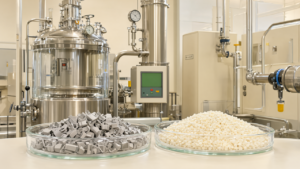
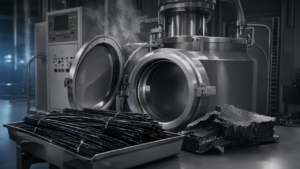
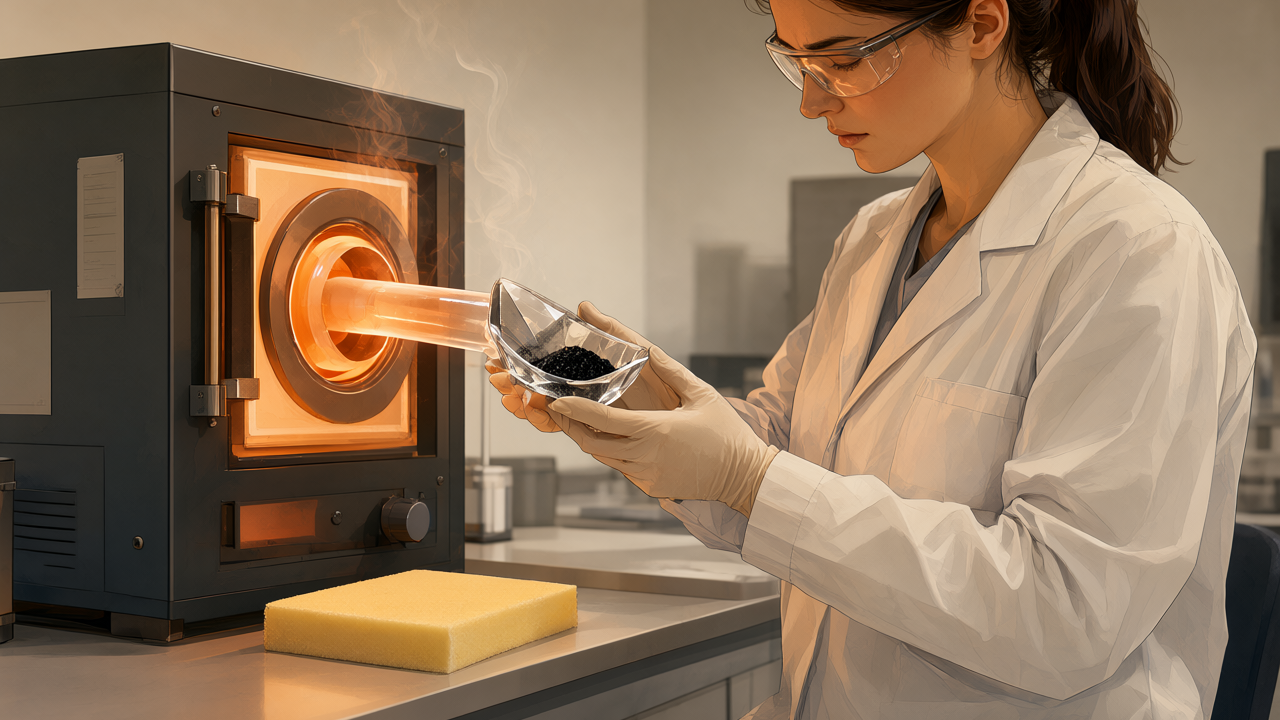
The researchers employed an atmosphere-controlled pyrolysis method to decompose waste polyurethane. This process involves heating the polyurethane at high temperatures under carefully controlled oxygen concentrations, altering its molecular structure to efficiently separate two main valuable product streams. The first is a liquid product (oil) that can be utilized as a lubricant or fuel. The second is a solid carbon-rich char, which can serve as an electrode catalyst for fuel cells. Notably, this solid char holds significant potential as a high-performance catalyst due to its excellent electrical conductivity and porous structure. This method exemplifies upcycling, creating high-functional materials directly from waste.
Background and Industry Context
Polyurethane is widely used in mattresses, insulation, and automotive components, yet its complex chemical structure makes recycling difficult, leading to a large proportion being landfilled. Millions of tons of polyurethane waste are generated globally each year, making the establishment of sustainable treatment methods an urgent challenge. This research significantly contributes to accelerating the transition to a circular economy by reducing environmentally harmful landfill volumes and promoting the efficient use of finite resources. Particularly, its application in next-generation energy technologies like fuel cells further enhances its economic and environmental value.
Future Outlook
While this research is still in its foundational stages, it opens new possibilities for business models and technological development related to polyurethane reuse. Future work is expected to involve further performance evaluation of the generated catalysts and lubricants, along with scale-up studies for commercialization. If successfully implemented, this technology could dramatically enhance the sustainability of the polyurethane industry and potentially be applied to other plastic waste streams, contributing to broader environmental problem-solving. This is a prime example of realizing the concept of ‘urban mining’ by creating value from waste.
Get our weekly technology intelligence — free
Receive an infographic that lets you judge at a glance whether each field’s analysis report is worth reading.
Subscribe Free — Weekly Tech Intelligence
By subscribing, you’ll receive Troy-Technical’s weekly technology intelligence newsletter.
- Your email and selected fields are used only to deliver the newsletter.
- We never share your information with third parties.
- You can unsubscribe anytime via the link in each email.
See our Privacy Policy for details.
Takes about a minute · Unsubscribe anytime