Key Findings
Toray Industries, Inc., in a joint research effort with Professor Masayoshi Yamamoto of Nagoya University’s Institute of Materials and Systems for Sustainability, has successfully developed a film capacitor capable of stable operation in high-temperature environments up to 150°C. Furthermore, they have demonstrated the stable operation of an inverter integrated with this capacitor under 150°C conditions. This innovative capacitor utilizes Toray’s proprietary 150°C heat-resistant film as its dielectric, significantly improving heat resistance compared to conventional products. Thermal simulations suggest that using this new capacitor could reduce the inverter’s cooling structure size by approximately 50%, marking a groundbreaking achievement for miniaturization, weight reduction, and power output enhancement in next-generation mobility electrification technologies.
Technical Details
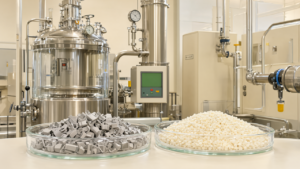
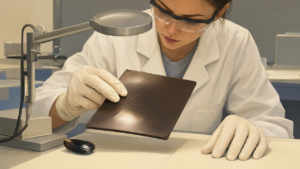
The core of this research is Toray’s 150°C heat-resistant film, developed through years of advanced polymer material technology. This film, serving as the dielectric, suppresses the degradation of electrical properties in high-temperature environments, achieving stable dielectric constant and low dielectric loss. The prototyped film capacitor utilizes a multilayer structure of this high-performance film, combining high capacitance with excellent heat resistance in a compact form factor. During demonstration tests, an inverter incorporating this capacitor was operated continuously at 150°C, confirming its stable performance. Inverters typically experience significant temperature rises due to semiconductor devices, and cooling has been a major barrier to miniaturization. The ability of this new capacitor to operate stably at an ambient temperature of 150°C dramatically increases the flexibility of thermal design, leading to reduced thermal resistance and a potential 50% reduction in the size of cooling components like heat sinks.
Background & Context
With the proliferation of next-generation mobility solutions such as electric vehicles (EVs) and hybrid vehicles (HVs), there is an increasing demand for power electronic components, particularly inverters, to be smaller, lighter, more powerful, and capable of operating at higher temperatures. High-temperature passive components are indispensable, especially when considering placement in hot environments like engine compartments. Conventional film capacitors are typically limited to 105°C to 125°C, necessitating complex and bulky cooling systems, such as water-cooling, for higher-temperature operation. The achievement by Toray and Nagoya University resolves this bottleneck, enabling the design of more efficient and compact power modules.
Strategic Significance & Outlook
This 150°C heat-resistant film capacitor and the resulting inverter miniaturization technology hold the potential to revolutionize the electrification of next-generation mobility. More compact and higher-performance inverters will contribute to extended driving ranges, shorter charging times for electric vehicles, and more efficient use of onboard space. Applications are also anticipated across a wide range of sectors requiring high efficiency and reliability in high-temperature environments, including aerospace, industrial machinery, and renewable energy conversion systems. Toray plans to leverage this technology as a core component to contribute to the evolution of mobility society and the realization of a sustainable future.
Source: https://prtimes.jp/main/html/rd/p/000000034.000163456.html
Get our weekly technology intelligence — free
Receive an infographic that lets you judge at a glance whether each field’s analysis report is worth reading.
Subscribe Free — Weekly Tech Intelligence
By subscribing, you’ll receive Troy-Technical’s weekly technology intelligence newsletter.
- Your email and selected fields are used only to deliver the newsletter.
- We never share your information with third parties.
- You can unsubscribe anytime via the link in each email.
See our Privacy Policy for details.
Takes about a minute · Unsubscribe anytime