


Key Findings
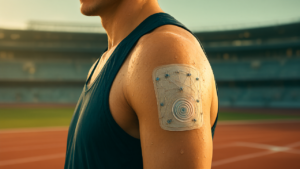
Researchers at the University of Alberta and Northumbria University have created non-invasive wearable sensors designed to track biomarkers for gout and rheumatoid arthritis using sweat. This approach provides a method for continuous monitoring, contrasting with the current reliance on intermittent clinical assessments, imaging, and serology.
Technical Details
The sensors target specific metabolic triggers and inflammatory proteins. Key biomarkers and their corresponding detection technologies include:
- Uric Acid (UA): A direct cause of gout. Potential sensing methods include electrochemical enzymatic UA sensing, single-atom nanozyme-based, electrode-based, microfluidic biosensors, and plasmonic double network hydrogels.
- Xanthines: Intermediary molecules in the metabolism of purines into uric acid. Detection options include flexible electrochemical patches, multi-enzyme biosensors, and colorimetric microfluidic devices.
- C-Reactive Protein (CRP): An inflammatory protein measured in undiluted sweat using the SWEATSENSER device (utilizing zinc oxide electrodes with CRP antibodies), the InflaStat wireless patch, or other electrochemical sensors.
- Cytokines: Detection of TNF-α is possible via graphene sensors, while IFN-γ can be detected using ZnO thin films with monoclonal antibodies on porous membranes. IL-1 and IL-6 detection is less investigated but potentially possible via the SWEATSENSER.
- Calprotectin: Measured using electrochemical immunosensors similar to the IBD AWARE and SWEATSENSER platforms.
Background & Context
Current diagnostics for rheumatic diseases are invasive and infrastructure-intensive, relying on fluid aspiration, serum assays, and imaging such as MRI, ultrasonography, and dual-energy computed tomography (DECT). These methods often fail to capture rapid physiological fluctuations preceding acute flares. The burden of these diseases is rising, with gout cases expected to reach almost 96 million worldwide by 2050, particularly in regions with low healthcare resources like Africa.
Significance & Outlook
By shifting from expensive, episodic diagnostics to continuous sweat-based sensing, medical providers can better track disease dynamics. This transition facilitates personalized therapy and earlier intervention, particularly in underserved regions where current diagnostic tools are cost-prohibitive.
Source: https://www.securities.io/sweat-sensors-bring-arthritis-monitoring-closer-to-home/
Get our weekly technology intelligence — free
Receive an infographic that lets you judge at a glance whether each field’s analysis report is worth reading.
Subscribe Free — Weekly Tech Intelligence
By subscribing, you’ll receive Troy-Technical’s weekly technology intelligence newsletter.
- Your email and selected fields are used only to deliver the newsletter.
- We never share your information with third parties.
- You can unsubscribe anytime via the link in each email.
See our Privacy Policy for details.
Takes about a minute · Unsubscribe anytime