

Key Findings
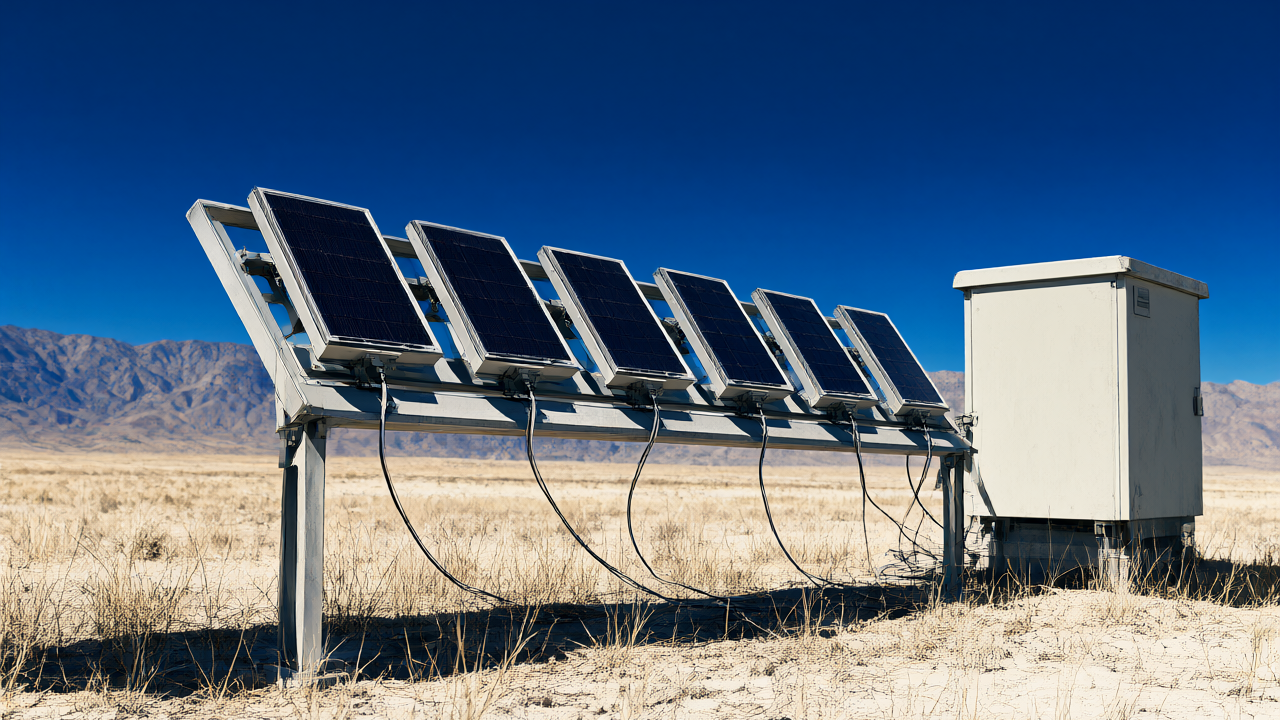
A study funded by the U.S. Department of Energy (DOE) has demonstrated that a novel hybrid polymer material significantly improves the ultraviolet (UV) stability and efficiency of perovskite solar cells (PSCs) in outdoor environments. The research, published in Science, highlights a champion module that achieved an initial efficiency increase to approximately 16% and maintained operational efficiency above 16% after 29 weeks of outdoor exposure.
Technical Details
The research team focused on p-i-n structured PSCs utilizing organic hybrid hole transport materials (HTMs). The investigation identified that degradation under sunlight with strong UV components is primarily driven by weak chemical bonding between three specific layers: the perovskite layer, the polymer HTM layer, and the transparent conducting oxide (TCO) layer.
To mitigate this, the researchers synthesized a hybrid polymer designed to strengthen the chemical bonding at the perovskite/HTM/TCO region. This approach addresses the instability caused by the interaction of perovskite thin-films with moisture, oxygen, heat, and applied voltage under fluctuating outdoor conditions of irradiance and temperature.
Background & Context
The study was led by the University of North Carolina at Chapel Hill, with contributions from the Colorado School of Mines, National Renewable Energy Laboratory (NREL), University of California, San Diego, and University of Toledo. Results were independently verified by the DOE’s Perovskite PV Accelerator for Commercializing Technologies (PACT) center.
The PACT center was established in 2021 by the DOE Solar Energy Technologies Office (SETO) to create testing and evaluation standards for the rapidly evolving perovskite PV technology, moving beyond controlled lab environments and LED light sources.
Significance & Outlook
This research represents the first published demonstration of outdoor performance for perovskite mini modules with an area greater than 15 cm2 maintaining an aperture efficiency above 16% after 29 weeks. By identifying the specific chemical bonding mechanisms that lead to UV degradation, the study provides a critical step toward the commercialization of reliable, high-efficiency perovskite photovoltaics.
Source: https://optics.org/news/nrel-examines-degradation-mechanisms-of-perovskite-solar-cells
Get our weekly technology intelligence — free
Receive an infographic that lets you judge at a glance whether each field’s analysis report is worth reading.
Subscribe Free — Weekly Tech Intelligence
By subscribing, you’ll receive Troy-Technical’s weekly technology intelligence newsletter.
- Your email and selected fields are used only to deliver the newsletter.
- We never share your information with third parties.
- You can unsubscribe anytime via the link in each email.
See our Privacy Policy for details.
Takes about a minute · Unsubscribe anytime