

Key Findings
The primary result of the field trial is a 21% increase in usable optical spectrum across an existing 500 km fiber route. Rather than focusing on a per-wavelength speed record, the trial demonstrates the ability to expand the available spectrum for Dense Wavelength Division Multiplexing (DWDM) transmission, allowing for additional wavelengths on heavily utilized backbone and DCI corridors where adding new fiber is expensive or constrained.
Technical Details
The deployment utilized Nokia’s 1830 Global Express (GX) Super C and Super L open line system. This Super C+L optical technology extends the usable spectrum beyond conventional wavelength bands. The architecture integrated the following components to provide flexibility in aggregating and transporting 400G and 800G services:
- CHMQ6 thin transponder modules
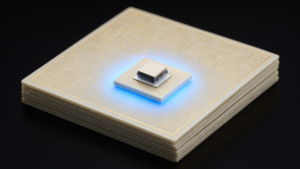
- ICE-X 400G and 800G ZR+ coherent pluggable optics
The source notes that while the usable spectrum increased by 21%, actual traffic capacity remains dependent on route engineering, OSNR, spectral efficiency, modulation, and channel spacing.
Background and Context
Arelion is evaluating this technology for its global backbone and Managed Optical Fiber Network (MOFN) services, which provide dedicated optical connectivity between infrastructure locations and data centers. The trial specifically targets the requirements of enterprises, neocloud providers, and hyperscalers that distribute AI workloads across multiple facilities.
Significance and Outlook
The trial highlights the synergy between spectrum expansion and coherent pluggables as complementary scaling mechanisms. By pairing the 1830 GX Super C/Super L system with CHMQ6 transponders and ICE-X optics, Arelion can extract more capacity from existing fiber assets to support distributed AI and cloud infrastructure. The next milestone for the project is determining if Arelion will move the Super C+L technology from field validation into broader commercial deployment.
Source: https://convergedigest.com/arelion-nokia-super-cl-optical-spectrum-amsterdam-london/
Get our weekly technology intelligence — free
Receive an infographic that lets you judge at a glance whether each field’s analysis report is worth reading.
Subscribe Free — Weekly Tech Intelligence
By subscribing, you’ll receive Troy-Technical’s weekly technology intelligence newsletter.
- Your email and selected fields are used only to deliver the newsletter.
- We never share your information with third parties.
- You can unsubscribe anytime via the link in each email.
See our Privacy Policy for details.
Takes about a minute · Unsubscribe anytime