


Key Findings
The addition of graphene oxide to culture media increases exosome yield from 1.4 billion to 2.75 billion particles per million cells. In rat models of full-thickness skin wounds, local administration of these engineered exosomes (GO-M-Exo) resulted in 97 percent wound closure by day 14, compared to 91 percent in untreated controls. Functional assays confirmed that GO-M-Exo enhances the expression of angiogenic factors including VEGF, bFGF, HGF, ANG-1, and ANG-2.
Technical Details
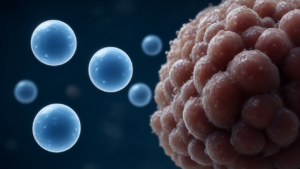
The team utilized graphene oxide nanosheets measuring 300 to 400 nanometers in width and 1.7 nanometers in thickness. When human induced pluripotent stem cells were cultured with graphene oxide at concentrations up to 20 micrograms per milliliter, the cells formed multiple small spheroids rather than a single large aggregate. This structural shift reduced hypoxic stress, evidenced by reduced HIF-1alpha signaling and altered expression of CDH1, ITGB1, and YAP1.
MicroRNA sequencing revealed that GO-M-Exo carries a distinct cargo profile, specifically altering levels of miR-126-3p, miR-130a-3p, and miR-210-5p. The therapeutic effect was proven to be VEGFR2-dependent, as the addition of the inhibitor SU5416 collapsed the enhanced network formation in Matrigel tube assays. Raman spectroscopy confirmed that the final exosome preparations were not contaminated by the graphene oxide nanomaterial.
Background & Context
Regenerative medicine is shifting toward cell-free therapies to avoid tumor risks, immune rejection, and genomic instability linked to living stem cell transplants. Exosomes—nanoscale vesicles released by cells—can deliver regenerative proteins and genetic instructions. However, clinical application has been hindered by the difficulty of producing sufficient quantities of therapeutically potent exosomes.
Significance & Outlook
The platform is extensible to lineage-specific production. When applied to vascular endothelial cells (GO-MV), the graphene oxide induced the formation of smaller aggregates that yielded 2.82 billion exosome particles per million cells, compared to 1.6 billion in conventional endothelial spheroids. This suggests a scalable method for producing specialized, high-potency vesicles for targeted tissue repair.
Get our weekly technology intelligence — free
Receive an infographic that lets you judge at a glance whether each field’s analysis report is worth reading.
Subscribe Free — Weekly Tech Intelligence
By subscribing, you’ll receive Troy-Technical’s weekly technology intelligence newsletter.
- Your email and selected fields are used only to deliver the newsletter.
- We never share your information with third parties.
- You can unsubscribe anytime via the link in each email.
See our Privacy Policy for details.
Takes about a minute · Unsubscribe anytime