

Key Findings
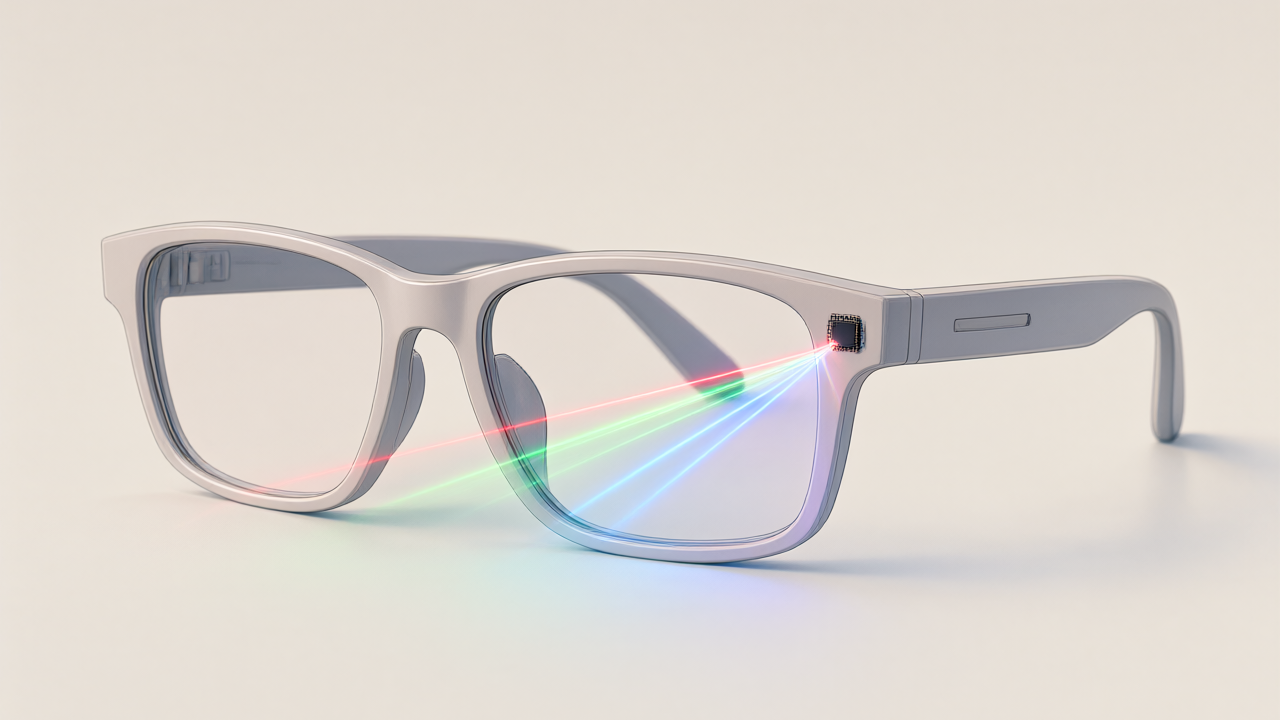
TDK Corporation has developed a photonic chip that controls laser light intensity via voltage rather than electrical current, significantly reducing power consumption and increasing switching speeds. The researchers report that the system can cut overall power consumption by more than 75% compared to conventional approaches. Furthermore, the chip achieved a modulation bandwidth of 10 gigahertz, which is sufficient to support 4K resolution and higher.
Technical Details
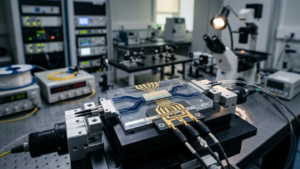
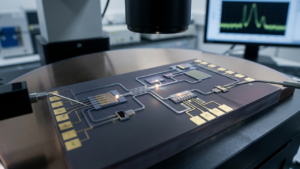
The device is fabricated using a thin film of lithium niobate, a material with electrically controllable optical properties. The architecture consists of the following components:
- Three Mach–Zehnder interferometers: One for each primary color (red, green, and blue), where applied voltage regulates the intensity of light passing through each channel.
- Multiplexer: Formed from lithium niobate waveguides to combine the three colors into a single output beam.
- MEMS scanning mirror: Integrated with the device to demonstrate the production of full-color images.
By utilizing a photonic circuit for intensity control, the design eliminates the need for neutral-density filters typically used to reduce excess laser output.
Background and Context
Conventional laser beam scanning displays produce images by steering a laser beam across a field of view. These systems typically control color intensity through direct current modulation of laser diodes. However, direct modulation has limited bandwidth compared to external optical modulation, restricting imaging resolution. Additionally, laser diodes must operate above a threshold current to maintain intensity, which increases power draw.
Significance and Outlook
This voltage-controlled approach addresses the interconnected challenges of switching speed, power consumption, and component count in the miniaturization of laser scanning displays. The 10-GHz bandwidth provides experimental evidence that external voltage control can support ultracompact, high-resolution wearable displays. Future research will focus on reducing optical losses within the lithium niobate waveguides and during the color combination process to further increase overall system efficiency.
Source: https://optics.org/news/tdk-develops-voltage-led-photonic-chip-to-make-smart-glasses-more-efficient
Get our weekly technology intelligence — free
Receive an infographic that lets you judge at a glance whether each field’s analysis report is worth reading.
Subscribe Free — Weekly Tech Intelligence
By subscribing, you’ll receive Troy-Technical’s weekly technology intelligence newsletter.
- Your email and selected fields are used only to deliver the newsletter.
- We never share your information with third parties.
- You can unsubscribe anytime via the link in each email.
See our Privacy Policy for details.
Takes about a minute · Unsubscribe anytime