

Key Findings
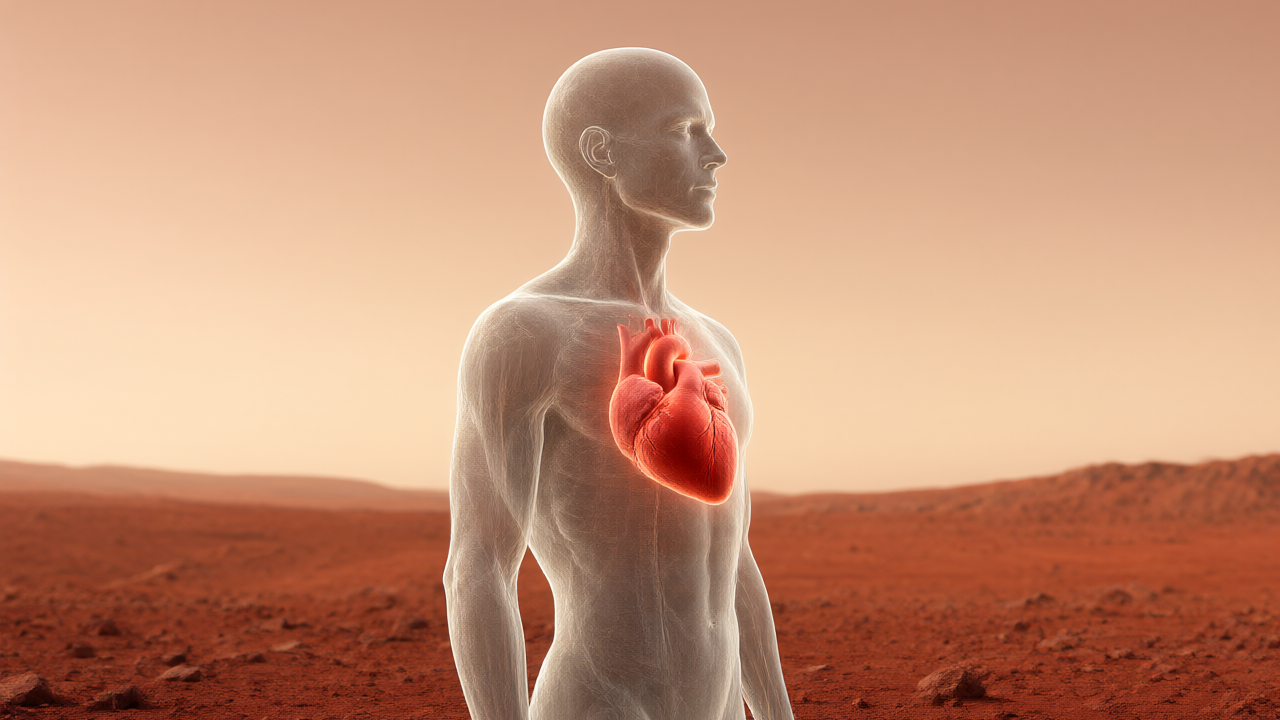
Astronauts showed no significant signs of cardiovascular strain when exposed to simulated Martian gravity after returning to Earth from six-month missions aboard the International Space Station. While initial spaceflight caused declines in heart performance, the cardiovascular system gradually adapted over time, with metrics returning to levels near those recorded before launch.
Technical Details
Researchers from Northwestern Medicine, UT Southwestern, and UT Houston utilized echocardiograms to monitor heart structure and pumping efficiency. The study tracked two primary metrics: cardiac filling (the volume of blood entering the heart between beats) and stroke volume (the amount of blood pumped out per contraction). Data revealed that both measurements decreased during the first two weeks in space but improved as the astronauts adapted to the microgravity environment.
To mitigate the loss of muscle and cardiac mass caused by reduced physical demand in space, astronauts followed NASA’s Exercise Countermeasures program. This regimen consisted of up to two hours of daily activity:
- 30 to 45 minutes of endurance training to strengthen the cardiovascular system.
- 60 to 75 minutes of resistance training to preserve muscle mass and strength.
Background & Context
In microgravity, the heart no longer works against gravity to circulate blood, which can lead to organ shrinkage. A primary concern for Mars missions is orthostatic hypotension—a drop in blood pressure upon returning to a gravitational environment that causes dizziness or lightheadedness. Mars possesses approximately 38% of Earth’s surface gravity, requiring the heart to function differently than it does in weightlessness.
Significance & Outlook
This study, published in the journal Circulation, is the first to investigate heart response to simulated Martian gravity following extended spaceflight. The results provide evidence that the combination of biological adaptation and rigorous exercise protocols allows the human heart to withstand the transition from microgravity to the weaker gravity of the Red Planet.
Source: https://sciencedaily.com/releases/2026/10/261020085016.htm
Get our weekly technology intelligence — free
Receive an infographic that lets you judge at a glance whether each field’s analysis report is worth reading.
Subscribe Free — Weekly Tech Intelligence
By subscribing, you’ll receive Troy-Technical’s weekly technology intelligence newsletter.
- Your email and selected fields are used only to deliver the newsletter.
- We never share your information with third parties.
- You can unsubscribe anytime via the link in each email.
See our Privacy Policy for details.
Takes about a minute · Unsubscribe anytime