


Key Findings
The Japan Aerospace Exploration Agency (JAXA) successfully deployed the Martian Moons eXploration (MMX) probe on Tuesday, October 20, 2026. The mission was initiated via the No. 10 H3 rocket, which lifted off from the Tanegashima Space Center in Kagoshima Prefecture at 4:41 a.m. The rocket placed the MMX into its planned orbit approximately 1 hour and 11 minutes after launch.
Technical Details
The launch marks a significant milestone for the H3 rocket’s reliability. Following three consecutive successful launches, the H3 rocket’s success rate has now reached 80 pct. Yasuhiro Kawakatsu, professor at JAXA’s Institute of Space and Astronautical Science and MMX mission leader, confirmed that the probe is currently in a stable condition.
Background & Context
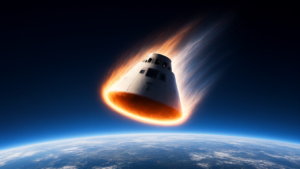
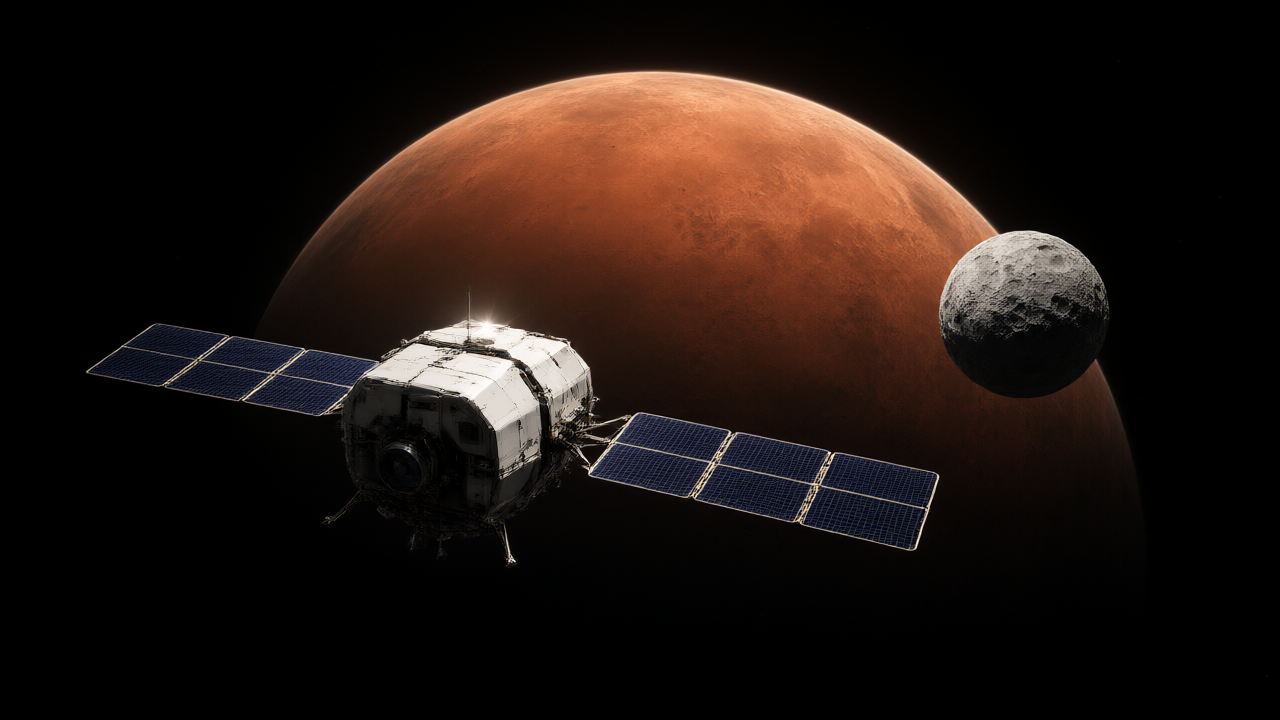
The MMX mission is designed as a sample-return operation. The probe is slated to land on Phobos, a Martian moon, to collect sand samples. The mission architecture includes a return journey to Earth, with the arrival scheduled for 2031. Makoto Arita, manager of JAXA’s H3 project team, noted that the H3 rocket has effectively opened the first chapter of this mission.
Significance & Outlook
If the mission achieves its objectives, it will represent the world’s first sample return mission from a Martian moon and the first round-trip voyage to the Martian system. The data and physical samples recovered are expected to provide critical insights into:
- The origins of Mars and its moons.
- The origin of life on Earth.
Get our weekly technology intelligence — free
Receive an infographic that lets you judge at a glance whether each field’s analysis report is worth reading.
Subscribe Free — Weekly Tech Intelligence
By subscribing, you’ll receive Troy-Technical’s weekly technology intelligence newsletter.
- Your email and selected fields are used only to deliver the newsletter.
- We never share your information with third parties.
- You can unsubscribe anytime via the link in each email.
See our Privacy Policy for details.
Takes about a minute · Unsubscribe anytime