


Key Findings
Research into the synthesis of nickel-rich cathode materials indicates that a residence time of eight seconds during spray pyrolysis yields the best electrochemical performance for NCM811. Particles produced under this condition exhibited a discharge capacity of 203 mAh/g at 0.1 C, superior rate capability, and excellent cycling stability. These particles were characterized by a well-defined spherical morphology, an average size of 2 μm, and a uniform composition.
Technical Details
The study utilized a force analysis method to calculate residence time and evaluate the conversion of droplets into solid particles. Researchers compared four specific residence-time conditions: 2.5, 6, 8, and 15 seconds. The data revealed that as residence time increased, droplets moved more slowly through the reactor, leading to more extensive evaporation and pyrolysis, which resulted in smaller precursor particles.
Following the annealing process, the eight-second samples maintained favorable structural features, specifically a well-ordered layered structure with minimal Li+/Ni2+ disorder. This structural integrity is directly linked to the improved electrochemical behavior observed during testing.
Background and Context
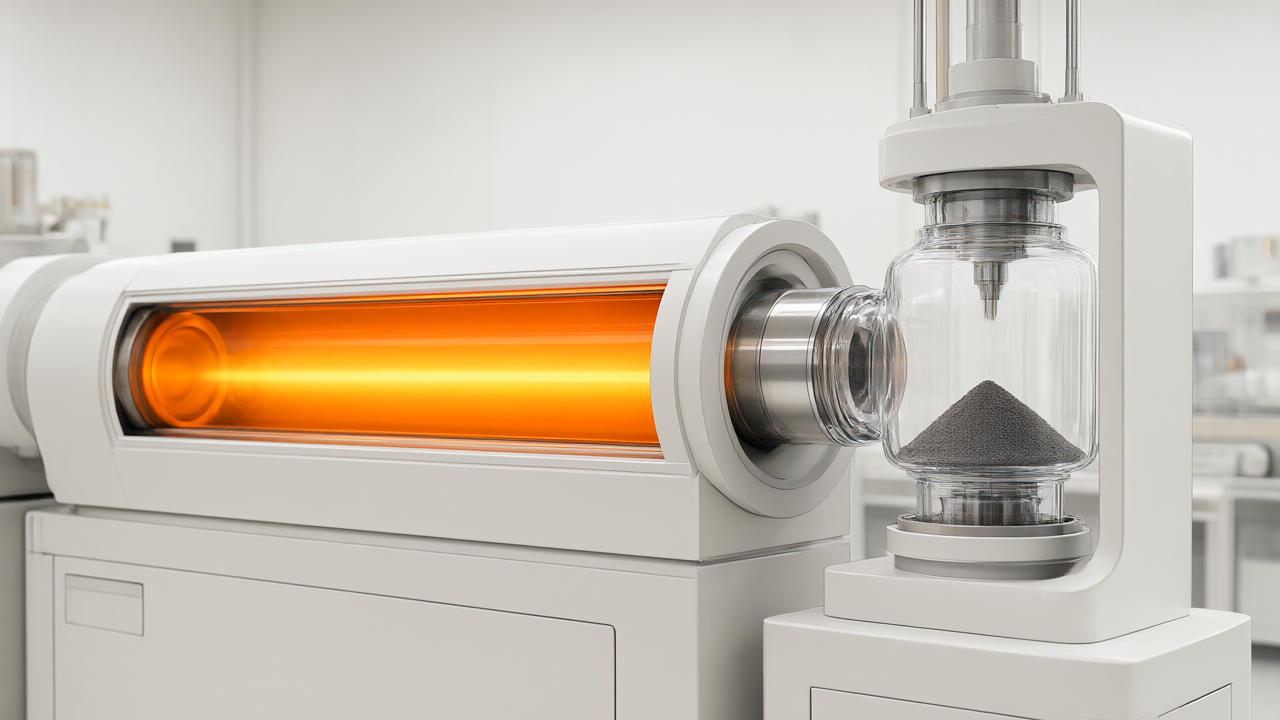
Spray pyrolysis was examined as a scalable, one-step continuous synthesis method for cathode materials. While the conversion of droplets to solid particles is known to affect the final material properties, the detailed influence of residence time had previously been insufficiently characterized. This research focused on how droplet motion, evaporation, and decomposition vary based on the time spent in the reactor.
Significance and Outlook
The results demonstrate that residence time is an effective experimental variable for regulating particle formation without requiring changes to the NCM811 chemical composition. However, the study’s scope is limited to laboratory-scale synthesis and a single nickel-rich composition. It remains undetermined if these optimum conditions apply to other cathode chemistries or different industrial reactor configurations.
Get our weekly technology intelligence — free
Receive an infographic that lets you judge at a glance whether each field’s analysis report is worth reading.
Subscribe Free — Weekly Tech Intelligence
By subscribing, you’ll receive Troy-Technical’s weekly technology intelligence newsletter.
- Your email and selected fields are used only to deliver the newsletter.
- We never share your information with third parties.
- You can unsubscribe anytime via the link in each email.
See our Privacy Policy for details.
Takes about a minute · Unsubscribe anytime