Key Findings
Tesla has achieved significant further refinements in its dry electrode technology, a core component of its electric vehicle (EV) battery manufacturing process within Gigafactories, leading to a substantial increase in production efficiency. This continuous technological innovation enables dramatic reductions in energy consumption and costs associated with battery manufacturing, further strengthening the company’s EV production capabilities. This advancement has the potential to significantly impact the efficiency and sustainability of the entire battery manufacturing industry.
Technical / Clinical Details
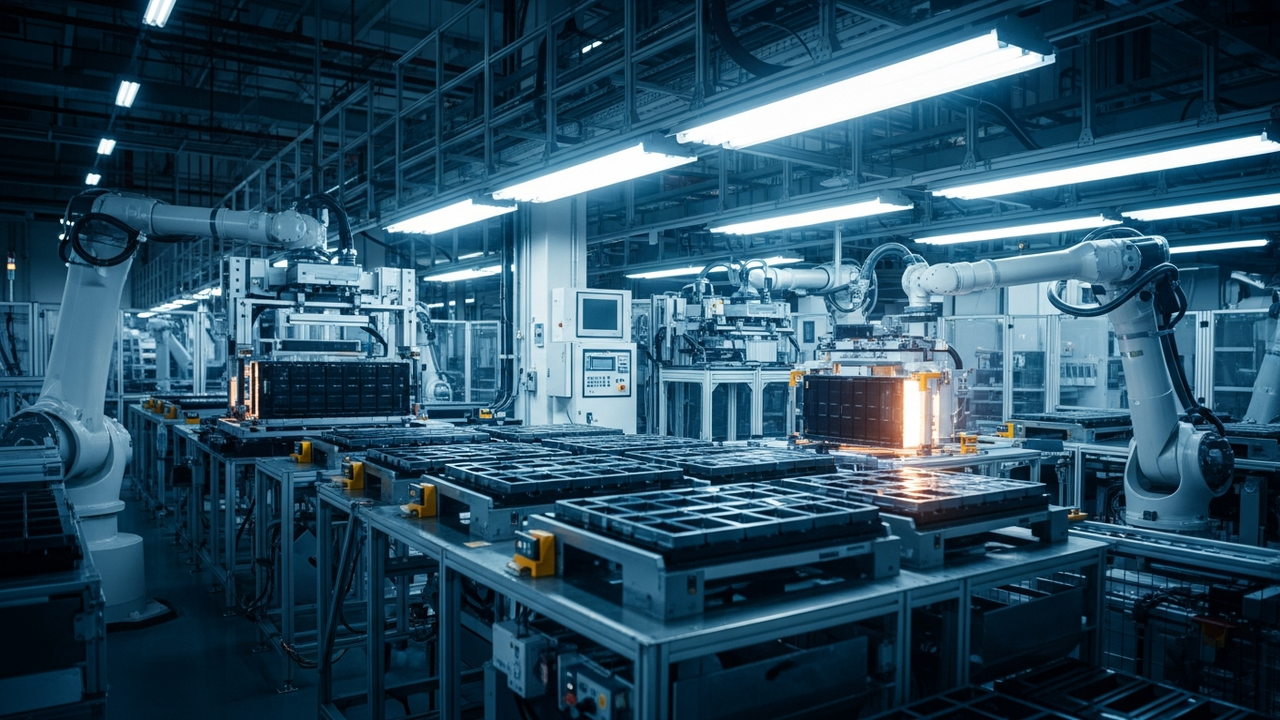
Tesla’s Dry Electrode Process (DEP) is a revolutionary solvent-free method for electrode material manufacturing. Traditional wet processes require dispersing electrode materials in a solvent, followed by a drying step, which incurs substantial energy consumption, capital expenditure, and time loss. In DEP, active electrode material, conductive agents, and binders are directly mixed and then rolled into a film to form the electrode. The recent improvements focus on enhancing uniformity in this rolling process, optimizing electrode mechanical strength, and improving ion conductivity. This leads to a reduction in electrode defects, improved battery cell performance, and an increase in manufacturing speed, reportedly reducing energy consumption by up to a factor of 10 compared to the traditional wet process.
Background & Context
Batteries constitute a significant portion of an electric vehicle’s cost, making manufacturing cost reduction crucial for EV price competitiveness and widespread adoption. Furthermore, battery manufacturing is energy-intensive, making environmental impact reduction a challenge for the entire industry. Tesla’s dry electrode process is anticipated as a fundamental solution to these challenges and serves as a key pillar of its cost leadership strategy. While other battery manufacturers are also working on similar dry processes, Tesla holds an advantage as a pioneer in applying this technology at a practical, large scale.
Strategic Significance & Outlook
Tesla’s ongoing refinements to the dry electrode process will further enhance its battery cell manufacturing capacity and cost competitiveness, directly contributing to an increase in EV production volumes. If this technology is fully optimized across all Gigafactories, it could alleviate battery supply constraints and potentially drive down the final cost of EVs even further. In the long term, the dry electrode process is expected to become a new industry standard for battery manufacturing, promoting decarbonization and efficiency across the global battery supply chain. This advancement by Tesla is not merely a production technology improvement but a critical factor accelerating the global transition to sustainable transportation.
Source: #
Get our weekly technology intelligence — free
Receive an infographic that lets you judge at a glance whether each field’s analysis report is worth reading.
Subscribe Free — Weekly Tech Intelligence
By subscribing, you’ll receive Troy-Technical’s weekly technology intelligence newsletter.
- Your email and selected fields are used only to deliver the newsletter.
- We never share your information with third parties.
- You can unsubscribe anytime via the link in each email.
See our Privacy Policy for details.
Takes about a minute · Unsubscribe anytime









Comments