


Key Findings
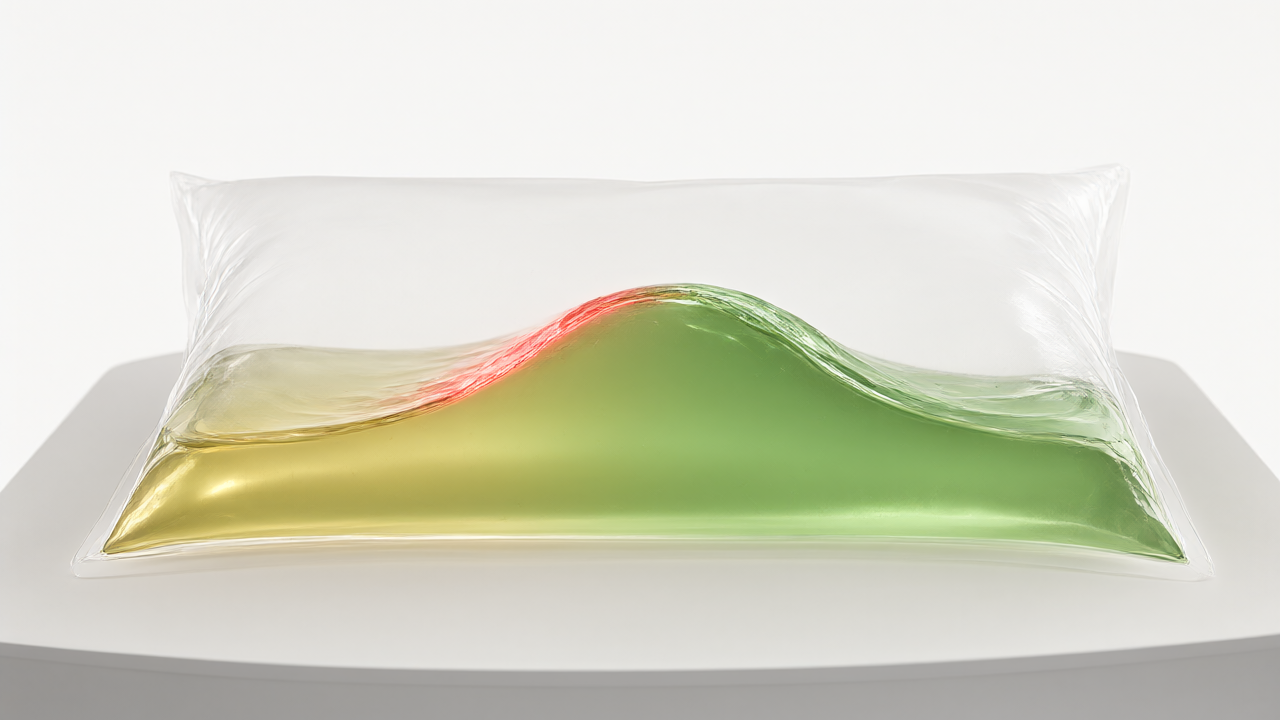
Numerical and experimental analysis reveals that while average shear rates in rocking disposable bioreactors remain below 22.5 s⁻¹, localized maximum shear rates can soar past 30,000 s⁻¹ under intensified rocking conditions. This creates “hydrodynamic hotspots” that far exceed the lethal threshold of 1500 s⁻¹ identified for HL-60 lymphocytes. Consequently, cells passing through these microzones—specifically near bag walls, wave crests, or the gas-liquid interface—face mechanical destruction of the lipid bilayer.
Technical Details
Researchers from Warsaw University of Technology utilized a two-dimensional Computational Fluid Dynamics (CFD) model employing the Volume of Fluid method to track the interface between the liquid medium and gas headspace. The model’s predictive accuracy was validated against experimental mixing time measurements, showing an absolute mean percentage difference of 29.2 percent.
To establish the biological limits, a rotational rheometer was used to expose HL-60 lymphocytes to controlled shear. The findings include:
- 1000 s⁻¹: Cell viability begins to decline as membranes rupture.
- 1500 s⁻¹: Total disintegration of cells occurs.
- Verification: Membrane damage was confirmed by measuring elevated lactate dehydrogenase (LDH) activity in the culture supernatant.
Background & Context
Rocking disposable bioreactors are preferred for shear-sensitive animal cell cultures, such as lymphocytes and stem cells, because they avoid the impeller-driven turbulence of stirred tanks. HL-60 cells, a human promyelocytic leukemia cell line, were used as a model for lymphocyte-like cells due to their sensitivity to hydrodynamic stress.
Significance & Outlook
The study identifies a fundamental trade-off: the higher rocking angles and frequencies required to improve oxygen transfer and mixing intensification simultaneously generate lethal shear zones. This has significant implications for the biopharmaceutical manufacturing of viral vectors and cell therapies. The developed computational framework allows engineers to simulate shear rate distributions to optimize rocking parameters and guide the scale-up of disposable systems by predicting the impact of bag geometry and liquid volume.
Get our weekly technology intelligence — free
Receive an infographic that lets you judge at a glance whether each field’s analysis report is worth reading.
Subscribe Free — Weekly Tech Intelligence
By subscribing, you’ll receive Troy-Technical’s weekly technology intelligence newsletter.
- Your email and selected fields are used only to deliver the newsletter.
- We never share your information with third parties.
- You can unsubscribe anytime via the link in each email.
See our Privacy Policy for details.
Takes about a minute · Unsubscribe anytime