

Key Findings
The study demonstrates that unsupervised machine learning via PCA can systematically organize complex spectral data to track the degradation of filler-containing epoxy formulations. A critical finding is that the curing agent dictates the degradation trajectory: while TETA and AMAM systems showed clearly distinguishable factors at 63 °C, the MDA system’s water-related and oxidation-related variations were strongly superimposed at the same temperature, only separating at 87 °C.
Technical Details
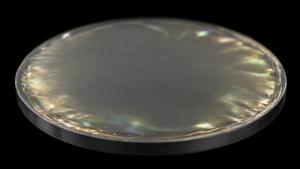
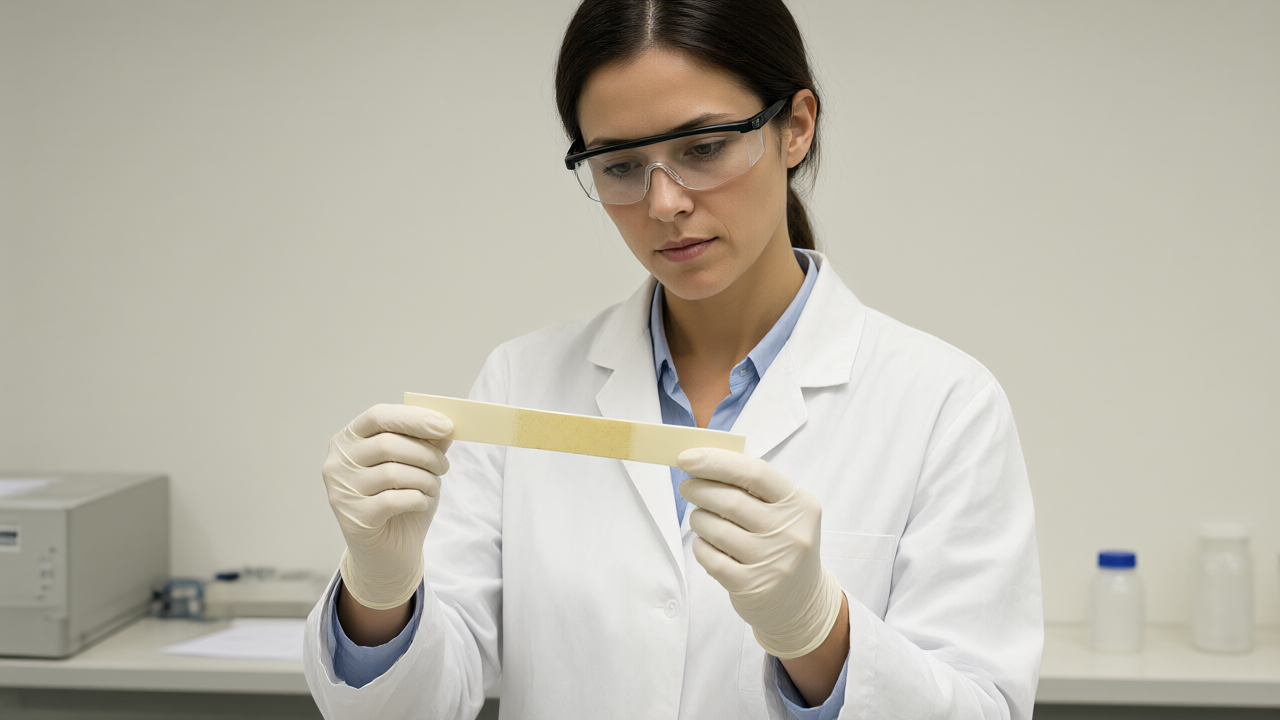
The researchers tested three curing agents—triethylenetetramine (TETA), p,p’-methylenedianiline (MDA), and POLYMIDE L-4051 (AMAM)—mixed into a base resin from Cemedine Co., Ltd. containing silica, calcium carbonate, and calcium oxide. Specimens were cast as 0.3-millimeter-thick sheets and subjected to accelerated aging: water immersion at 63 °C and 87 °C, and humid air at 120 °C with 100 percent relative humidity.
Analysis involved measuring bulk tensile strength and recording infrared spectra using a handheld FTIR spectrometer. PCA captured approximately 90 percent of the variance across the first three principal components, which mapped to three themes:
- Moisture-related signals (OH stretching region at 3000 to 3600 per centimeter).
- Oxidation-associated processes (carbonyl, CO, and CN vibrations near 1700 and 1100 per centimeter).
- Filler phase signatures (calcium carbonate bands near 700, 900, and 1400 per centimeter).
Background & Context
The AMAM system exhibited a unique non-monotonic strength profile, where tensile strength dropped, partially recovered, and then fell again. The initial drop is attributed to plasticization from water ingress. The subsequent recovery tracked the second principal component, suggesting that interactions between water and amidoamine groups may induce network relaxation. The final strength loss at 87 °C coincided with changes in the calcium carbonate-associated factor.
Significance & Outlook
The sensitivity of the PCA method allowed the detection of anomalies that would otherwise be missed, such as outliers in the AMAM system at 168 hours. By linking raw spectral variations to mechanical failure without model-dependent assumptions, this approach provides a framework for understanding the complex chemistry of adhesive aging in industrial applications.
Get our weekly technology intelligence — free
Receive an infographic that lets you judge at a glance whether each field’s analysis report is worth reading.
Subscribe Free — Weekly Tech Intelligence
By subscribing, you’ll receive Troy-Technical’s weekly technology intelligence newsletter.
- Your email and selected fields are used only to deliver the newsletter.
- We never share your information with third parties.
- You can unsubscribe anytime via the link in each email.
See our Privacy Policy for details.
Takes about a minute · Unsubscribe anytime