

Key Findings
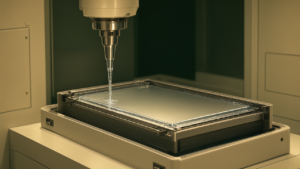
The Korea Research Institute of Chemical Technology has developed a “transfer-printing” process that enables the production of a uniform solid electrolyte film with an average thickness of 15 micrometers and a variation of approximately 1 micrometer across a 120 square centimeter area. Cells utilizing this method retained 83.6 percent of their initial capacity after 100 charge-discharge cycles, compared to only 36.1 percent for cells produced via conventional direct-coating methods.
Technical Details
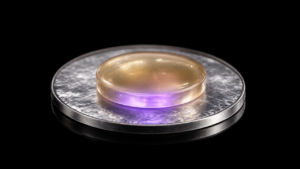
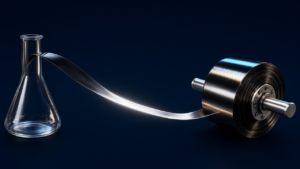
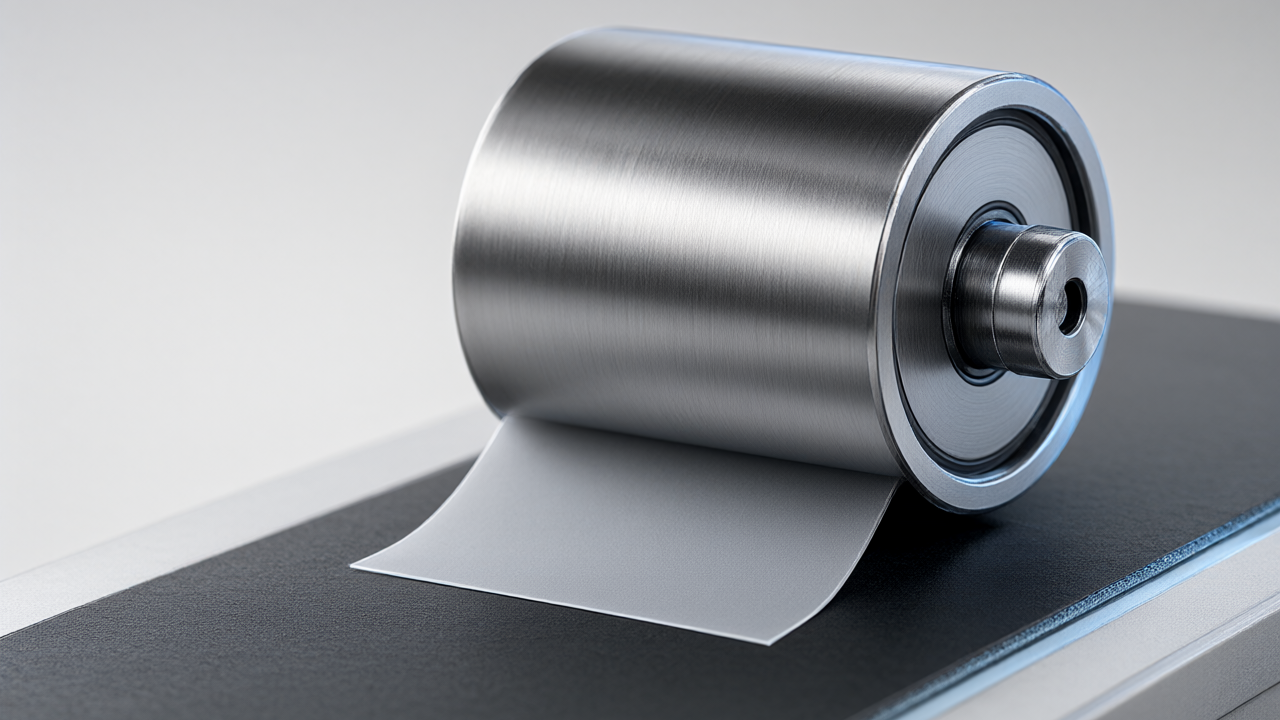
The team utilized LLZTO, a garnet-type oxide solid electrolyte. Unlike conventional methods where liquid electrolytes are applied directly to electrodes—often causing seepage, electrode deformation, and uneven thickness—the transfer-printing process involves coating the electrolyte onto a separate substrate, drying it, and then pressing it onto the electrode using a roller. To optimize the material combination, researchers applied the Hansen Solubility Parameter (HSP) to ensure the electrolyte spreads evenly during coating and releases cleanly during transfer.
Performance metrics include:
- Lithium-ion conductivity: Approximately 50 percent higher than conventional polyethylene separators.
- Lithium-ion transference number: Approximately twice as high as the comparison group.
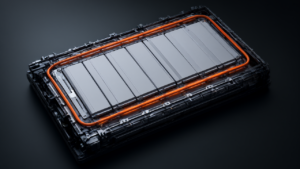
- Thermal stability: Pouch-type cells remained stable at 150 degrees Celsius for two hours and 30 minutes, whereas polyethylene separator-based cells suffered internal short circuits and voltage drops within 10 minutes.
Background & Context
All-solid-state batteries are targeted for electric vehicles and energy storage systems to reduce fire risks and increase energy density. However, commercialization has been hindered by the difficulty of producing thin, uniform films; conventional manufacturing typically required thicknesses of 70 to 120 micrometers to prevent tearing.
Significance & Outlook
The transfer-printing technique is expected to integrate with roll-to-roll continuous production to improve manufacturing efficiency and reduce defect rates in large-area applications. While pouch-type cells showed a capacity retention rate of 81.6 percent after 100 cycles, the researchers noted that further verification of production yield, manufacturing costs, and long-term cycle life is required before commercial deployment.
Source: https://biz.heraldcorp.com/article/10914778
Get our weekly technology intelligence — free
Receive an infographic that lets you judge at a glance whether each field’s analysis report is worth reading.
Subscribe Free — Weekly Tech Intelligence
By subscribing, you’ll receive Troy-Technical’s weekly technology intelligence newsletter.
- Your email and selected fields are used only to deliver the newsletter.
- We never share your information with third parties.
- You can unsubscribe anytime via the link in each email.
See our Privacy Policy for details.
Takes about a minute · Unsubscribe anytime