

Key Findings
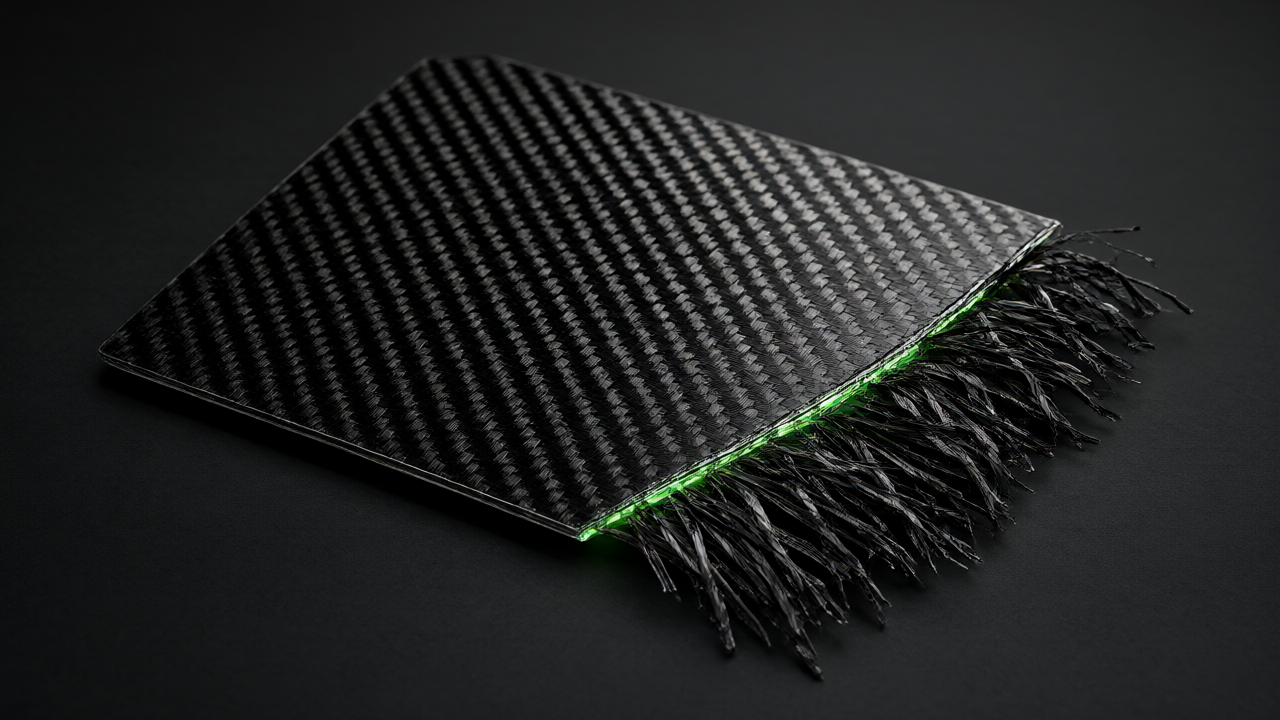
The study demonstrates that CO2-derived vitrimer composites can match the tensile performance of conventional epoxy-based carbon fiber composites. In tensile testing, the vitrimer composite reached a strength of 495 MPa and a Young’s modulus of 39 GPa, compared to 514 MPa and 41 GPa for the conventional epoxy. However, a significant gap exists in flexural strength, where the vitrimer composite recorded 385 MPa against the epoxy’s 667 MPa.
Technical Details
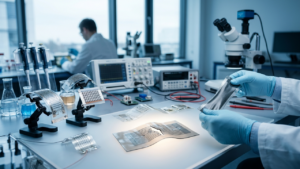
The vitrimer composites were fabricated using hot compression molding. Unlike traditional thermosets, vitrimers utilize bond exchange reactions to undergo topological rearrangement, allowing the material to be repaired and reprocessed. Technical analysis revealed the following:
- Flexural Performance: The vitrimer’s flexural modulus was 42 GPa, slightly lower than the epoxy’s 45 GPa. The strength deficit is attributed to matrix softening and interfacial debonding caused by the bond exchange reactions.
- Thermomechanical Properties: Dynamic mechanical analysis showed a reduced storage modulus and an earlier onset of the glass transition temperature for the vitrimer, indicating higher molecular mobility and lower high-temperature structural stability.
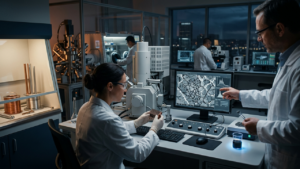
- Fracture Morphology: SEM analysis showed matrix cracking and fiber pull-out in vitrimer composites, whereas the epoxy composite exhibited brittle failure.
- Recyclability: Recycled vitrimer composites retained a flexural strength of 256 MPa and a flexural modulus of 40 GPa. The strength loss was attributed to fiber breakage during initial failure rather than the reprocessing step.
Background & Context
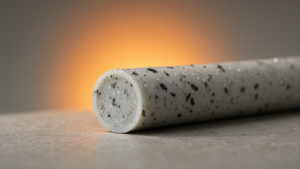
Carbon fiber-reinforced polymer composites are highly valued for stiffness and strength, but their thermoset matrices make end-of-life recycling difficult. This research compares a recyclable vitrimer matrix derived from CO2 against conventional epoxy to determine if structural performance can be maintained while adding the ability to reprocess the material.
Significance & Outlook
The results indicate that CO2-derived vitrimers combine mechanical integrity with reprocessability. While flexural properties and thermomechanical stability currently trail conventional benchmarks, the potential for cost advantages in recycling extends the suitability of these materials for high-performance carbon fiber applications.
Get our weekly technology intelligence — free
Receive an infographic that lets you judge at a glance whether each field’s analysis report is worth reading.
Subscribe Free — Weekly Tech Intelligence
By subscribing, you’ll receive Troy-Technical’s weekly technology intelligence newsletter.
- Your email and selected fields are used only to deliver the newsletter.
- We never share your information with third parties.
- You can unsubscribe anytime via the link in each email.
See our Privacy Policy for details.
Takes about a minute · Unsubscribe anytime