

Key Findings
Japan’s National Institutes for Quantum Science and Technology (QST), Tohoku University, and a consortium of partners have developed an automated experimental system that reduces the time required for hydrogen-storage alloy preparation and testing. The process now takes two to three hours per sample, a significant reduction from the previous requirement of two to three days. The system is capable of evaluating up to 10 different compositions consecutively.
Technical Details
The system is the first of its kind to automate the entire sequence of alloy fabrication, hydrogen absorption treatment, composition analysis, and hydrogen-release evaluation. An automated transfer robot connects several chambers dedicated to substrate loading, thin-film alloy deposition, hydrogen absorption, composition analysis, and release testing. To optimize efficiency, the system only sends samples that have successfully absorbed hydrogen to the release testing stage.
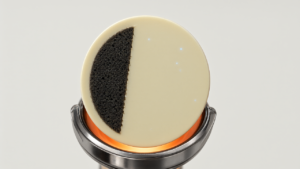
A primary engineering hurdle involved integrating high-vacuum alloy deposition with high-pressure hydrogen absorption. The team resolved this by placing a pressure-resistant vessel inside the hydrogen-treatment chamber; this allows the inner vessel to be pressurized with hydrogen while the surrounding chamber remains under high vacuum.
Background & Context
Hydrogen-storage alloys allow for compact solid-state storage by absorbing hydrogen between metal atoms. However, performance varies based on elemental proportions, and current alloys often face cost and weight constraints due to a reliance on rare metals and rare-earth elements. The development team includes the Institute for Molecular Science, R-DEC, and AVC, with support from the Japan Science and Technology Agency’s GteX program.
Significance & Outlook
The group intends to integrate experimental data with artificial intelligence to enable autonomous materials development, where AI proposes new compositions and conditions based on previous results. Future plans include linking the system with QST’s synchrotron research to use intense X-rays for observing absorption and release processes. R-DEC has commercialized the system, with an exhibition scheduled for October 26 in Sendai at the 19th International Symposium on Material-Hydrogen Systems.
Source: https://jp.ibtimes.com/qst-cuts-hydrogen-storage-alloy-experiments-days-2-3-hours-104919
Get our weekly technology intelligence — free
Receive an infographic that lets you judge at a glance whether each field’s analysis report is worth reading.
Subscribe Free — Weekly Tech Intelligence
By subscribing, you’ll receive Troy-Technical’s weekly technology intelligence newsletter.
- Your email and selected fields are used only to deliver the newsletter.
- We never share your information with third parties.
- You can unsubscribe anytime via the link in each email.
See our Privacy Policy for details.
Takes about a minute · Unsubscribe anytime