


Key Findings
A study published in Science China Chemistry (DOI: 10.1007/s11426-026-3487-0) demonstrates that modifying carbon nanotubes with hydroxyl groups (–OH) drastically improves the cycle life of aqueous zinc-iodine batteries. In small-cell testing at 1 A/g, the battery delivered an initial reversible capacity of 175.5 mAh/g and retained 89.34% of that capacity after more than 10,000 cycles, a test period exceeding 3,500 hours. Furthermore, at a higher current density of 10 A/g, the cell showed an initial capacity of 120 mAh/g and reached 93,400 cycles.
Technical Details
The research team used density functional theory (DFT) to determine which functional groups best capture polyiodide ions. They compared pristine CNTs against those functionalized with carboxyl (–COOH), amino (–NH2), and hydroxyl (–OH) groups. The DFT calculations identified the hydroxyl group as having the strongest adsorption affinity, with a calculated adsorption energy of −7.42 eV and an interaction energy of −5.69 eV for triiodide ions (I3−).
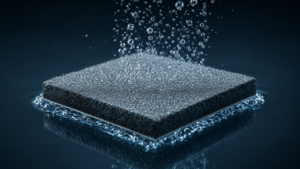
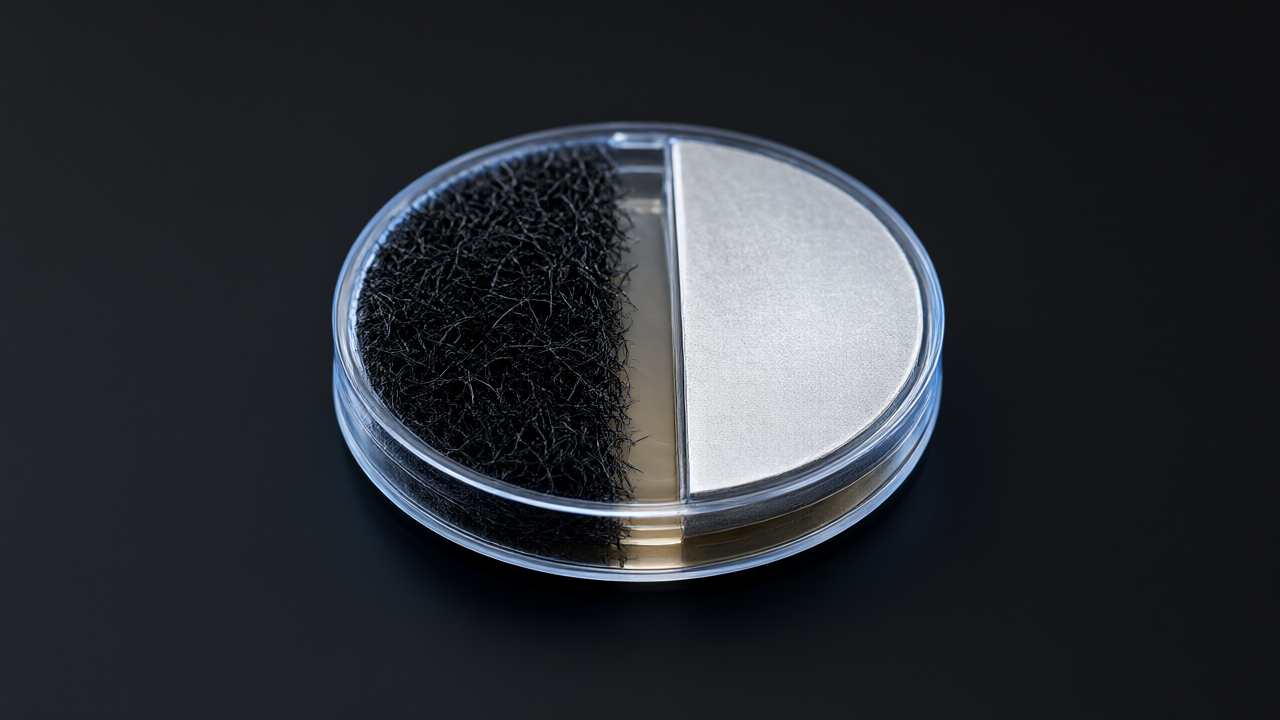
Based on these results, the team fabricated a hydroxyl-functionalized free-standing carbon nanotube sheet electrode (SSCC-OH). This cathode features a specific surface area of approximately 1,005 m2/g. The combination of this high surface area and the three-dimensional nanotube structure provides both chemical adsorption and physical confinement of the iodine species.
Background & Context
Aqueous zinc batteries are viewed as safer alternatives to lithium-ion batteries because they utilize non-flammable water-based electrolytes. However, zinc-iodine variants suffer from the “shuttle effect,” where polyiodide ions dissolve into the electrolyte and migrate to the zinc anode. This causes self-discharge, anode corrosion, and loss of active material. While previous attempts to mitigate this involved using microporous carbon or adding heteroatoms, a systematic design principle for selecting the most effective surface functional groups had not been established.
Significance & Outlook
By focusing on the surface chemistry of the cathode rather than modifying the anode, this approach provides a pathway to stable, long-term operation for large-scale storage and home battery systems. The ability to maintain high capacity over tens of thousands of cycles addresses a primary barrier to the practical application of aqueous zinc-iodine technology.
Source: https://xenospectrum.com/en/functionalized-cnt-aqueous-zinc-iodine-battery/
Get our weekly technology intelligence — free
Receive an infographic that lets you judge at a glance whether each field’s analysis report is worth reading.
Subscribe Free — Weekly Tech Intelligence
By subscribing, you’ll receive Troy-Technical’s weekly technology intelligence newsletter.
- Your email and selected fields are used only to deliver the newsletter.
- We never share your information with third parties.
- You can unsubscribe anytime via the link in each email.
See our Privacy Policy for details.
Takes about a minute · Unsubscribe anytime