

Key Findings
Researchers from the Chinese Academy of Sciences (CAS), Peking University, and the Shanghai Institute of Optics and Fine Mechanics (SIOM) have set a new world record for the coldest temperature ever achieved by humans. By cooling a cloud of rubidium atoms to 9.7 picokelvin, the team surpassed the previous record of 38 picokelvin set by a German team in 2021. The atoms remained stable for observation for seven seconds, a significant increase over the roughly 1 second possible on the International Space Station and 0.05 seconds in ground-based experiments.
Technical Details
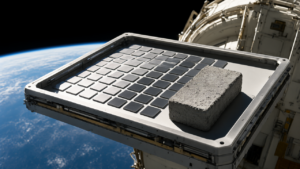
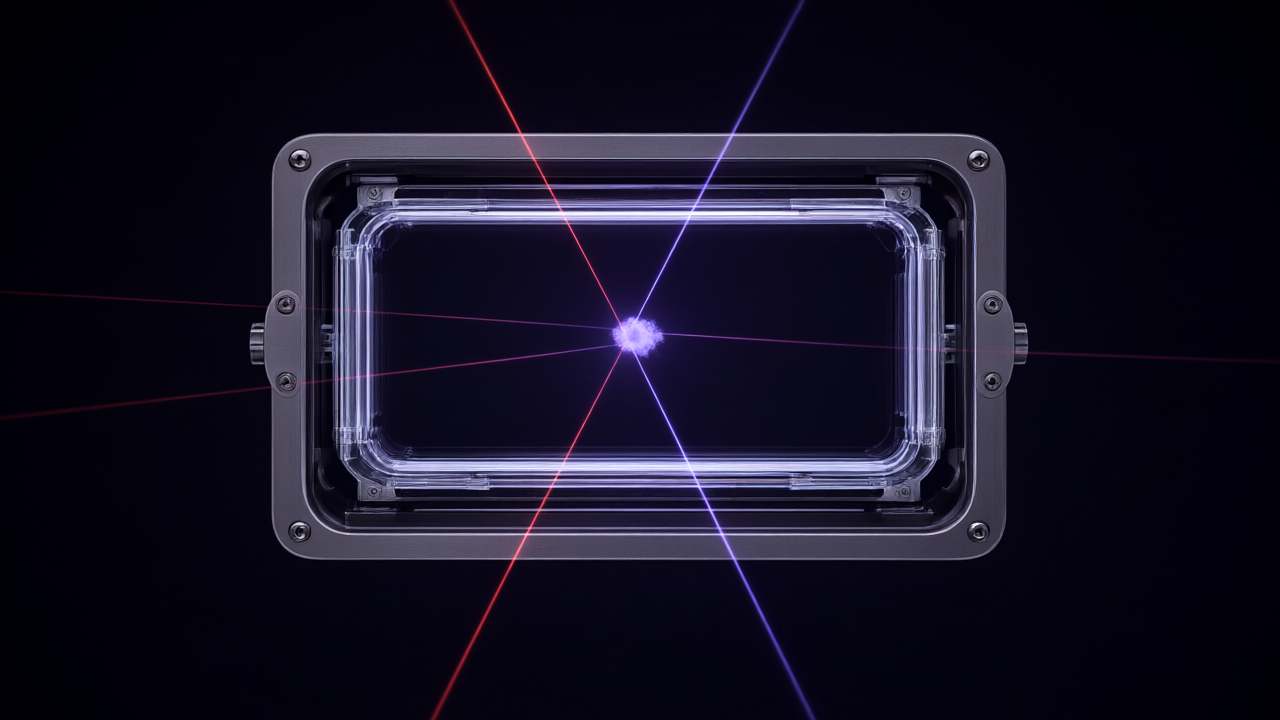
The experiment utilized the ultra-cold atom physics rack aboard the Mengtian module. The team employed an all-optical trap to hold the atom cloud, followed by laser intensity reduction for evaporative cooling and a final “non-adiabatic diffusion” deep-cooling step. This all-optical approach offers several advantages over international magnetic-trap methods, including reduced sensitivity to magnetic interference, easier precision control in space, and increased optical access.
To fit the system into the space station, engineers condensed a ground-based system measuring 20 cubic meters and weighing 10 tonnes into a rack of 0.7 cubic meters and 0.5 tonnes. This required overcoming challenges in high-power fiber lasers, ultra-high vacuum systems, and long-term laser frequency stabilization.
Background and Context
The project began feasibility studies in 2011, with the experimental system launched in 2022. The research, published in the journal Science, leverages microgravity to allow weaker confinement of atoms, which enables lower temperatures and longer observation windows.
Significance and Outlook
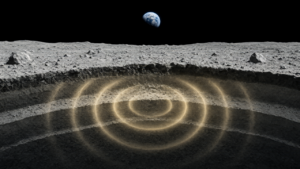
Reaching temperatures near absolute zero (approximately minus 273.15 degrees Celsius) stretches de Broglie wavelengths to observable scales, making quantum effects more controllable. This platform supports the development of high-precision atomic clocks, quantum computing, and atom-interferometry inertial measurement. Furthermore, the ability to observe fainter physical phenomena allows for the study of phase transitions, non-equilibrium dynamics, early-universe simulation, and ultralight dark matter detection.
Source: https://english.news.cn/20261106/b1e05437fb304f60bf51fc68299dfd4f/c.html
Get our weekly technology intelligence — free
Receive an infographic that lets you judge at a glance whether each field’s analysis report is worth reading.
Subscribe Free — Weekly Tech Intelligence
By subscribing, you’ll receive Troy-Technical’s weekly technology intelligence newsletter.
- Your email and selected fields are used only to deliver the newsletter.
- We never share your information with third parties.
- You can unsubscribe anytime via the link in each email.
See our Privacy Policy for details.
Takes about a minute · Unsubscribe anytime