Key Findings
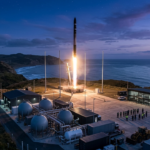
Dr Byrenn Birch of the University of Southern Queensland (UniSQ) successfully utilized a computed tomographic imaging spectrometer (CTIS) to capture images of spacecraft breaking apart during the KREPE-3 observation campaign. Conducted on 12 October 2026 over the Pacific Ocean from Rarotonga in the Cook Islands, the mission marked the first reported use of CTIS technology to document spacecraft breakup during atmospheric re-entry.
Technical Details
The CTIS differs from conventional cameras by capturing spatial and color information simultaneously across more than 500 colors, whereas standard cameras record only three primary colors. This capability allows researchers to analyze various materials and physical processes as they occur. Additionally, the CTIS can capture information from multiple objects within a single image, which is essential for monitoring several fragments during a re-entry event.
UniSQ provided four instruments for the campaign:
- The CTIS spectrometer
- A tracking camera
- A conventional imaging spectrometer
- A specialized filtered camera designed to detect carbon signatures associated with spacecraft breakup
Background & Context
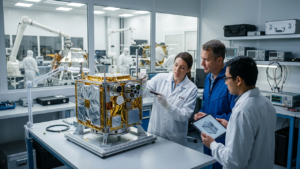
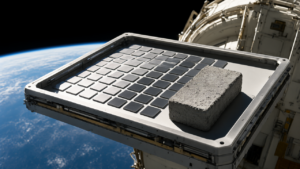
The observation mission involved the re-entry of 12 experimental capsules developed by UniSQ, the University of Kentucky, the University of Stuttgart, and Zafiro Systems. These capsules were designed to test how different thermal protection systems and materials respond to extreme temperatures and aerodynamic forces. The project was supported by the Australian Government’s iLAuNCH Trailblazer program and builds upon research funded by an Australian Research Council Discovery Early Career Researcher Award (DECRA).
Significance & Outlook
Ongoing analysis of the collected data is expected to improve spacecraft design and re-entry prediction models by enhancing the understanding of material behavior and breakup conditions. Beyond re-entry research, iLAuNCH indicates that this imaging technology has potential applications in space situational awareness, aerospace engineering, and hypersonic flight testing.
Get our weekly technology intelligence — free
Receive an infographic that lets you judge at a glance whether each field’s analysis report is worth reading.
Subscribe Free — Weekly Tech Intelligence
By subscribing, you’ll receive Troy-Technical’s weekly technology intelligence newsletter.
- Your email and selected fields are used only to deliver the newsletter.
- We never share your information with third parties.
- You can unsubscribe anytime via the link in each email.
See our Privacy Policy for details.
Takes about a minute · Unsubscribe anytime