Key Findings
NASA has officially announced the flight approval for Morehead State University’s Lunar Environment Monitoring Station (LEMS) to be carried aboard an upcoming Artemis mission to the lunar surface. LEMS is destined for deployment near the Moon’s south polar region, where it will collect invaluable data regarding the Moon’s internal structure and seismic activity.
Technical & Operational Details
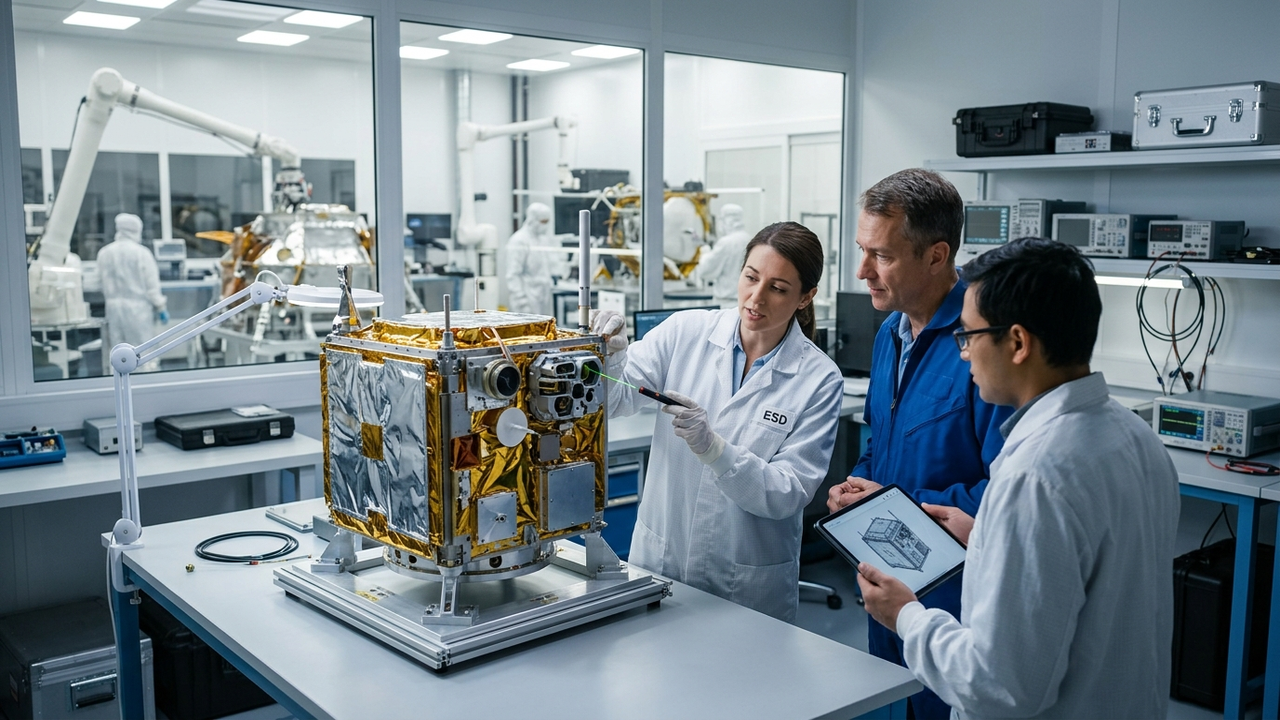
LEMS (Lunar Environment Monitoring Station) is a small, robust scientific payload developed by Morehead State University’s Space Systems Center. This autonomous station is equipped with highly sensitive broadband seismometers capable of detecting ‘moonquakes’ and recording their frequency, intensity, and epicentral locations. Such data are crucial for meticulously mapping the Moon’s core, mantle, and crustal structures. LEMS is slated for transport to the Moon via the Commercial Lunar Payload Services (CLPS) initiative as part of the Artemis program. Its contributions will enhance our understanding of long-term geological activity in the lunar environment, aid in selecting future lunar base sites, and assess potential structural risks posed by seismic events. Its compact design and autonomous operational capability are optimized for scientific observation under the Moon’s limited resources and harsh conditions.
Background & Industry Context
Data concerning the Moon’s interior structure largely relies on limited datasets from the Apollo era, and fundamental questions about how the Moon formed and evolved remain unanswered. The Artemis program aims to return humans to the lunar surface and establish a sustained lunar presence, making a more comprehensive understanding of the Moon’s physical environment—especially its seismic activity—indispensable for success. Small scientific payloads like LEMS enable detailed data collection at specific points not covered by larger missions, contributing to broader scientific objectives. Direct contributions from universities to major NASA missions are also vital for nurturing the next generation of space scientists and engineers.
Strategic Significance & Outlook
Once deployed, LEMS will collect high-fidelity seismic data from the Moon’s south polar region for the first time in decades. This data is expected to yield new insights into the Moon’s thermal history, internal fluidity, and current geological activity, potentially leading to a re-evaluation of lunar formation models. Furthermore, with the anticipated presence of water ice at the lunar south pole, the geological data provided by LEMS could indirectly support resource exploration and utilization planning. In future crewed lunar activities, the data will also serve as foundational information for assessing hazards posed by moonquakes, aiding in the design of safer lunar infrastructure. The partnership between Morehead State University and NASA will serve as an excellent example of how academic research can contribute to national-scale space exploration missions, fostering a new era of scientific discovery.
Source: http://www.moreheadstate.edu/news/2026/09/msus-lems-ready-for-nasa-artemis-moon-mission?feature
Get our weekly technology intelligence — free
Receive an infographic that lets you judge at a glance whether each field’s analysis report is worth reading.
Subscribe Free — Weekly Tech Intelligence
By subscribing, you’ll receive Troy-Technical’s weekly technology intelligence newsletter.
- Your email and selected fields are used only to deliver the newsletter.
- We never share your information with third parties.
- You can unsubscribe anytime via the link in each email.
See our Privacy Policy for details.
Takes about a minute · Unsubscribe anytime








Comments