Key Findings
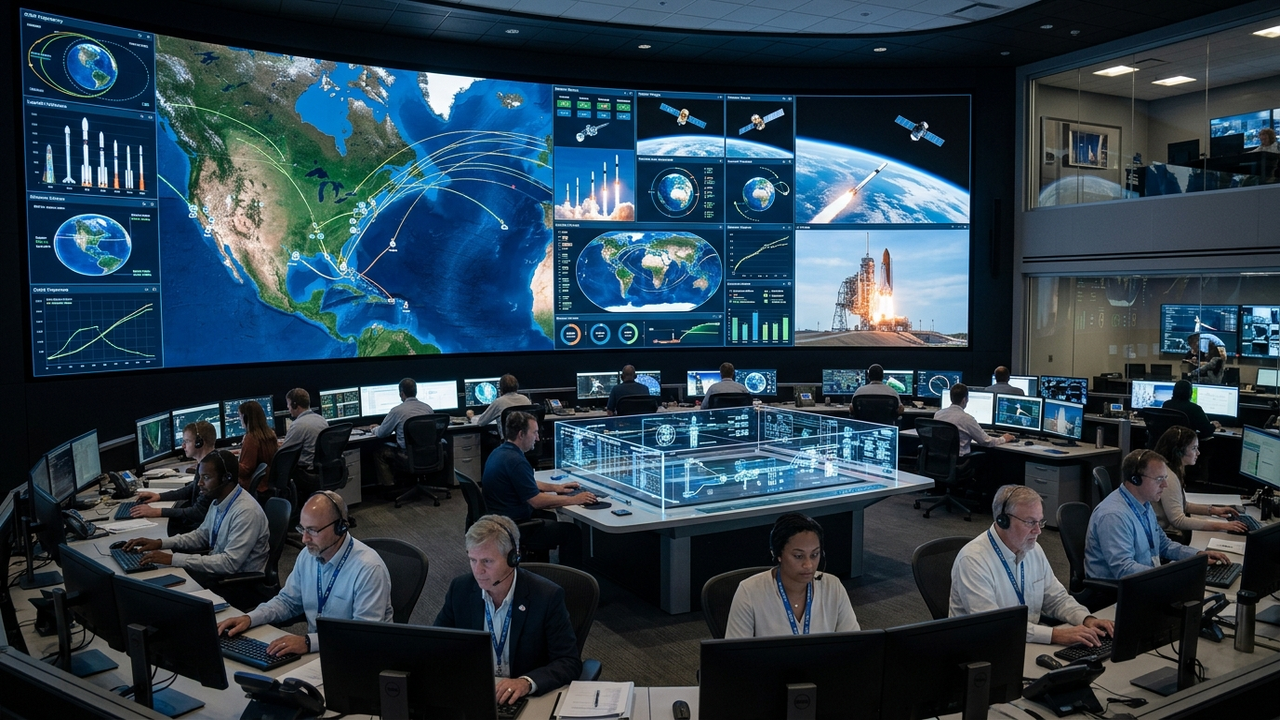
The U.S. Department of Transportation (DOT) has established the ‘Space Policy Administration, Coordination, and Execution (SPACE) Task Force’ to effectively manage the anticipated exponential increase in commercial space launches and reentries. This task force represents a critical initiative to address the projected surge to 10,000 annual space launches by 2035.
Technical & Operational Details
The primary objectives of the SPACE Task Force are multifaceted. Firstly, it aims to seamlessly integrate commercial space launch and reentry activities into the existing Air Traffic Control (ATC) system. This involves redefining how airspace where aircraft flight paths and spacecraft trajectories intersect are managed. Secondly, the task force will advance the designation and establishment of priority airspace, or ‘launch corridors,’ specifically for space launches and reentries. This will enhance the efficiency of launch preparations and execution while minimizing disruption to conventional air traffic. Thirdly, it will develop and implement plans to expand the capacity of national launch infrastructure. This includes supporting the development of new launch sites, modernizing existing facilities, and integrating related technologies. These efforts are designed to create an operational framework that sustains the rapid growth of the space industry while upholding stringent aviation safety standards.
Background & Industry Context
In recent years, commercial space activities have experienced unprecedented growth, largely driven by the proliferation of launch services from private companies such as SpaceX, Blue Origin, and Rocket Lab. With the emergence of new business models—including satellite constellations, space tourism, and in-orbit manufacturing—launch frequencies are reaching historic levels. The Federal Aviation Administration (FAA), part of the DOT, is responsible for regulating commercial spaceflight but has faced challenges in adapting traditional regulatory and management systems to this rapid evolution. The establishment of the SPACE Task Force is a direct response to this situation, forming part of a national strategy for the government to actively modernize space traffic management and support the US space industry’s ability to maintain its global competitiveness.
Strategic Significance & Outlook
The activities of the SPACE Task Force are expected to have a broad impact across the entire US aerospace sector. Smooth integration of commercial space launches and expansion of infrastructure could lower barriers to entry for new companies and foster innovation. More predictable and efficient launch processes may also lead to reduced costs for space missions, ultimately accelerating the growth of the overall space economy. However, significant technical and policy challenges remain in ensuring safe coexistence with air traffic, and the task force will be required to address these steadily. This initiative symbolizes the modern space industry’s transition from merely a frontier of exploration to a vital domain of economic activity.
Source: https://avweb.com/aviation-news/dot-forms-space-task-force-as-launch-forecast-reaches-10000-a-year/
Get our weekly technology intelligence — free
Receive an infographic that lets you judge at a glance whether each field’s analysis report is worth reading.
Subscribe Free — Weekly Tech Intelligence
By subscribing, you’ll receive Troy-Technical’s weekly technology intelligence newsletter.
- Your email and selected fields are used only to deliver the newsletter.
- We never share your information with third parties.
- You can unsubscribe anytime via the link in each email.
See our Privacy Policy for details.
Takes about a minute · Unsubscribe anytime








Comments