


Key Findings
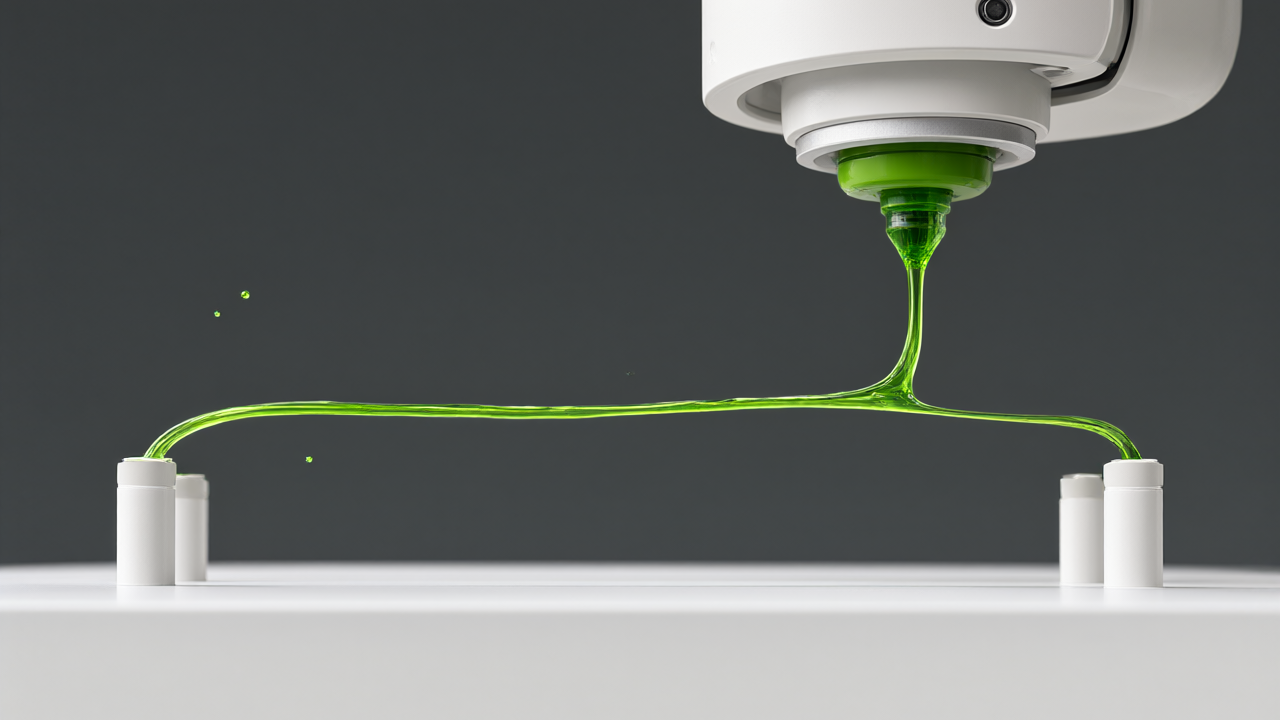
Extrusion-based bioprinting of an alginate-methylcellulose bioink is functionally achievable under short-term microgravity conditions. The study successfully produced layer-by-layer prints at layer distances between 260–610<0xE2><0x80><0x89>µm and created unsupported filament bridges reaching up to 13<0xE2><0x80><0x89>cm. Furthermore, the first “green” bioprinting of microalgae-laden hydrogels was performed, with cell viability on day 7 post-printing exceeding 99% for Scenedesmus sp. and reaching 97% for Chlorella vulgaris.
Technical Details
To assess photosynthetic efficiency, the researchers used real-time pulse-amplitude modulated (PAM) fluorometry. The results showed that the effective quantum yield of photosystem II remained stable across all gravitational phases for both liquid cultures and bioprinted samples. While stability was maintained, species-specific differences in non-photochemical quenching between the two microalgae species persisted.
Background and Context
As crewed space missions extend in distance and duration, relying on Earth-based medical supplies becomes impractical due to storage limitations, mass and volume constraints in rockets, and product expiration dates. 3D bioprinting is a promising solution for on-site medical care because it integrates patient-specific image processing with cell-compatible manufacturing. Extrusion bioprinting is particularly suited for space use because the hardware is compact and robust, can be operated as an open system in microgravity, and is accessible to non-specialists.
Significance and Outlook
The absence of gravity alters the balance of forces, making surface adhesion and hydrophilicity more influential than on Earth, while simultaneously offering greater geometric freedom for overhangs and spanning cavities. Because peer-reviewed data on real microgravity is rare and often proprietary, using parabolic flights to validate basic functionality is essential before committing to expensive space flights. This study demonstrates that photosynthetically active structures can be cultivated in space without loss of photosynthetic performance, establishing a foundation for reliable biofabrication capabilities during crewed missions.
Source: https://doi.org/10.1038/s41526-026-00669-y
Get our weekly technology intelligence — free
Receive an infographic that lets you judge at a glance whether each field’s analysis report is worth reading.
Subscribe Free — Weekly Tech Intelligence
By subscribing, you’ll receive Troy-Technical’s weekly technology intelligence newsletter.
- Your email and selected fields are used only to deliver the newsletter.
- We never share your information with third parties.
- You can unsubscribe anytime via the link in each email.
See our Privacy Policy for details.
Takes about a minute · Unsubscribe anytime