


Key Findings
The Titania architecture enables high-performance AI inference without the need for 100-kilowatt-plus liquid-cooled racks. It is designed to fit into existing enterprise and lab racks, providing a cost and power budget lower than an RTX6000 server. The company reports confirmed commitments for Titania exceeding $300 million.
Technical Details
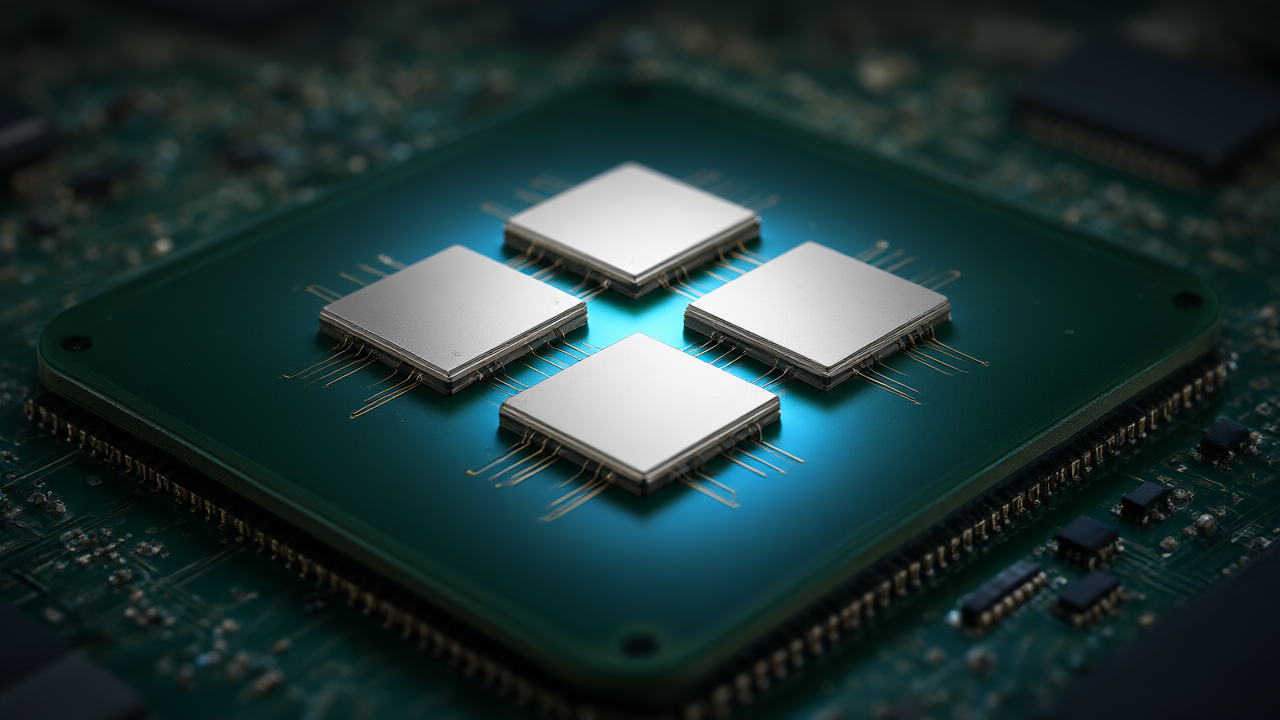
Titania utilizes a chiplet design based on Digital In-Memory Computing (D-IMC) and incorporates programmable RISC-V compute and high-capacity LPDDR6 memory. By using LPDDR6 instead of HBM, each package achieves 128 GB of capacity with lower power consumption and avoids HBM supply chain dependencies.
- Form Factors: Available as standard PCIe cards and OCP-compliant UBB baseboards with eight Titania OAM modules.
- Reference Server (AX8): A 4U air-cooled configuration providing 20 PFLOPS of FP8 compute, 1 TB of accelerator memory, and 19.6 TB/s memory bandwidth.
- Power Consumption: Typical power draw of 5-6kW for the AX8 server.
- Model Capacity: A single server can hold a 1.6 trillion-parameter model at FP4. Two servers fit in a legacy 15 kW rack, and five fit in a 30 kW air-cooled rack.
- Software Support: The Voyager toolchain and AxeleraScript (AxScript) support tensor, expert, and pipeline parallelism, speculative decoding, and KV cache offloading.
Background and Context
Titania is the third generation of Axelera AI’s technology, following the Metis and Europa platforms. While Metis focused on energy efficiency and Europa extended the architecture into enterprise AI, Titania expands the product line into large-scale data center inference. It is specifically designed for interactive and variable workloads in sovereign clouds, telcos, and AI factories.
Significance and Outlook
The architecture addresses the “tokenomics” of AI infrastructure by reducing the CAPEX required to rebuild data centers. By optimizing the conversion of power and memory into tokens—claiming that the underlying architecture already converts 88 percent of memory bandwidth into tokens on Europa silicon—Axelera AI aims to allow organizations to own and control their inference infrastructure without specialized liquid-cooling requirements.
Get our weekly technology intelligence — free
Receive an infographic that lets you judge at a glance whether each field’s analysis report is worth reading.
Subscribe Free — Weekly Tech Intelligence
By subscribing, you’ll receive Troy-Technical’s weekly technology intelligence newsletter.
- Your email and selected fields are used only to deliver the newsletter.
- We never share your information with third parties.
- You can unsubscribe anytime via the link in each email.
See our Privacy Policy for details.
Takes about a minute · Unsubscribe anytime