

Key Findings
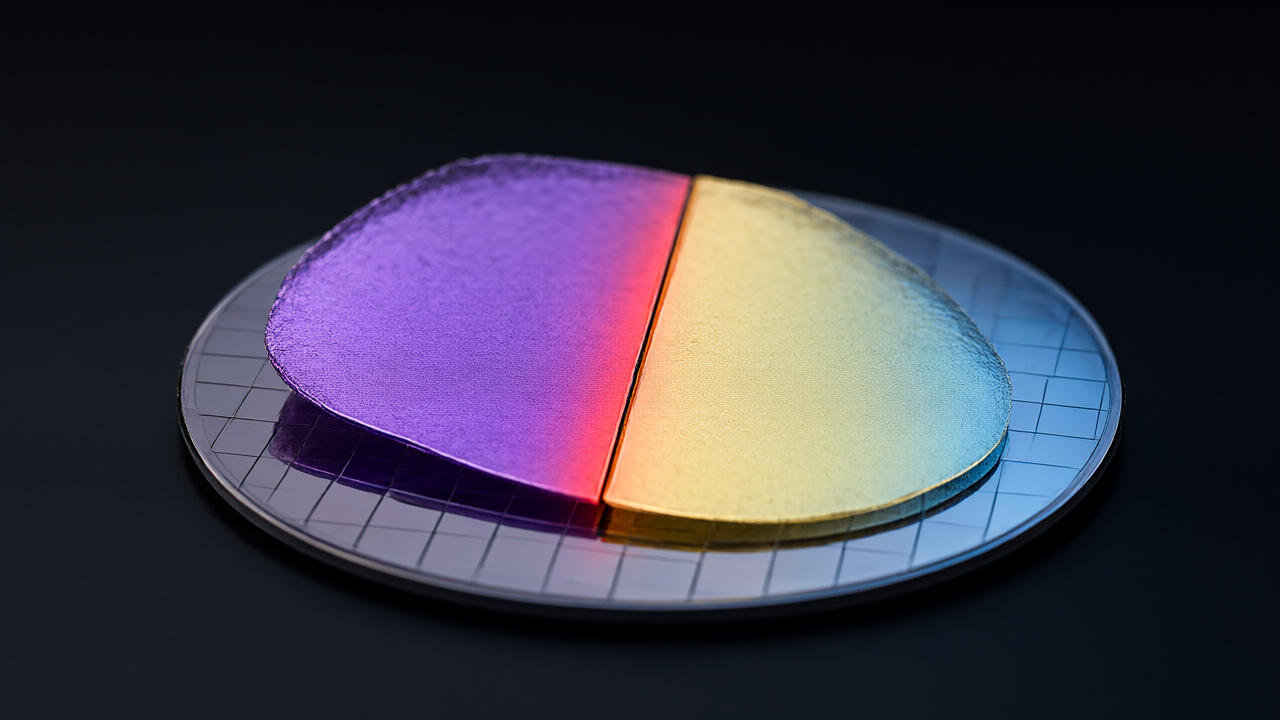
The study identifies that the orientation of the interface in lateral MoSe₂/MoS₂ heterostructures significantly impacts thermal transport. At room temperature, the armchair interface achieves an interfacial thermal conductance (ITC) of 218 MW/m²•K, while the zigzag interface shows a lower value of 188 MW/m²•K. Both orientations exhibit an increase in ITC as temperature rises.
Technical Details
To analyze these properties, the researchers employed a deep learning interatomic potential (DLP) trained using the DeePMD-kit on density functional theory (DFT) data. This DLP was paired with non-equilibrium molecular dynamics (NEMD) simulations. The reliability of the trained potential was verified through its close match with DFT energies, forces, and phonon dispersion relations.
The difference in thermal performance was attributed to the vibrational density of states. Analysis revealed that the armchair interface possesses greater phonon spectral overlap, which drives its superior thermal transport capabilities compared to the zigzag orientation.
Background & Context
Managing heat flow across interfaces in lateral 2D transition-metal dichalcogenide (TMD) heterostructures is a critical challenge for the development of next-generation optoelectronic and nanoelectronic devices. Efficient heat dissipation is essential to maintain device stability and performance at the nanoscale.
Significance & Outlook
These results establish a machine-learning framework for studying heat transport in lateral TMD heterostructures. By identifying interface orientation as an effective means of controlling heat dissipation, the study provides a practical pathway for engineering the thermal properties of junctions in 2D material-based electronics.
Source: https://doi.org/10.1088/1361-648x/aec07d
Get our weekly technology intelligence — free
Receive an infographic that lets you judge at a glance whether each field’s analysis report is worth reading.
Subscribe Free — Weekly Tech Intelligence
By subscribing, you’ll receive Troy-Technical’s weekly technology intelligence newsletter.
- Your email and selected fields are used only to deliver the newsletter.
- We never share your information with third parties.
- You can unsubscribe anytime via the link in each email.
See our Privacy Policy for details.
Takes about a minute · Unsubscribe anytime