
Key Findings
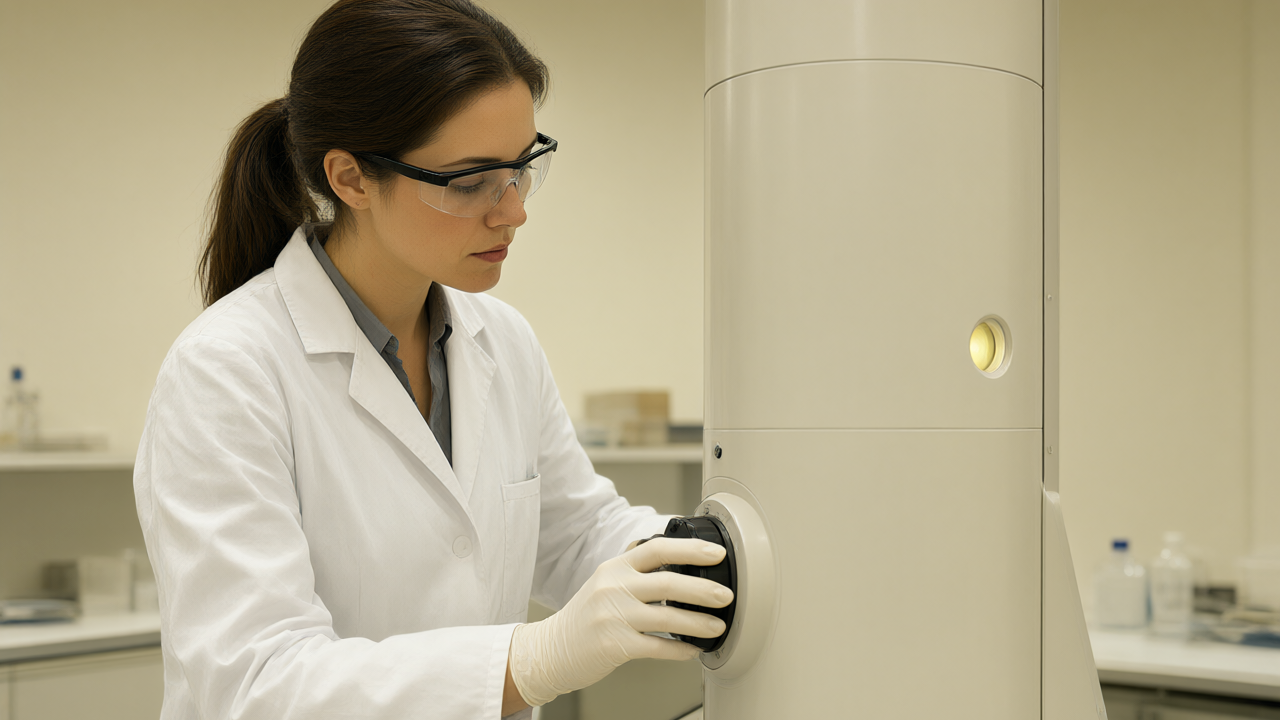
A research team led by the University of Chicago Pritzker School of Molecular Engineering has determined that electrostatic charging is the dominant mechanism of beam damage in solid-state sodium battery electrolytes. The study, published in Microscopy and Microanalysis, demonstrates that electron irradiation creates a localized electrical bias that displaces mobile sodium ions. The researchers converted this unintended effect into a diagnostic tool, using the beam’s bias to drive sodium ions across the electrolyte framework and nucleate sodium metal crystals on the opposite side of the sample.
Technical Details
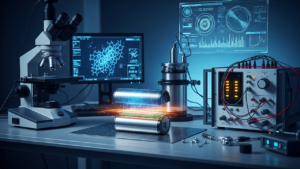
The investigation utilized a collaboration between the University of Chicago, Argonne National Laboratory, and Thermo Fisher Scientific. Using an electron microscope with fast direct electron detectors and chemical spectroscopy, the team gathered data at low electron doses between 10 and 50 electrons per square angstrom. To prevent atmospheric degradation, an inert gas transfer method was used to insert specimens at room temperature.
Crucially, the team found that cryogenic cooling—typically used to suppress radiolysis damage in battery microscopy—did not mitigate beam damage in sodium closo-hydroborate electrolytes. This indicated a distinct degradation pathway. Because sodium ions possess high ionic mobility within the conductive closo-hydroborate framework, the focused electron beam’s bias chased ions through the crystal structure, resulting in clean sodium metal nucleation on the opposite surface.
Background & Context
Sodium and sulfur are being explored as lower-cost, more abundant alternatives to lithium-ion batteries, which face geological constraints and reliance on transition metals like cobalt and copper. In 2024, the Laboratory for Energy Storage and Conversion, directed by Shirley Meng, debuted an anode-free sodium solid-state battery that replaces liquid electrolytes with a stable solid-state version to mitigate parasitic side reactions and resistive layer growth.
Significance & Outlook
This method allows researchers to directly observe a pristine interface between a sodium solid-state electrolyte and freshly deposited sodium metal. This interface mirrors the initial deposition process occurring in anode-free solid-state batteries, providing critical insights into interphase stability and the microscopic processes that dictate battery performance and lifetime.
Get our weekly technology intelligence — free
Receive an infographic that lets you judge at a glance whether each field’s analysis report is worth reading.
Subscribe Free — Weekly Tech Intelligence
By subscribing, you’ll receive Troy-Technical’s weekly technology intelligence newsletter.
- Your email and selected fields are used only to deliver the newsletter.
- We never share your information with third parties.
- You can unsubscribe anytime via the link in each email.
See our Privacy Policy for details.
Takes about a minute · Unsubscribe anytime