

Key Findings
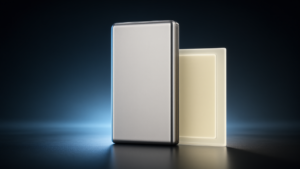
A research team from Xidian University has developed a thin-film liquid coating that significantly enhances the stability of lithium-metal anodes. The protected anode demonstrates a critical current density of 3.5 mA cm⁻², which is more than four times the 0.8 mA cm⁻² threshold of unprotected lithium. In full-cell tests using a sulfide solid-state electrolyte, the coated cells retained 82.3% of their original capacity after 300 charging cycles, compared to only 43% for unprotected cells.
Technical Details
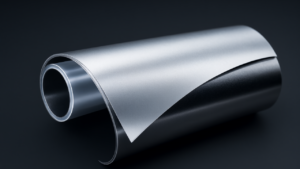
The “chemical armor” consists of a fluorine-containing silicone polymer and indium chloride. When applied, the mixture reacts directly on the metal to form a flexible hybrid layer measuring only 12 micrometers in thickness. The coating functions through three primary mechanisms:
- Mechanical Buffering: The elastic polymer network absorbs mechanical stresses caused by the expansion and contraction of the cell during charging.
- Electronic Insulation: A lithium fluoride phase acts as an insulator to block electrons, preventing the initiation of dendrites.
- Ion Distribution: Lithium-indium alloy nanoparticles act as microscopic “traffic controllers,” distributing incoming lithium ions evenly to prevent the accumulation of spikes.
Background & Context
Pure lithium is a preferred battery material but is prone to forming dendrites—tree-like needles that can pierce cell barriers, causing short circuits and fire risks. This issue has historically hindered the deployment of high-performance solid-state batteries. Lithium-metal offers a theoretical energy storage capacity nearly ten times higher than the graphite used in current smartphones and electric vehicles.
Significance & Outlook
The liquid coating process is compatible with standard roll-to-roll production lines via slot-die or gravure printing, eliminating the need for expensive vacuum chambers. If scaled, this technology could enable electric vehicles with significantly lighter batteries, longer ranges, and charging times comparable to traditional refueling stops. Potential applications extend to aviation and large-scale stationary energy storage for renewable energy. The researchers also suggest this approach could be adapted to test alternative metals such as tin or zinc.
Source: https://www.basicthinking.de/blog/2026/11/14/festkoerperbatterie/
Get our weekly technology intelligence — free
Receive an infographic that lets you judge at a glance whether each field’s analysis report is worth reading.
Subscribe Free — Weekly Tech Intelligence
By subscribing, you’ll receive Troy-Technical’s weekly technology intelligence newsletter.
- Your email and selected fields are used only to deliver the newsletter.
- We never share your information with third parties.
- You can unsubscribe anytime via the link in each email.
See our Privacy Policy for details.
Takes about a minute · Unsubscribe anytime