


Key Findings
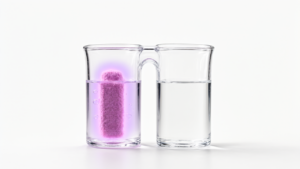
A new 3D mathematical model has revealed that tiny bubbles formed during water electrolysis can significantly disrupt hydrogen production and increase electricity consumption. The study identified a critical bubble radius beyond which the additional voltage required for electrolysis rises exponentially. Under specific simulated conditions, this extra voltage demand can exceed 50 percent of the voltage required in a bubble-free environment. Conversely, keeping bubbles below this critical threshold could limit additional voltage requirements to within three percent.
Technical Details
The computational tool acts as a digital twin of an electrolyzer, simulating processes across eight orders of magnitude in length. It allows researchers to reproduce real electrode shapes, materials, and operating conditions to observe microscopic processes that are difficult to isolate experimentally. Key technical achievements include:
- Identification of the critical bubble size, which depends on electrode geometry and the ease of liquid spread across the surface.
- Determination that the greatest energy losses occur when bubbles block active electrode surfaces.
- Implementation of a computational method that reduces the effort needed to run simulations by approximately 1,000 times without compromising numerical accuracy.
Background & Context
Green hydrogen is produced by splitting water (H2) into hydrogen and oxygen using electrolysis powered by renewable sources like wind or solar energy. While it emits zero carbon dioxide (CO2), the process is hindered by hydrogen and oxygen bubbles that develop on the electrodes. These bubbles block active reaction sites, prevent water from reaching electrode surfaces, and interfere with the movement of charged particles, forcing the electrolyzer to consume more electricity.
Significance & Outlook
The findings, published in EES Catalysis, suggest that efficiency can be improved by designing electrodes that release bubbles before they reach the critical size. The research team plans to expand the model to analyze how multiple bubbles grow, merge, and interact. Future goals include integrating this technology with 3D printing and computational optimization to develop more efficient electrode designs, ultimately making green hydrogen cheaper to produce for industries such as chemical manufacturing and steelmaking.
Source: https://interestingengineering.com/energy/tiny-bubbles-green-hydrogen-energy
Get our weekly technology intelligence — free
Receive an infographic that lets you judge at a glance whether each field’s analysis report is worth reading.
Subscribe Free — Weekly Tech Intelligence
By subscribing, you’ll receive Troy-Technical’s weekly technology intelligence newsletter.
- Your email and selected fields are used only to deliver the newsletter.
- We never share your information with third parties.
- You can unsubscribe anytime via the link in each email.
See our Privacy Policy for details.
Takes about a minute · Unsubscribe anytime