


Key Findings
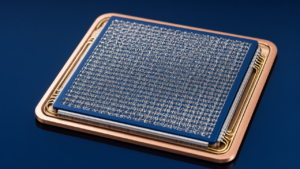
The IBM Quantum Nighthawk r3 processor is engineered to support 10,000 quantum operations on 520 programmable qubits, utilizing a total of 2,034 physical qubits. IBM intends to connect two r3 processors to create a single system with 1,040 qubits by 2027. This follows the deployment of Nighthawk r2, which supports over 7,500 operations on 120 qubits and generates up to 100,000 samples per second.
Technical Details
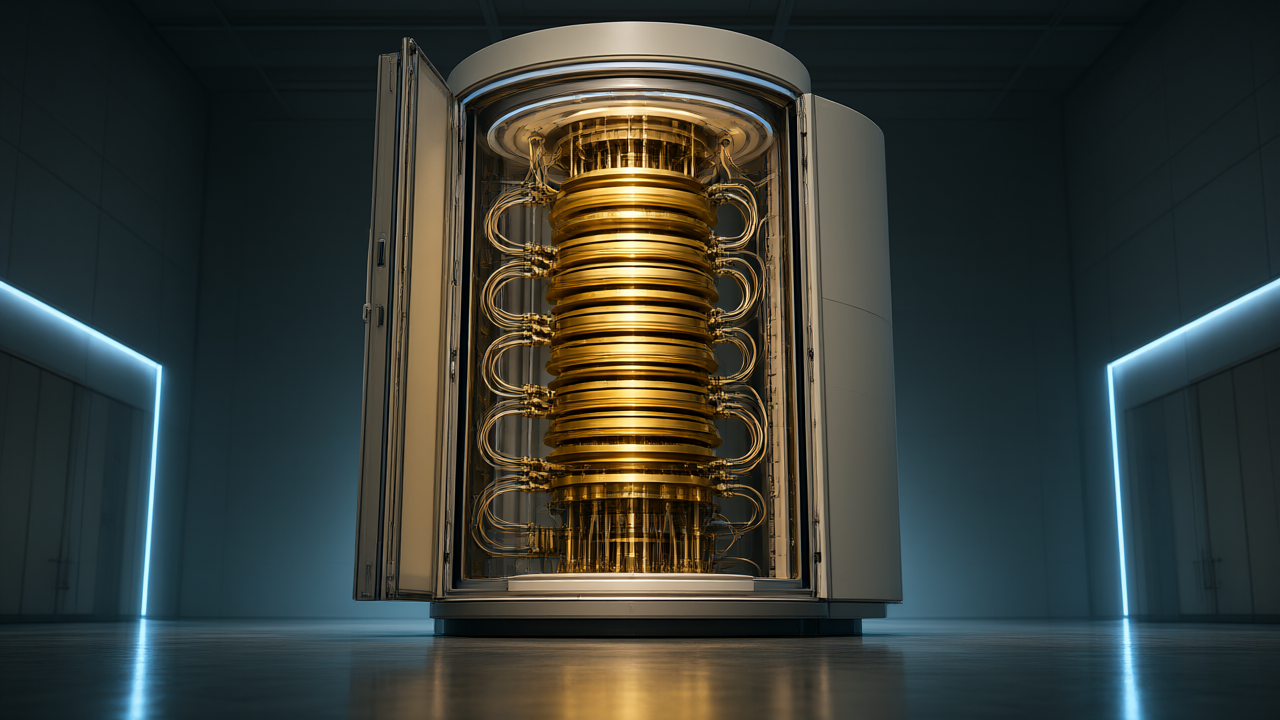
To enable scaling, IBM is implementing “L-couplers,” which provide 10 chip-to-chip connections while maintaining the square-lattice connectivity and high-speed operations of the r2. Previous tests with Nighthawk r1 using four L-couplers achieved 99.3% fidelity in quantum state transfer. Additionally, IBM has demonstrated the ability to link two cryogenic modules into a single system, reaching temperatures below 15 millikelvin in under five days.
Background and Context
Industrial applications require high sample volumes—often millions to billions—to be practical. Nighthawk r2 has already demonstrated significant performance gains over the previous Heron processor:
- E.ON reported a 15x speedup in quantum machine learning for power grid optimization.
- Experiments with Oak Ridge National Laboratory showed a 12x speedup in simulating magnetic materials.
- Simulations of non-homogeneous quantum materials with Algorithmiq were 8x faster than on Heron, requiring an estimated 240x more memory for classical tensor network methods to achieve equivalent accuracy.
Furthermore, the IBM Quantum Platform now integrates High-Performance Computing (HPC) with quantum workflows. This integration allowed researchers from IBM and RIKEN to execute sample-based quantum diagonalization (SQD) 5x faster and perform 100x more calculations than in previous studies.
Significance and Outlook
The shift toward modularity and HPC integration is designed to facilitate fault-tolerance and error correction. IBM has established a co-design platform with AMD and Oak Ridge National Laboratory, physically co-locating Nighthawk processors with the Umbra HPC system, which features AMD Instinct MI355X GPUs and 5th Gen AMD EPYC CPUs.
Get our weekly technology intelligence — free
Receive an infographic that lets you judge at a glance whether each field’s analysis report is worth reading.
Subscribe Free — Weekly Tech Intelligence
By subscribing, you’ll receive Troy-Technical’s weekly technology intelligence newsletter.
- Your email and selected fields are used only to deliver the newsletter.
- We never share your information with third parties.
- You can unsubscribe anytime via the link in each email.
See our Privacy Policy for details.
Takes about a minute · Unsubscribe anytime