

Key Findings
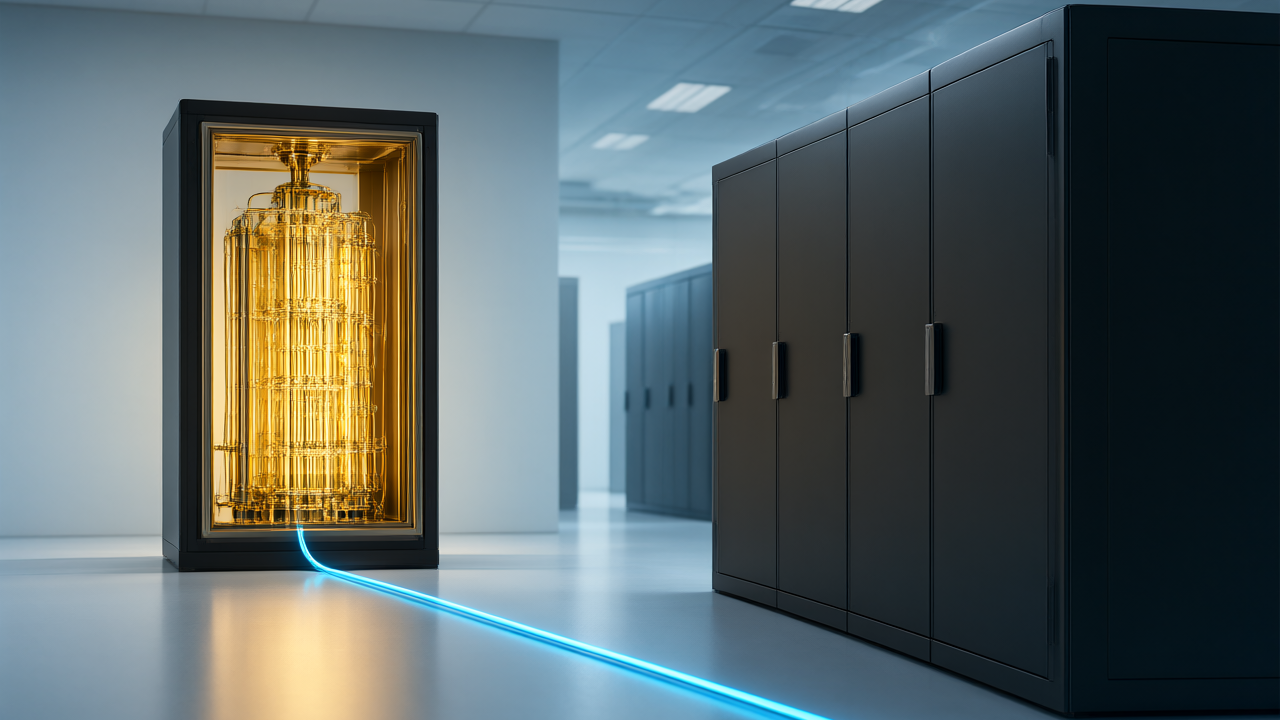
The University of Osaka’s D3 Center and Center for Quantum Information and Quantum Biology (QIQB) have integrated domestic superconducting quantum processors with the OCTOPUS supercomputer via the SEAFOOD (Supercomputing Entangled by Ambitious Fusion of OQTOPUS and OCTOPUS at D3C) platform. This marks the first time a Japanese-developed quantum computer and an on-campus supercomputer have been integrated at a single academic institution in Japan. The system is scheduled to enter formal operation in December 2026.
Technical Details
Led by Professor Susumu Date and Associate Professor Hiroshi Ueda, the SEAFOOD architecture utilizes a three-layer stack to partition workloads, ensuring each processor executes routines suited to its specific hardware design. This approach addresses the noise and qubit count constraints of near-term quantum processors and the high computational costs of classical high-performance clusters.
In a Quantum-Selected Configuration Interaction (QSCI) demonstration, the workload was split as follows:
- The quantum processor sampled dominant electron configurations.
- The high-memory compute nodes of OCTOPUS constructed and diagonalized the resulting subspace Hamiltonian.
Background & Context
The project focuses on simulating strongly correlated electronic structures for materials engineering and drug discovery. Development was supported by several Japanese initiatives, including JST Moonshot Goal 6, MEXT Q-LEAP, JST COI-NEXT, CSTI SIP, and NEDO’s Post-5G quantum-supercomputer hybrid platform program. The software stack, OQTOPUS, is open-source, and the QSCI methodology has been published in Physical Review Research.
Significance & Outlook
In fiscal year 2027, the D3 Center will grant trial access to up to 10 research teams from The University of Osaka through a proposal-based program. This phase is intended to refine hybrid job scheduling before the platform opens for broader external access via the nationwide JHPC-quantum initiative.
Get our weekly technology intelligence — free
Receive an infographic that lets you judge at a glance whether each field’s analysis report is worth reading.
Subscribe Free — Weekly Tech Intelligence
By subscribing, you’ll receive Troy-Technical’s weekly technology intelligence newsletter.
- Your email and selected fields are used only to deliver the newsletter.
- We never share your information with third parties.
- You can unsubscribe anytime via the link in each email.
See our Privacy Policy for details.
Takes about a minute · Unsubscribe anytime