


Key Findings
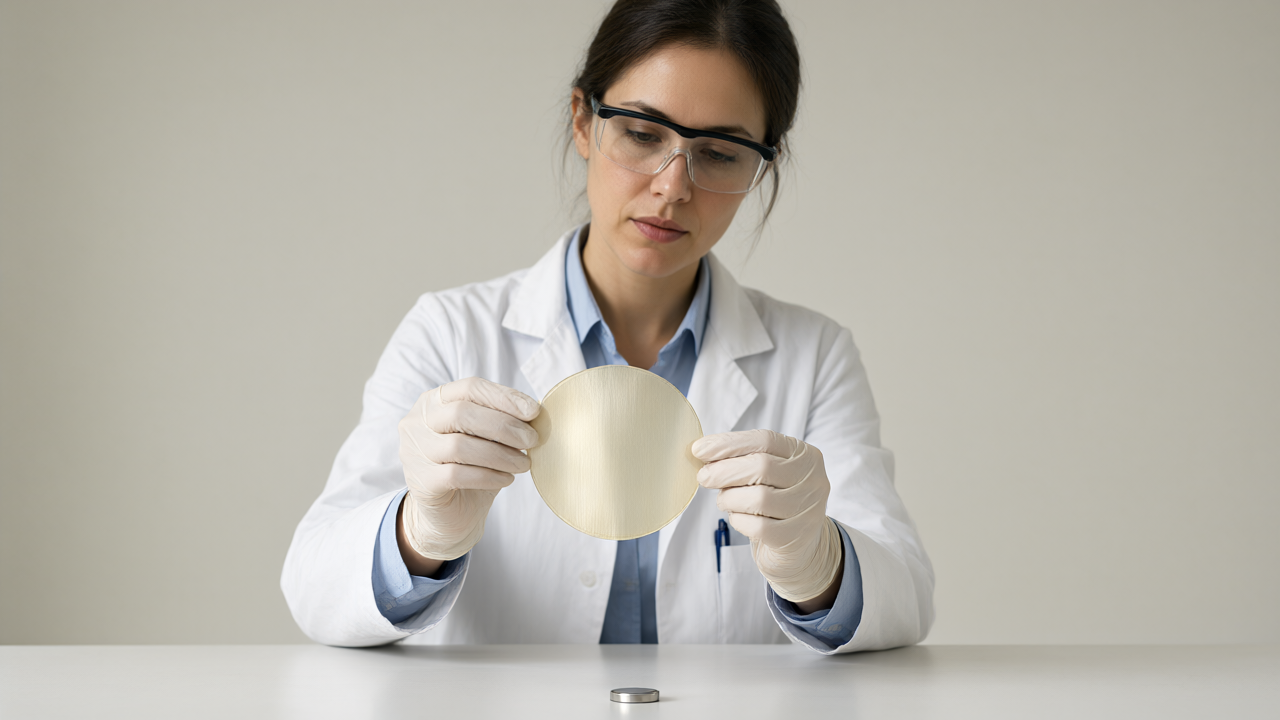
A joint research team led by Professors Dong Ki Yoon and Hye Ryungon Byon at KAIST has demonstrated that controlling the molecular alignment of a liquid crystal polymer separator significantly reduces the resistance encountered by lithium ions. The team found that vertical alignment of nanopores reduces the effective tortuosity of the ion pathway to about one-2.5th compared to planar (horizontal) alignment. This structural optimization results in an ionic conductivity of 1.77 mS/cm in a carbonate-based electrolyte and a low activation energy of 0.12 eV for ion migration.
Technical Details
The researchers synthesized liquid crystal molecules incorporating polyethylene glycol (PEG) chains to facilitate ion transport via coordination interactions. These molecules were cross-linked and fixed to create a PEG-LCP membrane with nanopore channels approximately 19 nm in diameter. The study compared two configurations with equivalent chemical compositions and pore structures:
- Planar alignment: Channels run parallel to the film surface.
- Homeotropic alignment: Channels are aligned through the film thickness, perpendicular to the electrode surface.
The vertical alignment acts as a “highway,” providing a more direct transport path for lithium ions moving between electrodes.
Background and Context
Conventional lithium-ion batteries use polyolefin microporous membranes with winding paths, characterized by high tortuosity. In lithium-metal batteries, uneven ion supply during fast charging often leads to the growth of “dendrites”—tree-like metallic lithium crystals—which can cause internal short circuits and battery degradation. The KAIST study, published in ACS Nano (Volume 20, Issue 40), focuses on using molecular alignment as an independent control element to ensure a more uniform ion supply.
Significance and Outlook
The results indicate that vertical alignment improves the deposition of metallic lithium and suppresses dendritic and porous growth. While this laboratory-scale proof of principle demonstrates that ion transport can be improved via alignment rather than solely through new chemical compositions, the researchers note that risks of side reactions and internal short circuits have not been fundamentally eliminated.
Source: https://xenospectrum.com/en/kaist-liquid-crystal-polymer-separator-lithium-metal-battery/
Get our weekly technology intelligence — free
Receive an infographic that lets you judge at a glance whether each field’s analysis report is worth reading.
Subscribe Free — Weekly Tech Intelligence
By subscribing, you’ll receive Troy-Technical’s weekly technology intelligence newsletter.
- Your email and selected fields are used only to deliver the newsletter.
- We never share your information with third parties.
- You can unsubscribe anytime via the link in each email.
See our Privacy Policy for details.
Takes about a minute · Unsubscribe anytime