
Key Findings
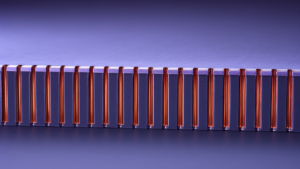
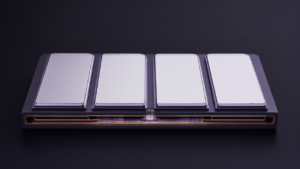
AMD’s Venice processors utilize 2.5D packaging to handle a data movement requirement of 1.6 TB/s. This shift was driven by power efficiency; using conventional packaging for this level of bandwidth would have consumed approximately 10–15% of the total SoC power budget. To facilitate this, AMD has moved away from a single I/O die to a split I/O die configuration.
Technical Details
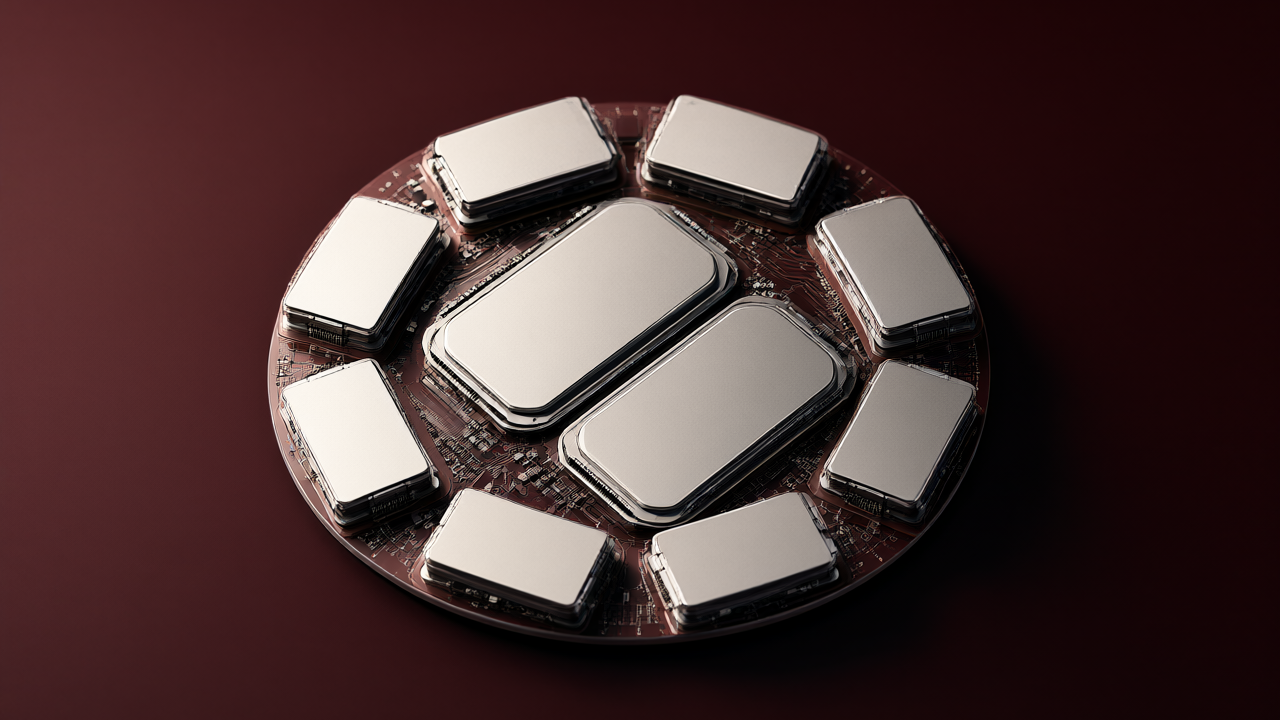
The transition to 2.5D packaging introduced strict physical constraints, requiring shorter die-to-die connections and precise matching of die widths at the interface. To provide sufficient perimeter for CCD connections and I/O beachfront, AMD implemented the following:
- Mirrored I/O Design: The SoC uses two identical I/O die designs, with one rotated 180 degrees. While this results in some area overhead due to the duplication of functional blocks like the root of trust, it simplifies design.
- Fabric Topology: The mirrored design is engineered to operate as a single domain in NPS1 configurations to maintain quality of service, bandwidth, and latency.
- Platform Differentiation: AMD developed distinct I/O dies for the SP7 and SP8 platforms. The SP7 I/O die is optimized for higher compute and memory bandwidth. In contrast, the SP8 I/O die provides 128 PCIe lanes per socket and half the memory channels of SP7, targeting lower core counts (up to 96 for Zen 6 and 128 for Zen 6c).
Background & Context
In previous generations, AMD utilized standard packaging and GMI links, which were sufficient when data movement was under 700 GB/s. The move to 2.5D packaging allows for low-power, high-bandwidth, and low-latency links, which mitigates the latency and power penalties associated with splitting the I/O die.
Significance & Outlook
The adoption of a tiled approach to I/O and compute allows AMD to scale SoCs to larger core counts and differentiate products for different enterprise market requirements. AMD indicates that tiled approaches will become increasingly advantageous as SoC core counts continue to scale.
Source: https://chipsandcheese.com/p/talking-venice-with-mahesh-subramony
Get our weekly technology intelligence — free
Receive an infographic that lets you judge at a glance whether each field’s analysis report is worth reading.
Subscribe Free — Weekly Tech Intelligence
By subscribing, you’ll receive Troy-Technical’s weekly technology intelligence newsletter.
- Your email and selected fields are used only to deliver the newsletter.
- We never share your information with third parties.
- You can unsubscribe anytime via the link in each email.
See our Privacy Policy for details.
Takes about a minute · Unsubscribe anytime