

Key Findings
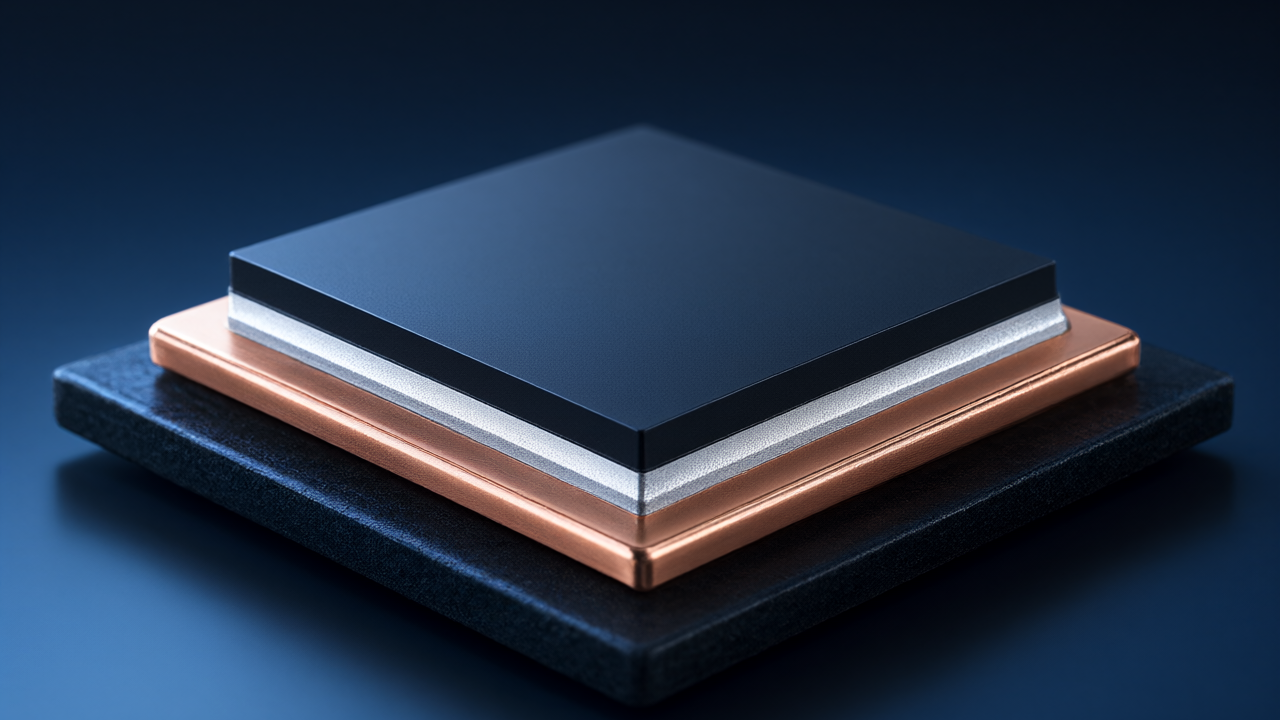
The integration of microwave hybrid heating (MHH) and nano-silver (Ag) reinforcement in Cu/In-Ag/Cu joints resulted in a peak shear strength of 28.05 MPa. This represents a substantial improvement compared to the 6.02 MPa observed in joints without silver. The study identified 30 weight percent nano-Ag as the optimal concentration; increasing the silver content to 40 weight percent reduced shear strength to approximately 11.3 MPa due to coalescing porosity.
Technical Details
To accelerate reaction kinetics and overcome the prolonged isothermal holding times of conventional solid-liquid interdiffusion (SLID) processes, the team utilized a bulk silicon carbide (SiC) susceptor. This setup allows molten indium to absorb microwave energy directly, creating a volumetric heating effect that promotes rapid intermetallic compound (IMC) growth. Key technical observations include:
- Diffusion Mechanisms: The growth of Cu11In9 shifted from bulk-diffusion to grain-boundary-diffusion as temperatures increased from 170 °C to 250 °C.
- Joint Quality: Processing at 250 °C for 120 minutes with 30 weight percent nano-Ag produced dense full-IMC joints free of large voids and residual indium.
- Stability: The formation of the (Ag, Cu)In2 phase suppressed copper transport, enhancing microstructural stability against electromigration.
Background and Context
Conventional SLID bonding often requires extensive time to convert solder into stable IMCs, limiting its efficiency for high-temperature packaging. This research specifically targets the reliability of third-generation semiconductor power devices, which operate under demanding thermal conditions.
Significance and Outlook
Long-term reliability tests conducted at a constant temperature of 280 °C over 675 hours showed that while shear strength gradually decreased to 4.17 MPa, the Ag-containing IMCs delayed void growth and structural degradation. By improving joint uniformity and mechanical performance, this MHH and nano-Ag strategy provides a viable pathway for extending the lifespan of high-temperature power electronics packaging.
Get our weekly technology intelligence — free
Receive an infographic that lets you judge at a glance whether each field’s analysis report is worth reading.
Subscribe Free — Weekly Tech Intelligence
By subscribing, you’ll receive Troy-Technical’s weekly technology intelligence newsletter.
- Your email and selected fields are used only to deliver the newsletter.
- We never share your information with third parties.
- You can unsubscribe anytime via the link in each email.
See our Privacy Policy for details.
Takes about a minute · Unsubscribe anytime