Key Findings
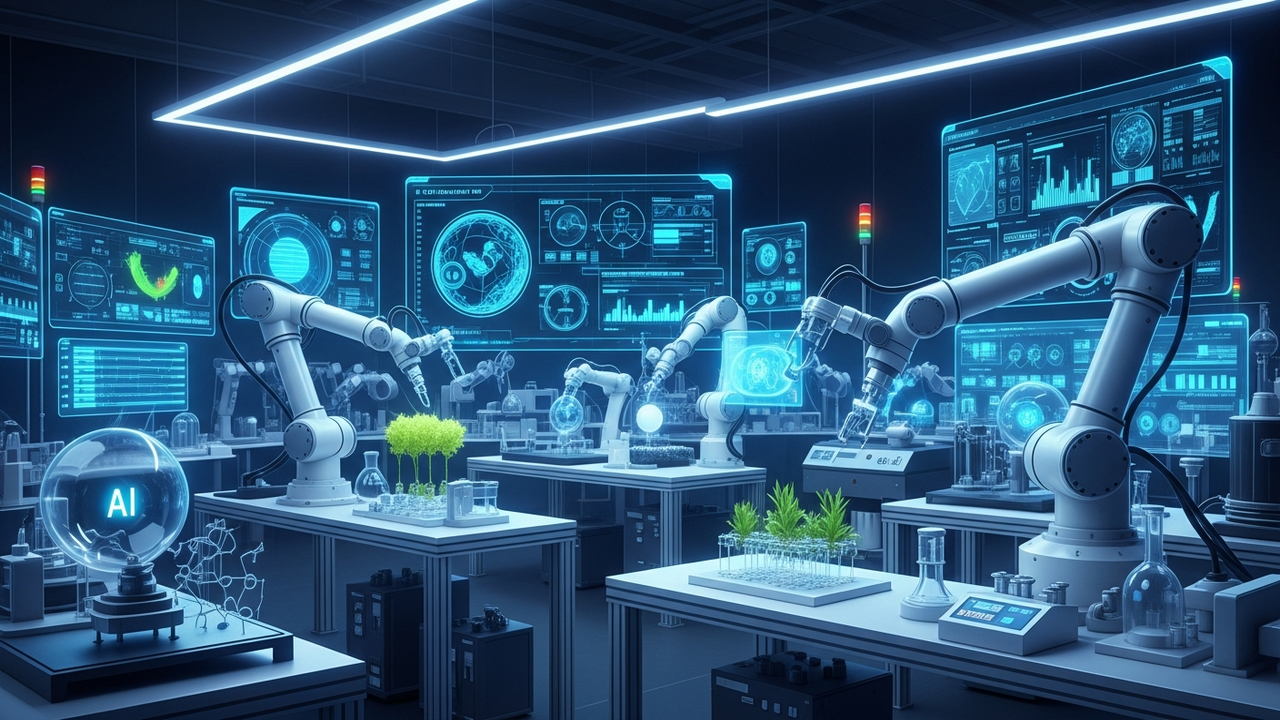
The integration of Artificial Intelligence (AI) and autonomous laboratories is revolutionizing the pace of functional materials discovery, offering a critical pathway to address the escalating climate crisis. This innovative approach establishes ‘closed-loop systems’ where AI algorithms propose potential material candidates, and robotic systems automatically synthesize and test them. This significantly reduces the bottlenecks inherent in traditional materials development, compressing timelines that would typically span months or years into mere weeks.
Technical Details
At the core of this breakthrough is the convergence of computational science, machine learning, and advanced robotics. The AI component predicts optimal chemical compositions and structural architectures for materials tailored to specific performance targets. These predictions then guide robotic platforms in executing automated experiments, with results fed back to the AI in real-time. This continuous feedback loop allows the AI to learn, refine its models, and propose increasingly optimized candidates with minimal human intervention, maximizing both efficiency and precision in material synthesis and characterization.
Background & Context
Historically, materials discovery has been a labor-intensive, trial-and-error process, ill-suited for the urgent demands of the climate crisis. There is a pressing need for high-performance materials in areas such as greenhouse gas emission reduction, advanced renewable energy storage, and carbon capture technologies. AI-driven autonomous labs emerge as a powerful solution, with their efficacy already demonstrated in research published in ‘Nature.’ Companies like Pheno are at the forefront, developing integrated high-throughput experimentation and AI platforms that are propelling a paradigm shift in materials science.
Strategic Significance & Outlook
The implementation of AI and autonomous laboratories promises to drastically cut the lead time and cost associated with new material development. This acceleration will drive innovations across diverse sectors, including enhanced solar cell efficiency, the creation of high-capacity batteries, and the development of lightweight yet highly durable structural materials. Ultimately, this technology is poised to become an indispensable component in achieving a sustainable society and mitigating climate change, delivering substantial economic and societal impact across industries globally.
Get our weekly technology intelligence — free
Receive an infographic that lets you judge at a glance whether each field’s analysis report is worth reading.
Subscribe Free — Weekly Tech Intelligence
By subscribing, you’ll receive Troy-Technical’s weekly technology intelligence newsletter.
- Your email and selected fields are used only to deliver the newsletter.
- We never share your information with third parties.
- You can unsubscribe anytime via the link in each email.
See our Privacy Policy for details.
Takes about a minute · Unsubscribe anytime