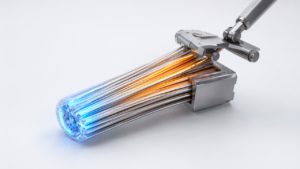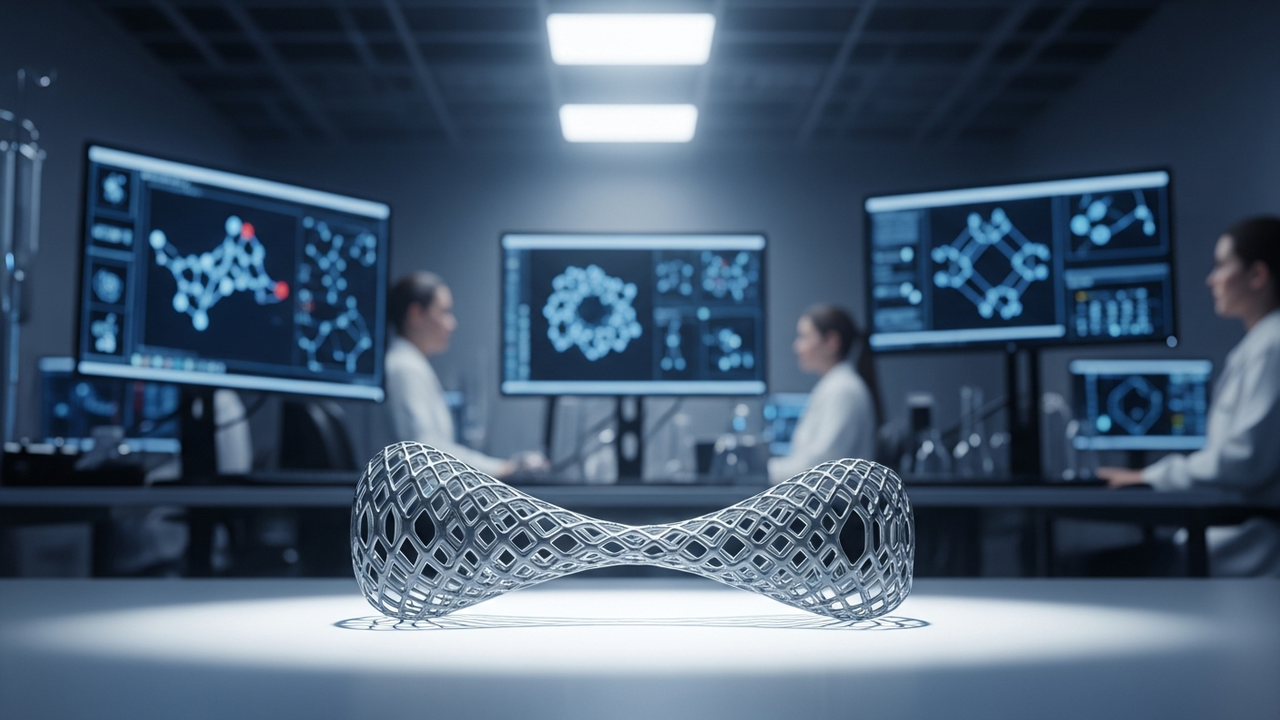
A research team at China’s Army Medical University has unveiled a groundbreaking multi-axial stretchable wound closure device. Constructed from shape memory alloy (SMA) metamaterials, this device can freely stretch in six directions and achieve precise, programmable mechanical contraction via a smartphone application. It overcomes the unidirectional constraints of traditional wound closure techniques, adapting to complex wound geometries to facilitate faster and more robust healing.
Technical / Clinical Details
- At the core of this device are thermally responsive Nitinol (nickel-titanium) SMA actuators integrated into an elastic polymer metamaterial structure. This combination allows the device to precisely pull wound edges together by changing shape in response to temperature variations.
- Traditional wound closure methods (sutures, staples, adhesives) apply tension in only one direction, making it challenging to effectively manage irregular wound shapes and depths. This new device applies uniform contractile force from six different directions, promoting closure from all sides of the wound, expected to accelerate healing and minimize scar formation.
- Smartphone app control empowers medical professionals to fine-tune the contractile force and speed according to the patient’s wound condition. This enables individualized treatment plans, reduces the risk of tissue damage from excessive tension, and enhances patient comfort.
Background & Context
Wound healing has long been a challenge in medicine, with the closure of large or irregularly shaped wounds often being a complex and time-consuming process. Traditional techniques have left issues such as infection risk, scar size, and patient discomfort. While shape memory alloys have gained attention for medical device applications due to their unique properties (superelasticity, shape memory effect), this marks the first device to achieve precise multi-directional control in wound closure.
Strategic Significance & Outlook
This innovative wound closure device has the potential to revolutionize a wide range of medical fields, including emergency medicine, battlefield trauma care, chronic wound management, and even aesthetic plastic surgery. Significant applications are also anticipated in telemedicine and self-manageable wound care systems, offering substantial benefits for regions with limited medical resources or patients requiring home care. Following further clinical trials and regulatory approvals, this technology could soon become an integral part of standard wound care protocols.
Source: https://www.eurekalert.org/news-releases/1131333
Get our weekly technology intelligence — free
Receive an infographic that lets you judge at a glance whether each field’s analysis report is worth reading.
Subscribe Free — Weekly Tech Intelligence
By subscribing, you’ll receive Troy-Technical’s weekly technology intelligence newsletter.
- Your email and selected fields are used only to deliver the newsletter.
- We never share your information with third parties.
- You can unsubscribe anytime via the link in each email.
See our Privacy Policy for details.
Takes about a minute · Unsubscribe anytime