This study successfully synthesized a novel fluorine-free polymer coating that combines unprecedented durability with superhydrophobic properties, achieved through a thermo-photo dual-curing mechanism. The dense polymer network formed by this innovative approach rigorously encapsulates micro- and nanoscale fillers, enabling the coating to maintain its functionality even under severe physical and chemical stresses.
Technical / Clinical Details
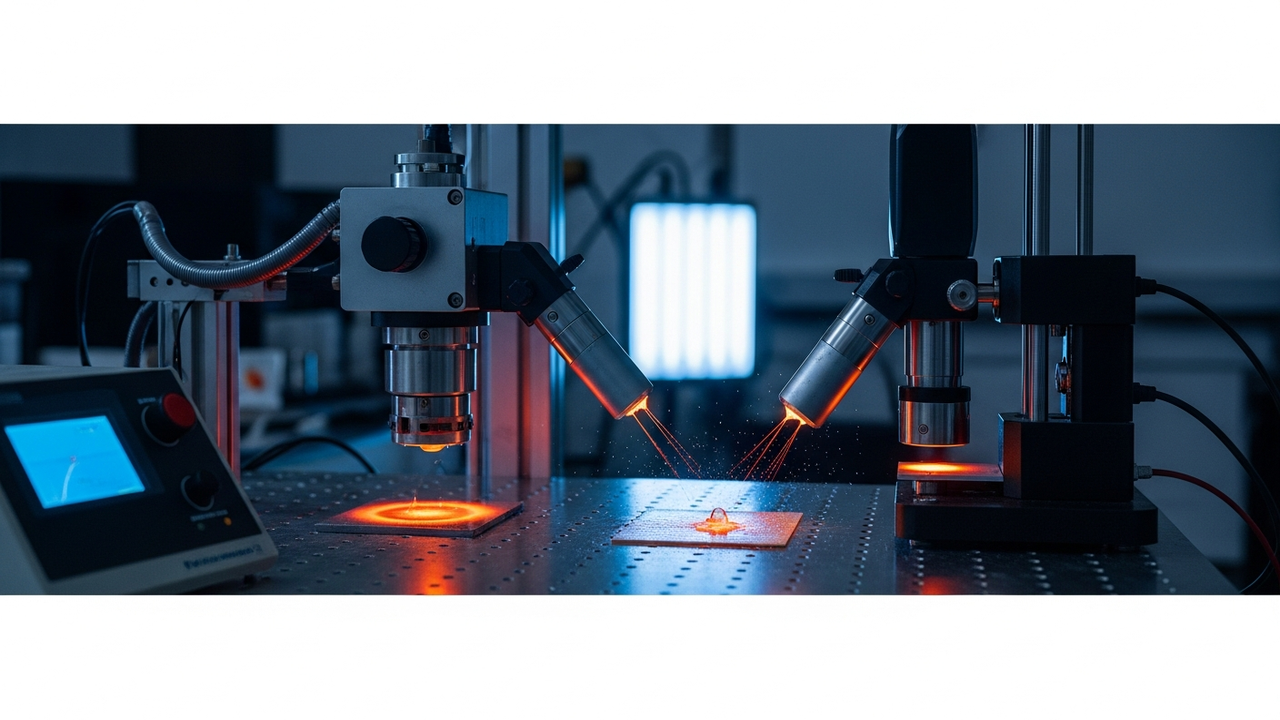
- Dual-Curing Mechanism: The key to this technology lies in combining two distinct energy sources, heat and light, to form the polymer network. Photo-curing facilitates rapid initial cross-linking, while subsequent thermal curing promotes further bonding and densification of polymer chains. This synergistic effect constructs a uniform and robust dual-network structure.
- Anchoring of Micro/Nanofillers: The developed coating incorporates specific micro/nanofillers. The dual-cured network tightly entraps these fillers within the polymer matrix, effectively preventing their detachment due to abrasion or erosion, thereby ensuring long-term superhydrophobicity.
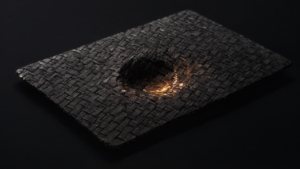
- Durability Assessment: The coating’s abrasion resistance was evaluated using 1000-grit sandpaper. Even after 66 meters of abrasion under a pressure of 9.8 kPa, the water contact angle remained above 150°, consistently demonstrating superhydrophobicity. This significantly addresses the mechanical fragility issues often associated with conventional fluorine-free superhydrophobic coatings.
- Chemical and Thermal Stability: The coating exhibited high chemical and thermal stability, maintaining structural integrity and water repellency after exposure to a wide range of pH environments (e.g., pH 1 to 14) and organic solvents, as well as high temperatures (e.g., above 200°C).
Background & Context
Fluorinated compounds have been widely used for their excellent water and oil repellency, but environmental concerns (particularly the PFAS issue) have made the development of alternative materials a pressing need. Traditional fluorine-free superhydrophobic coatings generally suffer from poor mechanical durability, presenting a significant barrier to practical application. This research represents a crucial step in resolving this durability challenge and developing high-performance, environmentally friendly materials.
Strategic Significance & Outlook
This fluorine-free superhydrophobic coating technology is anticipated to find diverse industrial applications, including automotive body protection, waterproof treatment for construction materials, moisture protection for electronic devices, and water-repellent finishing for textiles. Especially for products exposed to harsh environments, this solution will offer strong market competitiveness by balancing long-term performance with compliance to environmental regulations. The research team is pursuing further studies aimed at cost reduction and establishing large-scale production techniques, aspiring to contribute to a sustainable society.
Source: https://pubmed.ncbi.nlm.nih.gov/42272288/
Get our weekly technology intelligence — free
Receive an infographic that lets you judge at a glance whether each field’s analysis report is worth reading.
Subscribe Free — Weekly Tech Intelligence
By subscribing, you’ll receive Troy-Technical’s weekly technology intelligence newsletter.
- Your email and selected fields are used only to deliver the newsletter.
- We never share your information with third parties.
- You can unsubscribe anytime via the link in each email.
See our Privacy Policy for details.
Takes about a minute · Unsubscribe anytime