Background
Long-duration energy storage (LDES) is rapidly becoming an indispensable technology for integrating high penetrations of intermittent renewable energy sources, such as solar and wind, and for bolstering overall grid stability. While lithium-ion batteries excel in short-duration applications, LDES solutions like Energy Dome’s CO2 Battery are designed to economically address the complex demands of multi-hour to multi-day energy storage. This strategic collaboration between Energy Dome, SRP, and Google exemplifies a significant industry pivot towards diversifying beyond lithium-ion chemistries. The focus is on exploring alternative LDES technologies that offer superior safety profiles, enhanced sustainability, and improved economic viability for extended discharge durations. The accelerating energy demands from the proliferation of AI and expanding data centers further accentuate the critical need for robust, reliable, and sustainable energy infrastructure solutions.
Key Findings
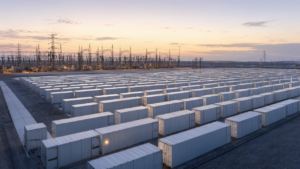
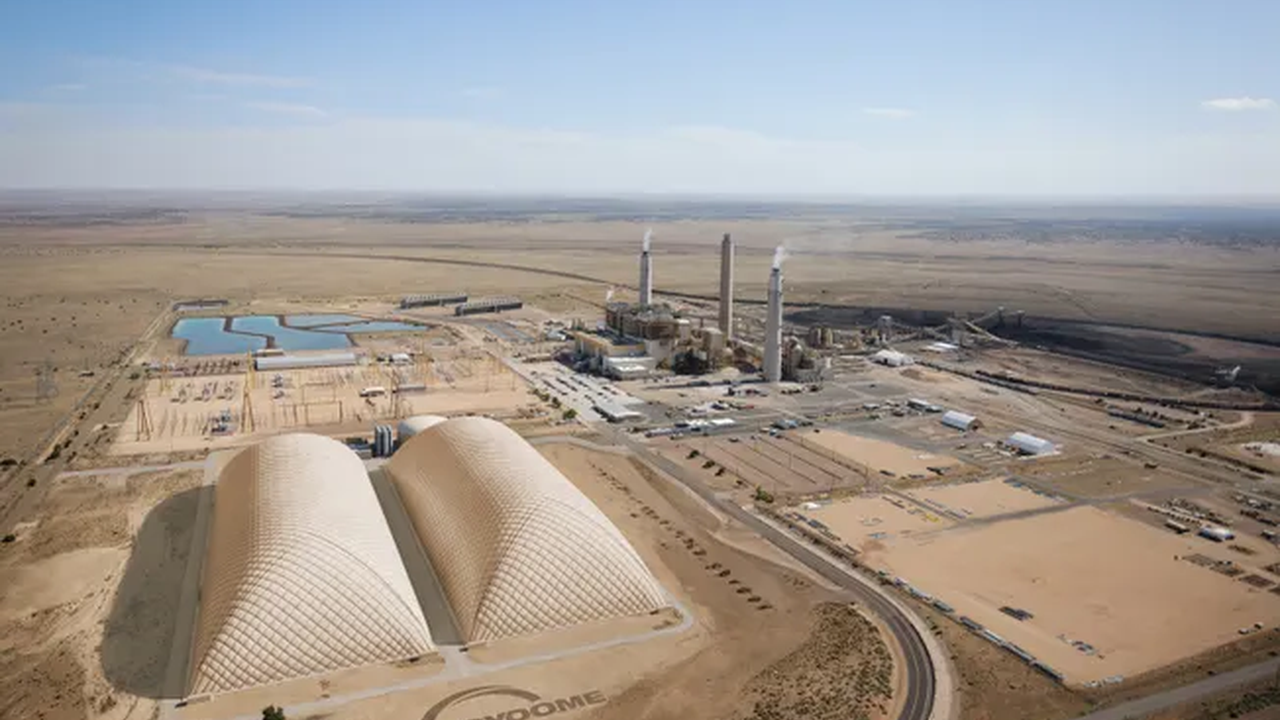
Energy Dome, a long-duration energy storage (LDES) provider supported by Google, and Salt River Project (SRP), a prominent Arizona utility, have formalized an agreement to deploy a 19MW, 10-hour carbon dioxide (CO2) battery system. This pioneering project will be co-located at SRP’s Coronado Generating Station in Arizona. Utilizing Energy Dome’s proprietary thermomechanical CO2 Battery technology, the system stores energy by compressing and liquefying CO2 and releases it by vaporizing CO2 to drive a turbine. Expected to be operational by 2029, this LDES solution is designed to provide scalable, dispatchable capacity to the U.S. grid, directly addressing the escalating energy demands fueled by artificial intelligence (AI) growth and expanding data centers.
Technical Details
Energy Dome’s CO2 Battery operates on a reversible, closed-loop thermomechanical cycle. Energy is stored by compressing gaseous CO2 into a liquid state; conversely, energy is released by allowing the liquid CO2 to vaporize and expand through a turbine. This system perpetually reuses the same CO2, ensuring zero atmospheric emissions. The 19 MW / 10-hour system is engineered to provide continuous power for approximately 4,275 homes for a full ten hours. Distinct advantages of this technology include its reliance on readily available and cost-effective CO2 as the working fluid, its inherent non-flammability, and the critical ability to independently size power (MW) and energy (MWh) capacity. This decoupling facilitates highly flexible and economically efficient long-duration energy storage.
- Storage Capacity & Duration: The system delivers 19 MW of continuous power for 10 hours, accumulating a total energy storage capacity of 190 MWh.
- Proprietary Thermomechanical Design: This solution employs a unique CO2-based thermomechanical battery, fundamentally differentiating it from conventional electrochemical battery technologies.
- Environmental Footprint: Operating as a closed-loop system, the CO2 Battery guarantees no CO2 emissions, positioning it as a highly sustainable LDES alternative.
- Google’s Strategic Investment: Google is co-funding this initiative via a cost-sharing agreement, underscoring its strategic commitment to accelerating the commercialization of non-lithium-ion LDES technologies. This investment is integral to Google’s overarching goal of powering its global data centers with 24/7 carbon-free energy.
Strategic Significance & Outlook
The deployment of the CO2 Battery system at SRP’s Coronado Generating Station represents a pivotal large-scale demonstration of LDES technology’s commercial viability and operational reliability. Successful implementation here could catalyze widespread adoption of similar CO2 battery systems across diverse regions and industrial applications, significantly accelerating the global energy transition. This project is poised to enhance the resilience of the U.S. energy grid and bolster its energy security, particularly as technological advancements continue to drive increased electricity consumption. Ultimately, this groundbreaking partnership marks a crucial stride towards transforming the global energy landscape by establishing non-lithium LDES solutions as a commercially mature and scalable reality.
Get our weekly technology intelligence — free
Receive an infographic that lets you judge at a glance whether each field’s analysis report is worth reading.
Subscribe Free — Weekly Tech Intelligence
By subscribing, you’ll receive Troy-Technical’s weekly technology intelligence newsletter.
- Your email and selected fields are used only to deliver the newsletter.
- We never share your information with third parties.
- You can unsubscribe anytime via the link in each email.
See our Privacy Policy for details.
Takes about a minute · Unsubscribe anytime