Key Findings
The commercialization of sodium-ion (Na-ion) battery technology is rapidly gaining momentum globally, with leading companies reporting concrete advancements through mass production, significant funding rounds, and strategic partnerships. In the U.S., Natron Energy has already initiated large-scale production, while UNIGRID secured $12 million for operational expansion. South Korea’s EcoPro BM is reportedly negotiating for Na-ion battery cathode material production, and in China, BYD has established a joint venture focused on Na-ion batteries. These developments collectively indicate that this technology is cementing its position as a cornerstone of next-generation energy storage.
Technical & Market Details
Each company’s efforts clearly illustrate the increasing technical maturity and market anticipation for Na-ion batteries:
- Natron Energy: As a pioneer in Na-ion batteries, Natron Energy has commenced large-scale production, targeting applications requiring high performance and safety, such as data centers and industrial backup power. Their technology is characterized by rapid charge/discharge capabilities and extended cycle life.
- UNIGRID: The $12 million funding round will accelerate the development and expansion of Na-ion battery technology and manufacturing capabilities. This signifies a strong investor confidence in the sector’s growth potential.
- EcoPro BM: Negotiations by EcoPro BM, a leading South Korean battery material manufacturer, for Na-ion battery cathode production highlight the growing interest of established Li-ion supply chain players in Na-ion technology.
- China’s Leadership: China continues to lead in alternative EV battery technologies, with BYD’s establishment of a Na-ion battery joint venture accelerating the formal adoption of Na-ion batteries in the electric vehicle sector. Furthermore, new technological developments are enhancing Na-ion battery capacity and range, improving their practical viability for EVs.
These collective advancements suggest that sodium-ion batteries are solidifying their role as a compelling alternative or complementary technology to lithium-ion batteries.
Background & Industry Context
The global battery market faces significant challenges, including supply constraints for lithium resources, geopolitical risks, and increasing demands for sustainability. These factors are primary drivers behind the heightened interest in alternative technologies like sodium-ion batteries. Sodium is abundant globally, relatively inexpensive, and parts of the existing lithium-ion battery manufacturing infrastructure can be repurposed, making it suitable for rapid commercialization. Notably, China is intensifying its investments in diverse battery chemistries, with Na-ion batteries forming a core part of its strategy to maintain a competitive edge in the EV market.
Strategic Significance & Outlook
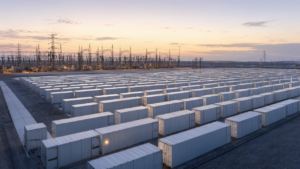
The series of developments—Natron Energy’s mass production, UNIGRID’s funding, EcoPro BM’s entry into material production, and BYD’s JV establishment—clearly demonstrate that sodium-ion batteries are transitioning from a research topic to a full-fledged industry. Over the next few years, Na-ion batteries are expected to play a crucial role in grid-scale energy storage, EVs, and other industrial applications. Further technological advancements and cost reductions for this technology will accelerate the global energy transition and contribute to building more sustainable and resilient energy systems worldwide.
Source: https://sodiumbatteryhub.com/
Get our weekly technology intelligence — free
Receive an infographic that lets you judge at a glance whether each field’s analysis report is worth reading.
Subscribe Free — Weekly Tech Intelligence
By subscribing, you’ll receive Troy-Technical’s weekly technology intelligence newsletter.
- Your email and selected fields are used only to deliver the newsletter.
- We never share your information with third parties.
- You can unsubscribe anytime via the link in each email.
See our Privacy Policy for details.
Takes about a minute · Unsubscribe anytime