Key Findings
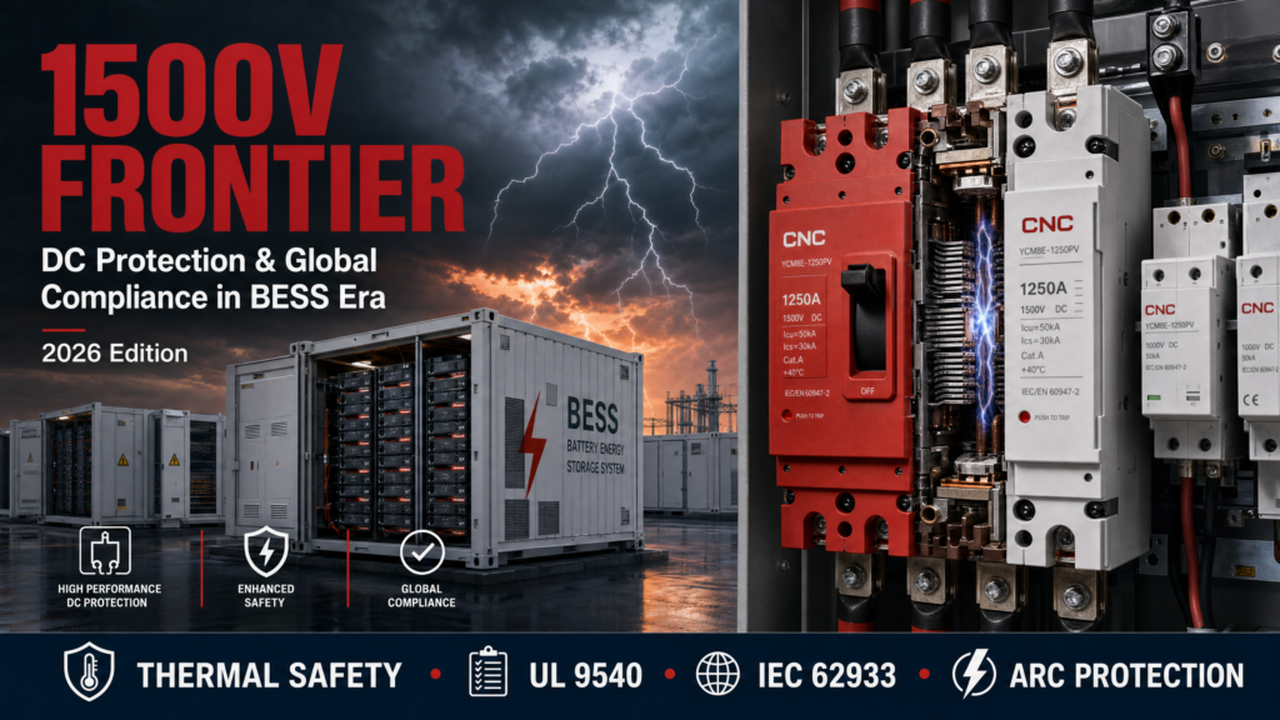
The 2026 edition of the 1500V Battery Energy Storage System (BESS) DC protection and global compliance guide has been published, setting new standards for ensuring the safety and reliability of high-voltage BESS. This guide meticulously details the importance of a “multi-layered approach” encompassing fault detection, arc suppression, prevention of thermal runaway propagation, and robust emergency isolation mechanisms. This comprehensive framework is essential for minimizing operational risks as BESS deployments scale up and move towards higher voltage architectures.
Technical & Policy Details
While 1500V BESS offers increased power density and efficiency, it also introduces heightened electrical and thermal risks. The guide specifies concrete technical measures and operational requirements to address these challenges:
- Multi-Layered Protection Approach:
- Fault Detection: Advanced monitoring systems for rapid detection of short circuits, overcurrent, overvoltage, ground faults, and early signs of thermal runaway.
- Arc Suppression: Dedicated devices and design considerations to suppress arc faults, which are prone to occur in high-voltage DC circuits.
- Thermal Runaway Propagation Prevention: Physical barriers (compartmentation) and cooling systems to prevent the spread of thermal runaway from one cell to adjacent cells.
- Emergency Isolation: Mechanisms for swift and safe disconnection of the entire system or affected sections from the power grid in the event of fire or critical failure.
- NFPA 855 Requirements: The guide incorporates detailed requirements aligned with the National Fire Protection Association (NFPA) Standard 855 for BESS installations, including:
- Minimum Spatial Separation: Physical distances that must be maintained between BESS units or between BESS and other structures.
- Ventilation Rates: Performance criteria for ventilation systems necessary for thermal management and gas exhaust.
- Explosion Protection: Protective measures against potential explosion risks.
- Emergency Responder Access: Ensuring safe access routes and sufficient space for emergency responders like firefighters.
- Maintenance Intervals: Recommended maintenance intervals for key components such as DC circuit breakers, surge protective devices (SPDs), and fire suppression systems are provided to ensure long-term system reliability.
These detailed guidelines serve as an indispensable resource for BESS designers, installers, and operators of high-voltage systems.
Background & Industry Context
Global demand for large-scale BESS is escalating with the integration of renewable energy and modernization of power grids. High-voltage systems like 1500V are increasingly adopted in utility-scale projects due to their ability to maximize power per footprint and reduce transmission costs. However, ensuring the safety of high-voltage BESS remains a top priority for the industry. BESS fire incidents reported worldwide have prompted the tightening of standards and regulations, and this guide was developed in response to such concerns.
Strategic Significance & Outlook
The introduction of the 2026 1500V BESS DC protection and global compliance guide is critical for promoting the safe and reliable deployment of high-voltage BESS. Widespread adoption of these comprehensive guidelines is expected to reduce the risk of BESS fires and increase overall industry confidence. This will accelerate the further integration of renewable energy and the construction of more resilient and sustainable power grids. Adhering to global compliance and implementing advanced protection technologies are key to the long-term growth and development of the BESS industry.
Source: https://cnkuangya.com/blog/1500v-dc-protection-bess-compliance-2026/
Get our weekly technology intelligence — free
Receive an infographic that lets you judge at a glance whether each field’s analysis report is worth reading.
Subscribe Free — Weekly Tech Intelligence
By subscribing, you’ll receive Troy-Technical’s weekly technology intelligence newsletter.
- Your email and selected fields are used only to deliver the newsletter.
- We never share your information with third parties.
- You can unsubscribe anytime via the link in each email.
See our Privacy Policy for details.
Takes about a minute · Unsubscribe anytime