Key Findings
HTMP Biotechnology has introduced the HTMP™ 192, a novel high-throughput microwell platform that significantly improves 3D cell culture workflows by preventing spheroid loss during media exchange. This innovation addresses a long-standing challenge in the field, enabling more robust and reliable assays for drug discovery and disease modeling.
Technical / Clinical Details
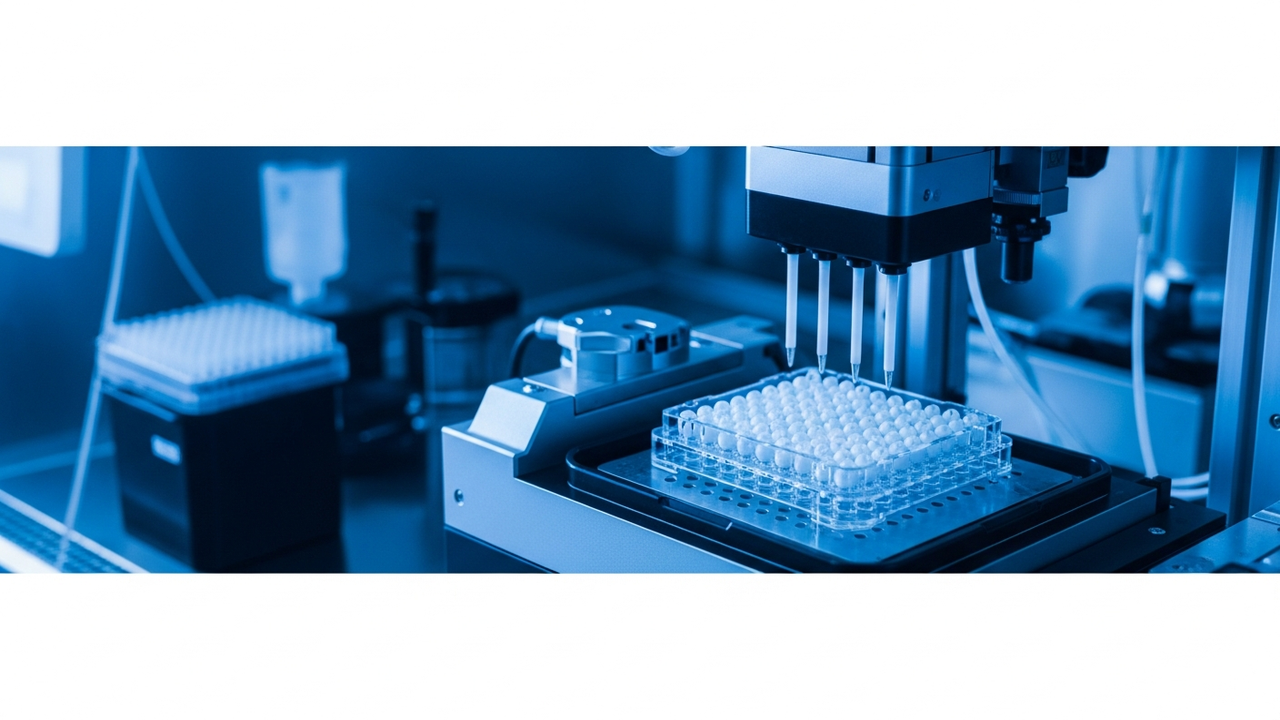
- Proprietary Media Exchange: The HTMP™ 192 platform utilizes a unique bottom-feeding and aspirating mechanism for media exchange, effectively retaining spheroids within the wells. This design minimizes physical disruption and loss of precious cell aggregates, a common issue with traditional methods.
- High-Throughput Compatibility: The platform adheres to the SBS/SLAS standard 192-well format, facilitating seamless integration with existing automation systems. This ensures efficient and reproducible 3D cell culture for large-scale drug screening campaigns and cell-based assays.
- Enhanced Physiological Relevance: 3D cell cultures offer a more accurate in vivo representation compared to 2D systems, making them invaluable for drug development. The HTMP™ 192 enhances the reliability of these physiologically relevant models, providing more predictive in vitro data.
Background & Context
Conventional 3D cell culture systems have often struggled with compromised assay reliability and reproducibility due to spheroid dislodgement or damage during manual or semi-automated media changes. This issue is particularly pronounced in high-throughput settings, limiting the full potential of 3D cultures. HTMP Biotechnology’s HTMP™ 192 directly tackles this bottleneck, promising to expand the application scope of 3D cell culture technologies across pharmaceutical research and development.
Strategic Significance & Outlook
The introduction of the HTMP™ 192 platform is expected to empower researchers and pharmaceutical companies to conduct more accurate and efficient drug candidate screening using highly reliable 3D cell models. Its impact will be particularly felt in areas such as oncology, regenerative medicine, and toxicology studies, where physiologically relevant outcomes are paramount. By accelerating the drug discovery process, this technology holds the potential to contribute to the development of innovative therapies for patients worldwide.
Source: https://htmpbio.com/pages/technology
Get our weekly technology intelligence — free
Receive an infographic that lets you judge at a glance whether each field’s analysis report is worth reading.
Subscribe Free — Weekly Tech Intelligence
By subscribing, you’ll receive Troy-Technical’s weekly technology intelligence newsletter.
- Your email and selected fields are used only to deliver the newsletter.
- We never share your information with third parties.
- You can unsubscribe anytime via the link in each email.
See our Privacy Policy for details.
Takes about a minute · Unsubscribe anytime